
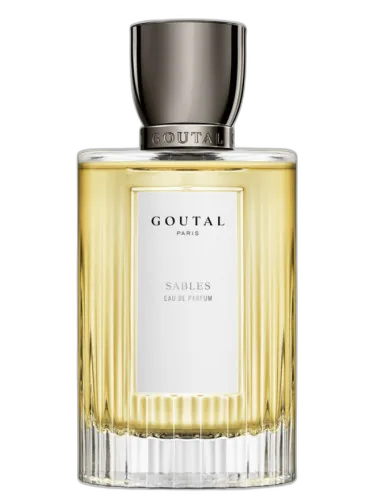

Sables Goutal
At a glance
Is Sables Goutal worth trying?
Sables by Goutal is a Oriental Woody fragrance for men.
- Best match
- Evening wear in Fall
- Performance feel
- Excellent longevity with Strong sillage
- Signature profile
- warm spicy, herbal, sweet with Immortelle, Cinnamon, Pepper
The first impression
Sables by Goutal is a Oriental Woody fragrance for men. Sables was launched in 1985. The nose behind this fragrance is Annick Goutal. Top notes are Immortelle and Cinnamon; middle notes are Pepper and Black Tea; base notes are Sandalwood and Amber.
What shapes the scent
The perfumer behind it

Annick Goutal
Annick Goutal began her career as a pianist and model before founding her eponymous perfume house in 1981, where she worked closely with her daughter Camille Goutal. Known for a natural, luminous style, her compositions often highlight a single note, as seen in the citrusy Eau d'Hadrien and the fresh, floral Eau de Camille. Her creations, including the romantic Ce Soir Ou Jamais and the gentle Eau de Charlotte, are celebrated for their elegant simplicity and emotional resonance, establishing a legacy of intimate, artisanal perfumery.
Notes pyramid
Top Notes
First impression · 15-30 min
 Immortelle
 Cinnamon
Heart Notes
Core character · 2-4 hours
 Pepper
 Black Tea
Base Notes
Lasting impression · 4+ hours
 Sandalwood
 Amber
Amber
The mood it creates
The Lover Archetype: Portrait of Sables Goutal
Essence
To wear Sables by Annick Goutal is to embrace the paradox of fire and earth-a fragrance of smoked amber, honeyed spices, and sun-baked resins. It is not a scent for the timid or the conventional. The person who chooses this fragrance is drawn to transformation, to the liminal space between destruction and creation. They are, at their core, an Alchemist-one who seeks to transmute the raw materials of life into something richer, deeper, and more enduring.
Shadow
Yet every strength has its inverse. Their obsession with transformation can tip into restlessness, a refusal to ever be satisfied. They may discard relationships or projects too quickly, always chasing the next revelation, the next refinement. Their disdain for the mundane can make them impatient with those who do not share their intensity-they may secretly scorn people who are content with simplicity, seeing them as unawakened.
There is also a danger of becoming too enamored with their own mythos. The Alchemist can slip into self-mythologizing, seeing themselves as the lone seeker in a world of sleepwalkers. This can breed arrogance, a subtle belief that they alone understand the true nature of things. Their love of depth can also become a kind of elitism-an assumption that only the rare and the obscure have value.
In darker moments, they may flirt with self-destruction, testing their own limits like an alchemist who inhales toxic fumes in pursuit of gold. They are not reckless, but they court danger as a way of feeling alive.
Conclusion
This is a person who thrives in the interplay of contrasts. They are sensual yet intellectual, fiery yet grounded, drawn to both decadence and austerity. Their tastes are refined but never sterile; they prefer objects and experiences that bear the marks of time-antique books with foxed pages, weathered leather, aged wine, and the patina of old metals. Their home is a sanctuary of textures: rough linen, dark wood, candlelight flickering against copper. They do not merely consume beauty; they curate it, as if assembling the ingredients for some grand, unseen experiment.
Philosophically, they are drawn to the idea that life is a crucible. Suffering is not meaningless but a necessary fire that refines the soul. They may quote Rilke: "You must change your life." Yet their worldview is not one of passive mysticism but of active engagement-they believe in shaping their fate, in bending circumstance to their will. They are not content with mere existence; they demand intensity, depth, a life that burns rather than smolders.
If you like this, try these
Fragrances with a comparable profile - shared accords, notes, and character.
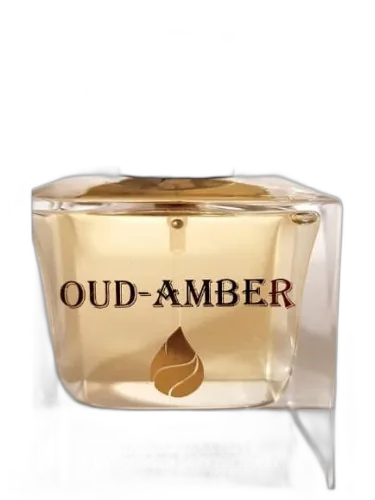
AAP PERFUMES
Oud Amber Aap Perfumes
Shared top notes: cinnamon
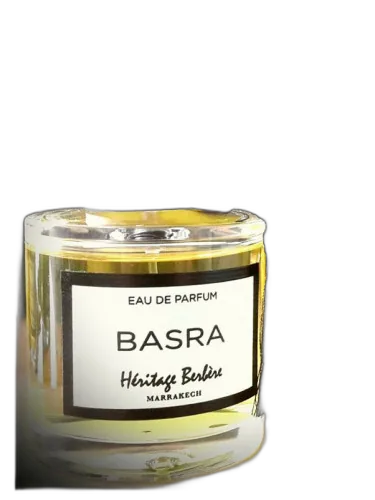
Héritage Berbère
Basra Héritage Berbère
Shared top notes: cinnamon
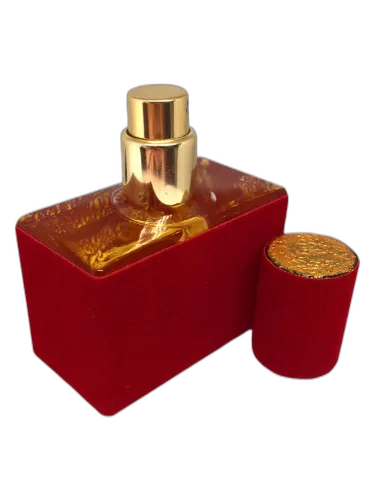
Jousset Parfums
Le Dernier Sultan Jousset Parfums
Shared top notes: cinnamon

Odetu
Di Vanilator Odetu
Shared top notes: cinnamon
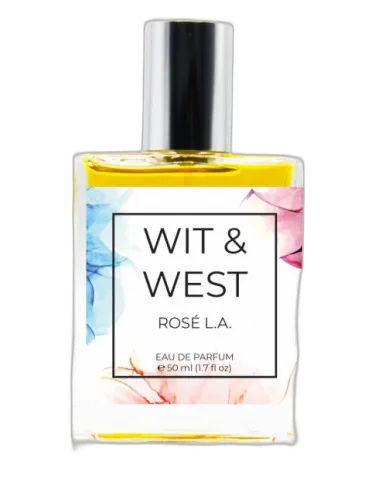
Wit & West
Rosé L.a. Wit & West
Shared base notes: amber, sandalwood