
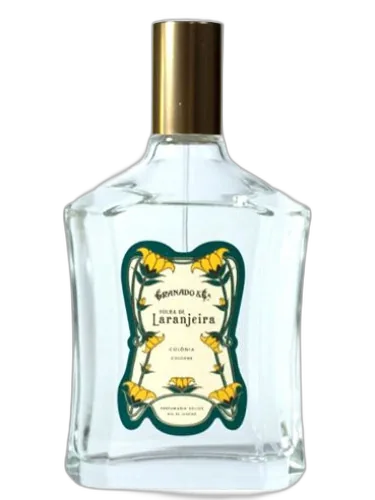

Folha De Laranjeira Granado
At a glance
Is Folha De Laranjeira Granado worth trying?
Folha de Laranjeira by Granado is a Oriental Floral fragrance for women and men.
- Best match
- Casual wear in Spring, Summer
- Performance feel
- Moderate longevity with Intimate sillage
- Signature profile
- citrus, aromatic, green with Petitgrain, Sicilian Lemon, Bergamot
The first impression
Folha de Laranjeira by Granado is a Oriental Floral fragrance for women and men. Folha de Laranjeira was launched in 2016. The nose behind this fragrance is Carmita Magalhães. Top notes are Petitgrain, Sicilian Lemon, Bergamot and Mandarin Orange; middle notes are Petitgrain, Mint and Peony; base notes are Musk, Iris, Patchouli and Moss.
What shapes the scent
The perfumer behind it

Carmita Magalhães
Carmita Magalhães is a perfumer who has created fragrances for Ana Hickmann, Avon, and CIEL Parfum. Her work includes Gold In Shadow and Summer Paradise for Ana Hickmann. She also developed scents like Arc-en-ciel Halloween for CIEL Parfum.
Notes pyramid
Top Notes
First impression · 15-30 min
 Petitgrain
 Sicilian Lemon
 Bergamot
 Mandarin Orange
Heart Notes
Core character · 2-4 hours
Petitgrain
 Mint
Mint
 Peony
Peony
Base Notes
Lasting impression · 4+ hours
 Musk
Musk
 Iris
Iris
 Patchouli
Moss
Patchouli
Moss
The mood it creates
The Lover Archetype: Portrait of Folha De Laranjeira Granado
Essence
The person who gravitates toward Folha De Laranjeira Granado-a fragrance of fresh orange leaves, green citrus, and delicate florals-is most closely aligned with the Innocent archetype. This is not naivety in the pejorative sense, but a soul who seeks purity, simplicity, and harmony in a world often marred by cynicism. The Innocent is drawn to the unspoiled, the natural, the fleeting beauty of morning light filtering through leaves. They are not blind to darkness, but they choose to cultivate joy where they can, like a gardener tending to a fragile blossom.
Yet, as with all archetypes, the Innocent has a shadow-one that risks fragility, escapism, or an unwillingness to confront life’s harsher truths. Their love of beauty can become a retreat from reality, their optimism a mask for deeper fears.
Style & Aesthetic
Their world is one of soft edges and quiet elegance. They prefer natural fabrics-linen, cotton, silk-in muted earth tones or soft pastels. Their home is filled with sunlight, potted herbs, and well-worn books with dog-eared pages. They might collect ceramics, pressed flowers, or handwritten letters tied with ribbon.
In music, they favor acoustic melodies, classical compositions, or the gentle hum of bossa nova-anything that feels like a whisper rather than a shout. Their taste in art leans toward impressionism, where light and color blur into something dreamlike. They do not crave excess; they crave meaning in simplicity.
Philosophy & Values
They believe in kindness as a radical act, in small gestures that ripple outward. Their philosophy is not one of grand ideologies but of daily rituals-brewing tea mindfully, listening without interruption, leaving a window open to hear the rain. They distrust dogma, preferring intuition and lived experience over rigid systems.
Yet this can make them uncomfortable with conflict. They may avoid difficult conversations, smoothing over tensions with charm or deflection. Their optimism, while genuine, can sometimes be a shield-an unwillingness to admit that some wounds do not heal with time alone.
Relationships
In love and friendship, they are warm, attentive, and deeply loyal, but they may struggle with vulnerability. They give freely of their affection but hesitate to reveal their own doubts or sorrows, fearing they will burden others. Their relationships thrive in lightness-shared laughter, quiet walks, handwritten notes-but may falter when storms arrive.
They are drawn to people who balance their idealism with grounding wisdom, who can gently remind them that shadows exist without extinguishing their light.
Shadow
The Innocent’s greatest weakness is their reluctance to face the darker aspects of existence. When life becomes too harsh, they may retreat into nostalgia, fantasy, or even passive resignation. They might rationalize pain away with platitudes-"Everything happens for a reason"-rather than sitting with the raw, unresolved truth of it.
This avoidance can make them seem fragile or detached in moments when strength is needed. Their light is beautiful, but without the courage to acknowledge darkness, it risks becoming a flicker rather than a flame.
Conclusion
For the lover of Folha De Laranjeira, true wisdom lies in integrating their lightness with the weight of reality. They need not abandon their joy, but they must learn that true resilience comes from facing life in full-both the blossoms and the thorns. When they do, their optimism becomes not an escape, but a conscious choice, a defiance against despair.
They are the quiet reminder that beauty persists, not because it is untouched by suffering, but because it grows in spite of it.
If you like this, try these
Fragrances with a comparable profile - shared accords, notes, and character.

Granado
Folha Imperial Granado
Shared top notes: bergamot, mandarin orange, sicilian lemon
Bastide Aix en Provence
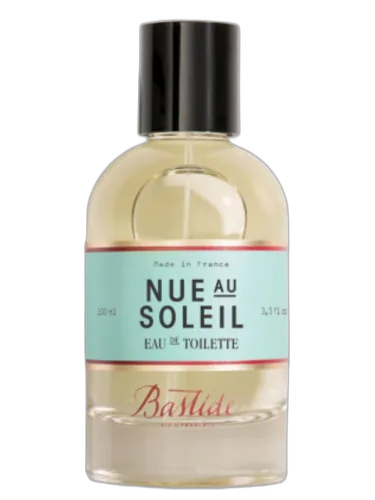
Nue Au Soleil Bastide Aix En Provence
Shared top notes: bergamot, mandarin orange, petitgrain

Maracujá Brasil
L'orangerie Ii Maracujá Brasil
Shared top notes: bergamot, sicilian lemon
Guerlain
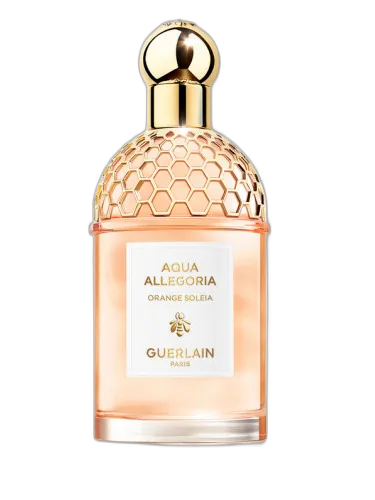
Aqua Allegoria Orange Soleia Guerlain
Shared top notes: bergamot

Yves Rocher
Comme Une Evidence L'eau De Parfum Yves Rocher
Shared top notes: bergamot, petitgrain