
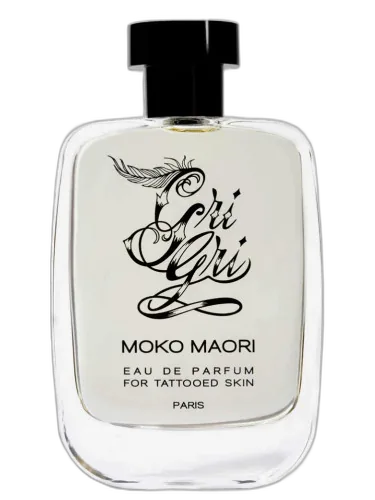

Moko Maori Gri Gri Parfums
At a glance
Is Moko Maori Gri Gri Parfums worth trying?
Moko Maori by Gri Gri Parfums is a Aromatic fragrance for men.
- Best match
- Evening wear in Fall
- Performance feel
- Good longevity with Moderate sillage
- Signature profile
- earthy, mossy, aromatic with Flax, Grass, Fern
The first impression
Moko Maori by Gri Gri Parfums is a Aromatic fragrance for men. Moko Maori was launched in 2016. The nose behind this fragrance is Anaïs Biguine. Top notes are Flax and Grass; middle notes are Fern, Manuka and Kowhai; base notes are Lichen and Kanuka.
What shapes the scent
The perfumer behind it

Anais Biguine
Anais Biguine is a French perfumer known for her work with independent niche houses such as Chapel Factory, Gri Gri Parfums, and Jardins d’Ecrivains. Her style often blends raw, smoky, or incense-like accords with unexpected gourmand or floral touches, as seen in creations like Chapel Factory’s Baptisma and Gri Gri Parfums’ Moko Maori. She is recognized for crafting evocative, narrative-driven scents that balance darkness with subtle sweetness.
Notes pyramid
Top Notes
First impression · 15-30 min
 Flax
Flax
 Grass
Grass
Heart Notes
Core character · 2-4 hours
 Fern
Fern
 Manuka
 Kowhai
Base Notes
Lasting impression · 4+ hours
 Lichen
 Kanuka
The mood it creates
The Wanderer Archetype: Portrait of Moko Maori Gri Gri Parfums
Essence
The person who cherishes Moko Maori Gri Gri by Parfums is, at their core, a Wanderer-an archetype defined by restlessness, curiosity, and a deep yearning for the unknown. This fragrance, with its smoky, woody, and slightly animalic depth, speaks to someone who thrives on the edges of convention, drawn to the mystical and the untamed. The Wanderer does not seek permanence but rather the fleeting beauty of experience, the kind that leaves an imprint on the soul rather than a mark on the world.
Style & Aesthetic
Their style is an extension of their philosophy: eclectic, layered, slightly undone. They favor well-worn leather jackets, linen shirts that have seen too many journeys, and jewelry with obscure symbolism. Their home, if they have one, is a curated chaos-books stacked unevenly, dried herbs hanging from beams, a collection of oddities gathered from markets in Marrakech or Kyoto. They do not decorate for others but for themselves, creating a space that feels like a living museum of their wanderings.
Philosophy & Values
Their philosophy is one of fluidity-they reject rigid dogma in favor of intuition and sensation. They believe truth is not found in books but in the scent of damp earth after rain, in the taste of foreign spices, in the hum of a distant city at night. They value freedom above all else, not as a political ideal but as an existential necessity. To be bound by routine, by expectation, by the mundane-this is a slow death to them.
Yet, their reverence for the unknown is not without paradox. While they disdain materialism, they are deeply sensual, drawn to textures, sounds, and scents that evoke primal memories. Moko Maori Gri Gri-with its rum-soaked tobacco, leather, and dark resins-appeals to this duality: it is both earthy and ethereal, grounding them while whispering of distant lands.
Relationships
The Wanderer is magnetic but elusive. They draw people in with their stories, their intensity, their refusal to conform-yet they vanish just as quickly. Their relationships are deep but transient, built on shared moments rather than permanence. They love fiercely but fleetingly, leaving behind a trail of admirers who remember them like a dream.
This is both their gift and their curse. Their independence is intoxicating, but it can also be isolating. They fear stagnation more than loneliness, and so they often leave before they can be left. Their shadow is a reluctance to commit-not out of cruelty, but because they fear that settling will dull the fire that keeps them alive.
Shadow
Every archetype has its darkness, and the Wanderer’s is rootlessness. Their aversion to routine can become self-sabotage, their love of the unknown a form of escapism. They may romanticize suffering, mistaking instability for depth. There is a danger in perpetual motion-they risk becoming a ghost in their own life, always passing through, never truly arriving.
At their worst, they are restless to the point of exhaustion, chasing experiences not for meaning but to avoid confronting the void within. The very freedom they cherish can become a cage if they never learn to sit still long enough to know themselves.
Conclusion
The healthiest Wanderer learns to carry home within themselves. They do not abandon their love of the wild but integrate it with moments of stillness. They understand that true freedom is not just the ability to leave but the wisdom to stay when it matters. Moko Maori Gri Gri becomes not just an escape but a reminder-a scent that grounds them in their own skin, even as it calls them to the horizon.
They are neither entirely of this world nor entirely apart from it. They walk the line between myth and reality, between the known and the unknowable. And in that tension, they find their truth.
If you like this, try these
Fragrances with a comparable profile - shared accords, notes, and character.

Roads
Bitter End Roads
Shared top notes: grass

Torre of Tuscany
Berkana Torre Of Tuscany
Shared top notes: grass

Fueguia 1833
Pampa Seca Fueguia 1833
Shared top notes: grass

Alkemia Perfumes
Mesnee D'hellequin Alkemia Perfumes
Shared accords: aromatic, earthy, fresh spicy

Agarthi
Waterways Spell Agarthi
Shared base notes: lichen