

Anne De Russie Gustave Eiffel
At a glance
Is Anne De Russie Gustave Eiffel worth trying?
Anne de Russie by Gustave Eiffel is a fragrance for women and men.
- Best match
- Evening, Special Occasion wear in Fall, Winter
- Performance feel
- Very Good longevity with Strong sillage
- Signature profile
- amber, leather, warm spicy with Bergamot, Mandarin Orange, Spices
The first impression
Anne de Russie by Gustave Eiffel is a fragrance for women and men. Anne de Russie was launched in 2019. The nose behind this fragrance is Bruno Herve. Top notes are Bergamot and Mandarin Orange; middle notes are Spices, Jasmine, Rose, Lily-of-the-Valley and Bergamot Leaf; base notes are Benzoin, Castoreum, Leather, Amber, Heliotrope, Vanilla and Musk.
What shapes the scent
The perfumer behind it

Bruno Herve
Bruno Herve has created fragrances for Franck Boclet, including Addiction, Be My Wife, Blue Moon, Cafe, Crime, Enjoy, Flowers, and Icon. His style often incorporates gourmand and oriental notes with a modern twist. Herve's scents are designed to be both evocative and wearable, appealing to a broad audience.
Notes pyramid
Top Notes
First impression · 15-30 min
 Bergamot
 Mandarin Orange
Heart Notes
Core character · 2-4 hours
 Spices
 Jasmine
 Rose
Rose
 Lily-of-the-Valley
 Bergamot Leaf
Base Notes
Lasting impression · 4+ hours
 Benzoin
 Castoreum
 Leather
 Amber
Amber
 Heliotrope
 Vanilla
 Musk
Musk
The mood it creates
The Anne De Russie Gustave Eif Archetype: Portrait of Anne De Russie Gustave Eiffel
Essence
Archetype: The Creator
This person is a modern alchemist, shaping reality with the same precision and vision as Gustave Eiffel himself. Their chosen fragrance-Anne De Russie Gustave Eiffel-is not merely a scent but a manifesto: metallic yet warm, industrial yet poetic, a fusion of steel and soul. They are the Creator, the archetype that builds worlds, whether through art, intellect, or sheer force of will.
Style & Aesthetic
Their tastes are an elegant paradox-rigorous yet romantic. They admire the stark geometry of Brutalist architecture but soften it with the lushness of velvet drapes or a single, perfectly placed orchid. Their wardrobe is curated with the same discipline: tailored lines, rich textures, and a restrained palette of blacks, deep blues, and muted earth tones. They might wear a leather-bound notebook as comfortably as a bespoke suit.
In music, they are drawn to compositions that balance order and chaos-Philip Glass’s mathematical repetitions, the raw emotionality of Nina Simone, or the intricate storytelling of Nick Cave. Their bookshelves hold equal weight in philosophy (Nietzsche, Camus) and design (Dieter Rams, Le Corbusier). They do not consume culture passively; they dissect it, reassemble it, make it their own.
Their home is a temple of purpose. Every object has been considered, every space optimized-not for minimalism’s sake, but because clutter is distraction. They might keep a meticulously organized desk, a collection of rare inks, or a wall of sketches for future projects. Even their leisure is deliberate: they do not binge Netflix but study films, dissecting cinematography and narrative structure.
Professionally, they thrive where creation and precision intersect-architecture, design, engineering, or even strategic roles in business. They are not content with maintenance; they must build, innovate, leave a mark.
Philosophy & Values
They believe in intentionality-that life is not found but forged. To them, existence is raw material, and they are the sculptor. This is not arrogance but a deep sense of responsibility: if they do not shape their destiny, who will? They reject fatalism, seeing it as surrender. Their motto might be: "Chaos is the canvas, discipline the brush."
Yet, this conviction carries a shadow. Their insistence on control can become rigidity. They may mistake adaptability for weakness, dismissing those who flow with life rather than bend it to their will. Their greatest fear is not failure but formlessness-the idea that their carefully constructed identity could dissolve into the mundane.
Relationships
They do not love carelessly. Relationships are projects, built with the same deliberation as their other creations. They seek partners who are both muse and collaborator-someone who understands their vision but challenges its edges. Their love is not possessive but curatorial; they want to refine, elevate, polish.
Yet this very idealism can isolate them. They may grow impatient with emotional spontaneity, seeing it as inelegant. Their partners might feel like tenants in a house designed without their input-admired, but not truly seen. Their friendships, too, are selective, often orbiting shared intellectual or creative pursuits rather than raw vulnerability.
Shadow
The Creator’s brilliance is also their trap. Their need to shape reality can curdle into perfectionism, leaving them paralyzed by the fear of flawed execution. They may dismiss good enough in pursuit of the sublime, never finishing what they start.
Worse, their self-sufficiency can become solipsism. They forget that not everything must be designed-some beauty exists only in wild, untamed forms. They may grow disdainful of those who live by instinct rather than intention, missing the poetry in chaos.
Conclusion
To evolve, they must learn that creation is also destruction-that to build anew, something must first be relinquished. They must allow themselves to be surprised, to trust the unplanned. The scent of Gustave Eiffel, after all, is not just steel and amber-it is also the whisper of something untamed beneath the structure.
They are not merely architects of their lives, but also its inhabitants. And sometimes, the greatest act of creation is to step back and let the world breathe.
If you like this, try these
Fragrances with a comparable profile - shared accords, notes, and character.
Avon
Velvet Imari Avon
Shared top notes: bergamot, mandarin orange
RPL
Xv Oud Voyage Rpl
Shared top notes: bergamot, mandarin orange
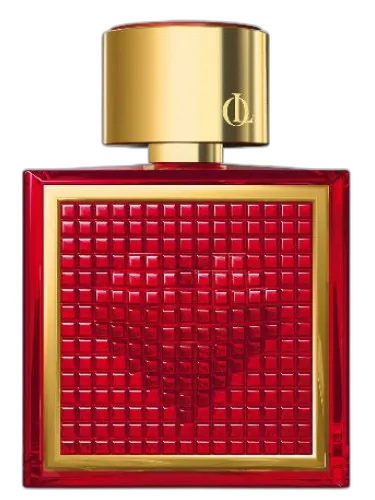
Queen Latifah
Queen By Queen Latifah Queen Latifah
Shared top notes: bergamot, mandarin orange

Yves Rocher
Ispahan Parfum Yves Rocher
Shared top notes: bergamot, mandarin orange

Natura
Flor De Laranjeira Natura
Shared top notes: bergamot, mandarin orange