
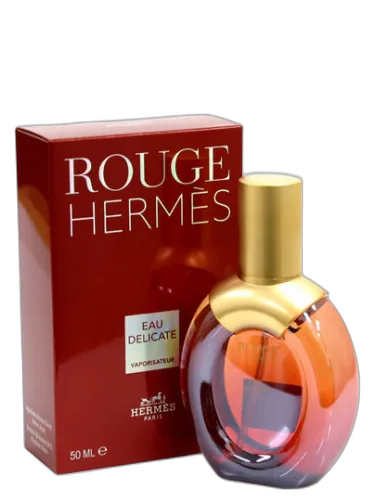

Rouge Hermes Eau Delicate Hermès
Fragrance Story
Rouge Hermes Eau Delicate by Hermès is a Floral Woody Musk fragrance for women. Rouge Hermes Eau Delicate was launched in 2002. The nose behind this fragrance is Akiko Kamei. Top notes are Aldehydes and Ylang-Ylang; middle notes are Rose and Vanilla; base notes are Labdanum, Amber and Cedar.
Composition Profile
About the Perfumer

Akiko Kamei
Akiko Kamei is a Japanese perfumer who has worked with major houses including Hermès, Diptyque, and Caron. Her style often balances luminous citrus notes with soft, elegant florals and musks, as seen in Hermès' Rouge Hermès and Diptyque's Oyedo. She is known for creating refined, wearable scents that feel both modern and timeless, such as L'Artisan Parfumeur's Mure Et Musc Cologne.
Fragrance Notes
Top Notes
First impression · 15-30 min
 Aldehydes
 Ylang-Ylang
Heart Notes
Core character · 2-4 hours
 Rose
Rose
 Vanilla
Base Notes
Lasting impression · 4+ hours
 Labdanum
 Amber
Amber
 Cedar
Cedar
Character Profile
The Lover Archetype: Portrait of Rouge Hermes Eau Delicate Hermès
Essence
The person who cherishes Rouge Hermès Eau Delicate is one who seeks beauty not as an ornament, but as a necessity-a vital force that breathes meaning into existence. This fragrance, with its delicate balance of rose, citrus, and musk, mirrors their soul: tender yet assertive, refined yet unafraid of depth. They embody The Lover archetype, for their life is an ode to passion-not merely in romance, but in all pursuits that stir the senses and the intellect.
They are drawn to the exquisite, not out of vanity, but because they believe that beauty is a language-one that speaks of harmony, pleasure, and the sacred act of savoring life. Their presence is magnetic, not because they demand attention, but because they exude an effortless allure, a quiet confidence that the world is richer when experienced with full intensity.
Style & Aesthetic
Their tastes are deliberate, never accidental. They favor minimalism with a touch of opulence-a cashmere scarf draped over a perfectly tailored coat, a single piece of antique jewelry worn daily, a home where every object has intention. They do not follow trends; they curate an existence that feels like an extension of their inner world.
In art, they are drawn to impressionism and classical compositions, where emotion is conveyed through subtlety rather than force. They prefer literature that explores desire and human complexity-Marguerite Duras, Marcel Proust, or Yukio Mishima-stories where love is both a wound and a revelation. Music, for them, must have texture: the warmth of jazz, the melancholy of Chopin, the sensuality of bossa nova.
They do not chase wealth for status, but for freedom-the freedom to travel, to collect rare books, to dine in places where the ambiance is as important as the cuisine. Their daily rituals are sacred: morning coffee in a delicate porcelain cup, an evening walk through a garden, the deliberate selection of a scent that matches their mood.
Yet, their pursuit of beauty can slip into hedonism. When disillusioned, they may indulge too deeply in wine, in luxury, in fleeting romances-mistaking sensation for fulfillment. Their greatest challenge is to balance their hunger for intensity with the wisdom to know when enough is enough.
Philosophy & Values
They reject the superficial, yet they are not ascetic. Their philosophy is one of intensified living-they believe that to be fully human is to feel deeply, to love fiercely, and to refuse numbness. They despise the transactional nature of modern relationships, seeking instead connections that are transformative, whether in friendship, romance, or intellectual exchange.
Their values are rooted in authenticity and aesthetic integrity. They would rather be alone than surrounded by hollow companionship. Yet, this very idealism can become their undoing-they sometimes mistake intensity for truth, forgetting that not all that glitters is gold.
Relationships
In love, they are both the devotee and the tempter. They do not love lightly; when they commit, it is with a depth that can be overwhelming. Their partners are drawn to their emotional richness, their ability to make even ordinary moments feel sacred. Yet, their shadow emerges when passion turns to possessiveness, when the line between devotion and obsession blurs.
Friendships, too, are curated-they have no patience for small talk or superficial bonds. Their closest companions are those who challenge them, who engage in debates about art, philosophy, and the nature of desire. But their disdain for mediocrity can make them elitist, unintentionally pushing away those who do not meet their exacting standards.
Shadow
The Lover’s brilliance is also their peril. Their capacity for deep feeling can turn into emotional tyranny-an expectation that others must love as fiercely as they do, or not at all. They may grow resentful when the world does not mirror their passion, retreating into melancholy or cynicism.
Their obsession with beauty can blind them to the value of imperfection, leading them to dismiss people or experiences that lack polish. And in their quest for transcendence, they may neglect the mundane but necessary acts of life-paying bills on time, enduring dull obligations, accepting that not every moment can be poetic.
The admirer of Rouge Hermès Eau Delicate is a paradox-a soul who worships at the altar of beauty yet risks being consumed by it. They are both the artist and the artwork, the lover and the beloved. Their life is a testament to the belief that existence must be felt deeply to be worth living.
But like all who walk the path of intensity, they must learn that true refinement lies not in exclusion, but in balance-that even the most delicate rose has thorns, and that the deepest love sometimes requires patience, not just passion.
Similar Fragrances
Fragrances with a comparable profile - shared accords, notes, and character.

Natori
Natori Natori
Shared accords: aldehydic, amber, floral

Crimean rose – Крымская роза
Артек (artek) Crimean Rose – Крымская Роза
Shared accords: aldehydic, floral, fresh
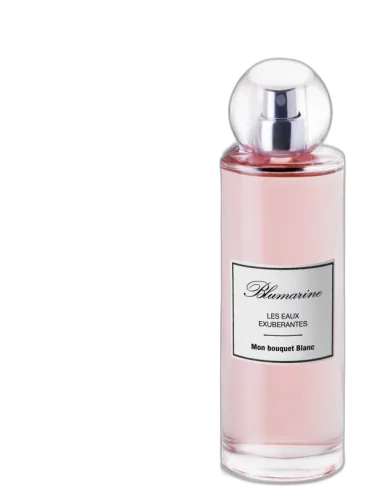
Blumarine
Mon Bouquet Blanc Blumarine
Shared accords: aldehydic, floral, fresh

Betty Barclay
Pure Flower Eau De Parfum Betty Barclay
Shared accords: aldehydic, floral, fresh
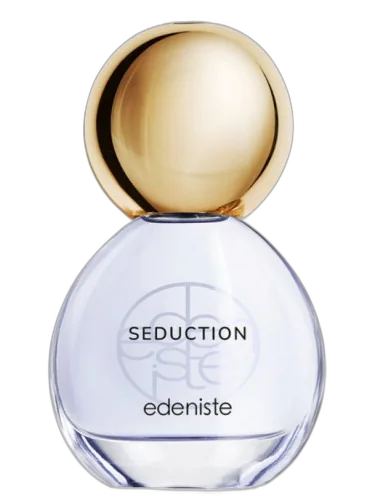
Edeniste
Seduction Edeniste
Shared accords: aldehydic, amber, floral