


Voyage D'hermes Hermès
Fragrance Story
Voyage d'Hermes by Hermès is a Woody Floral Musk fragrance for women and men. Voyage d'Hermes was launched in 2010. The nose behind this fragrance is Jean-Claude Ellena. Top notes are Cardamom, Amalfi Lemon, Spices and Juniper Berries; middle notes are Tea, Green Notes and Floral Notes; base notes are Woodsy Notes, Musk and Cedar.
Composition Profile
About the Perfumer

Jean-Claude Ellena
Jean-Claude Ellena is a renowned French perfumer who served as in-house perfumer for Hermès and has created iconic fragrances for many houses. His catalog includes Dia Woman for Amouage, Declaration for Cartier, and Bvlgari Eau Parfumee Au The Vert. He also composed Musc & Jasmin for 100 Bon and Rumba for Balenciaga, demonstrating his minimalist and transparent style.
Fragrance Notes
Top Notes
First impression · 15-30 min
 Cardamom
 Amalfi Lemon
 Spices
Juniper Berries
Spices
Juniper Berries
Heart Notes
Core character · 2-4 hours
 Tea
Tea
 Green Notes
 Floral Notes
Base Notes
Lasting impression · 4+ hours
Woodsy Notes
 Musk
Musk
 Cedar
Cedar
Character Profile
The Wanderer Archetype: Portrait of Voyage D'hermes Hermès
Essence
The Wanderer is the archetype of the journey itself, of movement and transition. Unlike the Explorer, who seeks a destination, the Wanderer finds meaning in the path. They are driven by a restless spirit, a need to keep moving, to see what is around the next bend. Voyage d'Hermes is the scent of this perpetual motion, of the open road and the promise of the unknown. It is a fragrance of elegant transience.
This perfume is the Wanderer’s companion. The opening is a bright, spicy burst of cardamom and lemon, a jolt of energy that signals departure. The heart is a delicate, fleeting blend of tea and green notes, like a landscape seen from a train window. The base of woods and musk is the warm, familiar scent of a well-worn leather seat. It is a scent that is both invigorating and comforting, a constant reminder that the journey is the destination.
Style & Aesthetic
The Wanderer’s style is practical, elegant, and understated. They favor classic, well-made pieces that can be easily packed and mixed-a trench coat, a cashmere sweater, a pair of comfortable boots. Their aesthetic is one of quiet sophistication, a nod to the timeless style of the grand traveler. They are not interested in flashy labels, but in quality and functionality.
Their aesthetic is the visual equivalent of the fragrance: clean, crisp, and slightly spicy. They are drawn to neutral tones-beige, grey, navy-with the occasional pop of color. Their accessories are chosen for their utility: a sturdy leather bag, a silk scarf that can double as a blanket, a good pair of sunglasses. They are always ready to go, their life packed into a single, elegant suitcase.
Philosophy & Values
The Wanderer believes that life is a journey, not a destination. They value freedom, flexibility, and the ability to adapt. They are not attached to possessions or places; they find home in the movement itself. They believe that the most important thing is to keep moving, to keep experiencing, to keep growing.
They value independence and self-reliance. They are comfortable with uncertainty and embrace the unknown. They are not afraid of solitude; they see it as a necessary part of the journey. Their philosophy is one of presence-they are fully engaged in the moment, aware that it will soon pass. They find beauty in the transient, the fleeting, the ephemeral.
Relationships
In relationships, the Wanderer is a fascinating but elusive partner. They are charming and engaging, but they are always aware that they will eventually move on. They form intense but brief connections, savoring the intensity of the encounter without expecting it to last. They are not afraid of goodbyes; they see them as a natural part of the journey.
They are drawn to people who are independent and adventurous, who understand their need for freedom. They are not interested in possessiveness or demands. Their ideal relationship is a meeting of two souls on the road, a shared moment of connection that is cherished for what it is, without the need for permanence.
Lifestyle
The Wanderer’s life is one of constant motion. They might live out of a suitcase, moving from city to city, country to country. They are likely to have a home base, but it is more of a storage unit than a true home. Their routines are flexible, adapted to the rhythm of travel. They are experts at packing, navigating airports, and finding the best local food.
They are voracious readers, particularly of travel writing and philosophy. They keep a journal, documenting their experiences and observations. They are drawn to the arts-music, film, literature-that capture the feeling of movement and transition. Their life is a series of arrivals and departures, each one a new beginning.
Shadow
The Wanderer’s shadow is a tendency towards rootlessness and avoidance. In their constant movement, they can avoid forming deep, lasting connections. They may use travel as a way to escape from their own emotions or from difficult situations. They can be perceived as unreliable or commitment-phobic.
Their shadow can also manifest as a sense of emptiness. The constant novelty can become a drug, and the Wanderer may find themselves always chasing the next thrill, never feeling truly satisfied. The challenge for the Wanderer is to learn that true freedom is not about endless movement, but about the ability to be still and find home within themselves.
Conclusion
Voyage d'Hermes is the scent of the Wanderer in their element. It is a fragrance of elegant transience, of the beauty of the journey itself. It is a reminder that the most important destination is the one that lies within. It is the scent of a soul that has embraced the path, finding meaning not in where they are going, but in the act of going.
Similar Fragrances
Fragrances with a comparable profile - shared accords, notes, and character.

Clean
Citron Fig Clean
Shared accords: aromatic, citrus, fresh

Hermès
Voyage D'hermes Parfum Hermès
Shared accords: aromatic, citrus, fresh

Alexandria Fragrances
Vitamin C Alexandria Fragrances
Shared accords: citrus, fresh, green

Frederic M
J'existe Frederic M
Shared accords: citrus, fresh, green
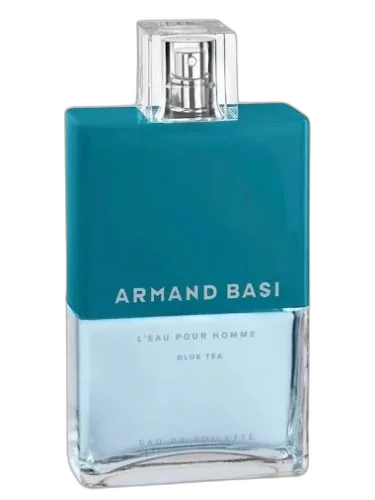
Armand Basi
L'eau Pour Homme Blue Tea Armand Basi
Shared accords: aromatic, citrus, fresh