
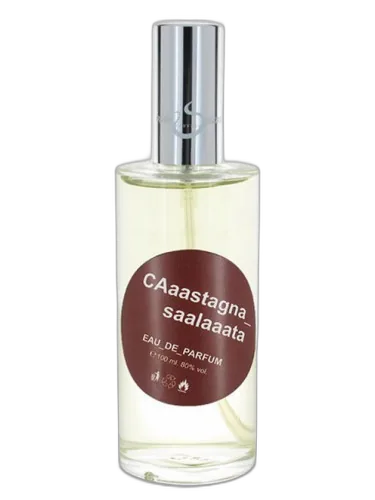

Caaastagna Saalaaata Hilde Soliani
At a glance
Is Caaastagna Saalaaata Hilde Soliani worth trying?
Caaastagna Saalaaata by Hilde Soliani is a Aromatic fragrance for women and men.
- Best match
- Casual wear in Fall
- Performance feel
- Good longevity with Moderate sillage
- Signature profile
- salty, marine, green with Salt, Chestnut, Green Notes
The first impression
Caaastagna Saalaaata by Hilde Soliani is a Aromatic fragrance for women and men. Caaastagna Saalaaata was launched in 2017. The nose behind this fragrance is Hilde Soliani.
What shapes the scent
The perfumer behind it

Hilde Soliani
Hilde Soliani is an Italian perfumer who founded her namesake brand, Hilde Soliani. Her fragrances, such as 24-09-11, Acquiilssssima, and Amore, often explore gourmand and floral themes with a playful, artistic touch. Soliani’s work is known for its creativity and emotional depth, reflecting her background in art and design.
Notes pyramid
All Notes
Complete scent profile
 Salt
Salt
 Chestnut
 Green Notes
 Sea Notes
The mood it creates
The Soliani Devotee Archetype: Portrait of Caaastagna Saalaaata Hilde Soliani
Essence
To wear Caaastagna Saalaaata by Hilde Soliani is to embrace a paradox-a fragrance that is at once warm and elusive, sweet yet smoky, comforting but with an edge of melancholy. The person who chooses this scent is not merely selecting a perfume; they are declaring an allegiance to a particular way of being in the world. Their soul is woven from nostalgia, sensuality, and a quiet defiance of the mundane.
The dominant Jungian archetype here is the Puer Aeternus (or Puella Aeterna)-the Eternal Child. This archetype embodies youthfulness, creativity, and a refusal to be fully tamed by convention. They are dreamers, wanderers, and seekers of beauty in the overlooked corners of life. Yet, like all archetypes, this one casts a shadow-a resistance to discipline, a tendency toward escapism, and a reluctance to fully commit to the responsibilities of adulthood.
Relationships
In love, they are both tender and elusive. They crave deep emotional connections but resist the constraints of traditional roles. They are the kind of lover who writes letters by hand, who remembers the exact way you take your coffee, who disappears for days when the weight of expectation grows too heavy. Their relationships thrive on freedom-they cannot bear to be caged, yet they long to be understood.
Friends are drawn to their warmth and imagination, but some grow frustrated by their inconsistency. They are the friend who shows up unannounced with a bottle of wine and a story, but who might vanish when you need them to help move apartments. Their charm is their currency, and they spend it freely-but not always wisely.
Shadow
The Eternal Child’s greatest weakness is their refusal to fully grow up. They romanticize transience, mistaking it for freedom. They may drift from job to job, city to city, lover to lover, always chasing the next fleeting inspiration. There is a fear beneath their whimsy-a dread of becoming ordinary, of being trapped in the mundane machinery of adult life.
This aversion to structure can leave them unmoored. Their creativity, if undisciplined, becomes mere daydreaming. Their sensuality, if unchecked, slips into self-indulgence. They must learn that true freedom is not escape, but the ability to choose one’s commitments-and to honor them.
Conclusion
Their tastes are rich, textured, and deeply tactile. They prefer the warmth of worn leather, the grain of aged wood, the flicker of candlelight over sterile LEDs. Their home is a sanctuary of curated chaos-vintage books stacked haphazardly, a record player spinning jazz or obscure European folk music, a kitchen perpetually smelling of roasted chestnuts and spiced wine. They are drawn to the aesthetics of old-world Europe, not out of mere nostalgia, but because they sense in it a lost depth of living.
Their philosophy is one of aesthetic hedonism-not in the shallow pursuit of pleasure, but in the belief that beauty and sensuality are essential to a meaningful existence. They reject the utilitarian mindset of modern life, seeing it as a kind of spiritual poverty. For them, a meal is not just sustenance; it is an act of devotion. A walk through autumn leaves is not just exercise; it is a ritual.
If you like this, try these
Fragrances with a comparable profile - shared accords, notes, and character.

Egofacto
Jamais Le Dimanche Egofacto
Shared top notes: green notes, sea notes

Bejar
Onyx Bejar
Shared top notes: sea notes
Natura
Água De Banho Misteriosa Pataqueira Natura
Shared top notes: green notes, sea notes
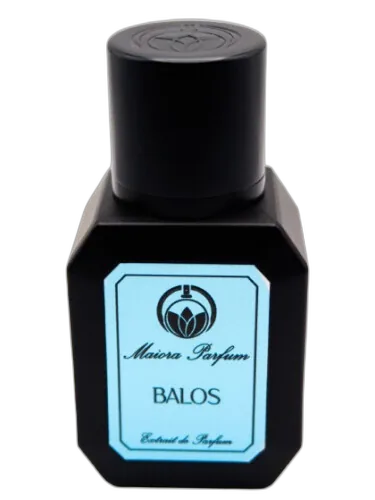
Maiora Parfum
Balos Maiora Parfum
Shared top notes: green notes, sea notes

Bahoma London
Ocean Spa Bahoma London
Shared top notes: green notes, sea notes