


Tchai Hima Jomo
At a glance
Is Tchai Hima Jomo worth trying?
Tchai by hima jomo is a Floral Green fragrance for women and men.
- Best match
- Casual wear in Spring, Summer
- Performance feel
- Good longevity with Moderate sillage
- Signature profile
- woody, green, aromatic with Violet Leaf, Bergamot, Cardamom
The first impression
Tchai by hima jomo is a Floral Green fragrance for women and men. This is a new fragrance. Tchai was launched in 2023. The nose behind this fragrance is Barnabe Fillion. Top notes are Violet Leaf, Bergamot and Cardamom; middle notes are Mimosa, Osmanthus and Ylang-Ylang; base notes are Darjeeling Tea, Sandalwood, Black Tea and Mate.
What shapes the scent
The perfumer behind it

Barnabe Fillion
Barnabe Fillion is a French perfumer who trained at Givaudan and now works closely with Aesop, where he has become a defining creative force. His style is known for blending raw, mineral-like accords with earthy and aromatic notes, often evoking landscapes and natural textures. He created several of Aesop’s most distinctive fragrances, including the green, citrusy Erémia, the smoky, woody Karst, and the dark, resinous Miraceti.
Notes pyramid
Top Notes
First impression · 15-30 min
 Violet Leaf
 Bergamot
 Cardamom
Heart Notes
Core character · 2-4 hours
 Mimosa
 Osmanthus
 Ylang-Ylang
Base Notes
Lasting impression · 4+ hours
 Darjeeling Tea
 Sandalwood
Black Tea
Sandalwood
Black Tea
 Mate
Mate
The mood it creates
The Wanderer Archetype: Portrait of Tchai Hima Jomo
Essence
The one who wears Tchai Hima Jomo is a wanderer of the senses, drawn to the scent’s smoky, spicy, and slightly mystical aura. Their soul resonates with the Seeker archetype-an eternal traveler, not merely in geography but in thought, emotion, and spirit. They are restless, always probing the edges of experience, never fully satisfied with the mundane. The fragrance, with its blend of incense, tea, and distant spices, mirrors their inner world: layered, elusive, and tinged with the promise of something just beyond reach.
Style & Aesthetic
Their aesthetic is eclectic, borrowing from bohemian, minimalist, and avant-garde influences. They favor textures that tell a story-linen scarves from distant markets, well-worn leather bags, silver rings with obscure symbols. Their home, if they have one, is a curated sanctuary of oddities: incense holders, rare books, a collection of tea tins from around the world. They might live in a small apartment in a bustling city or drift between temporary dwellings, always with the sense that the next place could hold the key to a deeper understanding.
Philosophy & Values
For them, life is an experiment, a series of trials meant to refine the self. They reject dogma, preferring instead the wisdom of intuition and the lessons of direct experience. Their philosophy is fluid, shaped by encounters with different cultures, philosophies, and states of mind. They might quote Nietzsche’s "Become who you are" without irony, seeing self-discovery as an endless process rather than a fixed destination.
Yet this very openness can become a paradox. Their refusal to settle on absolutes sometimes leaves them adrift, unable to commit to a single path. They value freedom above all-freedom of thought, movement, and expression-but this can manifest as an aversion to responsibility, a reluctance to plant roots.
Relationships
They attract others effortlessly-their curiosity and depth make them magnetic. Conversations with them are voyages, meandering through philosophy, art, and personal revelations. But intimacy is a challenge. They are prone to emotional detachment, treating relationships as another form of exploration rather than a commitment. Partners may feel like temporary companions on a journey that could end at any moment.
Their friendships are often intense but transient, built on shared ideas rather than enduring bonds. They inspire, provoke, and sometimes unsettle those around them, leaving an imprint long after they’ve moved on.
Shadow
The Seeker’s greatest flaw is their refusal to be found. Their relentless pursuit of the next experience can become an escape from depth, from the hard work of staying. They may mistake movement for growth, accumulating knowledge without ever integrating it into wisdom. At their worst, they become the Wanderer Who Never Arrives, haunted by the fear that stopping means stagnation.
This shadow manifests in subtle ways-abrupt career changes, unfinished projects, a reluctance to define themselves too clearly. They may grow frustrated with those who seem content with less, dismissing them as unambitious, blind to the fact that their own restlessness is a form of avoidance.
Conclusion
Tchai Hima Jomo is their olfactory manifesto: complex, transient, impossible to pin down. They are neither entirely at home in the world nor entirely apart from it. Their life is a work in progress, an ever-shifting mosaic of experiences, ideas, and fleeting connections.
To know them is to be swept into their current-exhilarating, unpredictable, but never still. And perhaps that is both their gift and their curse: they are forever in motion, chasing the horizon, never quite certain if they are running toward something or away from it.
If you like this, try these
Fragrances with a comparable profile - shared accords, notes, and character.

Nuori
Shinrin Nuori
Shared top notes: bergamot, cardamom, violet leaf

Who is Elijah
His | Her Who Is Elijah
Shared top notes: bergamot, cardamom, violet leaf

Petite Histoire
Riviera Santal Petite Histoire
Shared top notes: bergamot
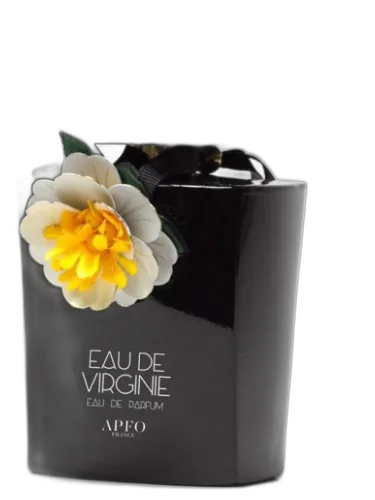
Au Pays de la Fleur d’Oranger
Eau De Virginie Au Pays De La Fleur D’oranger
Shared top notes: bergamot, cardamom
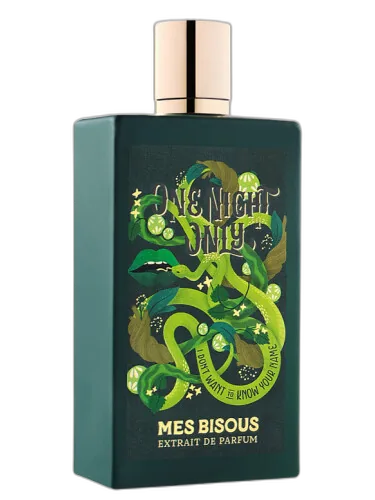
Mes Bisous
One Night Only Mes Bisous
Shared top notes: cardamom, violet leaf