
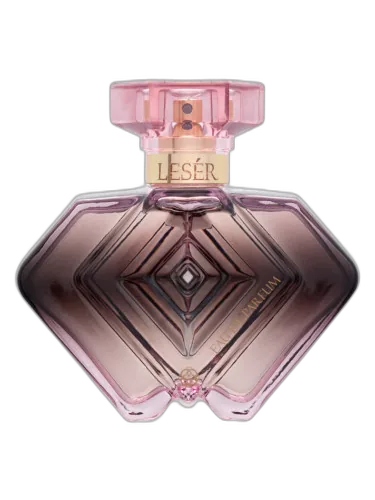

Lesér Hinode
Fragrance Story
Lesér by Hinode is a Oriental Floral fragrance for women. Lesér was launched in 2017. The nose behind this fragrance is Carmita Magalhaes. Top notes are Blackberry, Tangerine and Lemon Zest; middle notes are Coffee, Grasse Rose and Jasmine Sambac; base notes are Vanilla Bean, Patchouli and Musk.
Composition Profile
About the Perfumer

Carmita Magalhães
Carmita Magalhães is a perfumer who has created fragrances for Ana Hickmann, Avon, and CIEL Parfum. Her work includes Gold In Shadow and Summer Paradise for Ana Hickmann. She also developed scents like Arc-en-ciel Halloween for CIEL Parfum.
Fragrance Notes
Top Notes
First impression · 15-30 min
 Blackberry
 Tangerine
 Lemon Zest
Heart Notes
Core character · 2-4 hours
 Coffee
 Grasse Rose
Jasmine Sambac
Grasse Rose
Jasmine Sambac
Base Notes
Lasting impression · 4+ hours
Vanilla Bean
 Patchouli
 Musk
Musk
Lesér Hinode by Hinode offers a distinctive olfactory experience that stands out from other fragrances in its category.
Crafted with the finest ingredients and a blend of traditional and modern perfumery techniques, this fragrance represents the pinnacle of the perfumer's art.
Lesér Hinode embodies the distinctive style of Hinode while adding a unique chapter to their fragrance portfolio.
Character Profile
The Lover Archetype: Portrait of Lesér Hinode
Essence
The person who cherishes Lesér Hinode is most closely aligned with the Aesthete-an archetype that thrives on beauty, sensuality, and the refinement of experience. This is not mere superficiality, but a deep reverence for the sensory world, where every scent, texture, and hue carries meaning. The Aesthete lives in pursuit of harmony, seeking to elevate the mundane into the exquisite. Yet, like all archetypes, this one casts a shadow-where indulgence can become decadence, and discernment can curdle into elitism.
Style & Aesthetic
Their wardrobe is a study in restraint. Neutral tones dominate-soft creams, deep charcoals, muted blues-but the fabrics are sumptuous: linen, silk, cashmere. They favor designers who understand the interplay of texture and form, like Yohji Yamamoto or Issey Miyake. Every garment is chosen for its ability to age gracefully, to tell a story over time.
In food and drink, they prefer the subtle over the bold. A perfectly brewed sencha, a sliver of sashimi, a single square of dark chocolate-these are their indulgences. They are not ascetics, but they reject gluttony; pleasure, for them, is in the precision of the experience, not its excess.
Music and literature follow the same ethos. They may favor Satie’s sparse piano compositions or the haiku of Bashō-works where silence speaks as loudly as sound. In books, they gravitate toward authors who weave philosophy into narrative, like Borges or Kawabata.
The Aesthete’s greatest weakness is a fear of the imperfect. They may avoid spontaneity, seeing it as a threat to their carefully constructed world. A stain on linen, a poorly chosen word, a clumsy gesture-these can unsettle them disproportionately.
At their worst, they become the Snob, mistaking refinement for superiority. They may grow impatient with those who lack their discernment, forgetting that beauty is subjective. Their pursuit of the exquisite can become a prison, where nothing is ever quite good enough-not even themselves.
Philosophy & Values
To this person, life is an art form. They are drawn to the subtle, the understated, the things that whisper rather than shout. Lesér Hinode, with its delicate balance of floral and woody notes, appeals to their preference for complexity without ostentation. Their philosophy is one of curated experience-they believe that what one surrounds oneself with shapes the soul.
They are likely drawn to Japanese minimalism, where space and restraint heighten beauty. Their home is a sanctuary: uncluttered, with carefully chosen objects-a single ceramic bowl, a scroll of calligraphy, a sprig of ikebana. They may practice tea ceremony or meditation, not as rituals of piety, but as acts of mindfulness, ways to slow time and savor existence.
Yet, their pursuit of beauty is not passive. They are collectors, not hoarders-each possession must serve a purpose, either functional or transcendent. They despise waste, not out of frugality, but because excess dulls the senses.
Relationships
They do not seek many companions, but the few they choose are held close. Their friendships are deep, cultivated over years, built on shared sensibilities rather than convenience. They are drawn to those who appreciate nuance-who understand that a glance, a pause, a shared silence can be as meaningful as a declaration.
Romantically, they are slow to commit but fiercely loyal once they do. They do not love lightly; passion, for them, is a slow burn, a thing to be nurtured like a rare orchid. They expect their partner to match their intensity-not in drama, but in depth. A relationship without aesthetic or intellectual harmony is unthinkable to them.
Yet, their exacting standards can isolate them. They may dismiss others as "crude" or "unrefined," not out of malice, but because they cannot comprehend a life lived without intention. This is their shadow-a tendency toward emotional fastidiousness, where their love of beauty becomes a barrier to connection.
Conclusion
The ideal Aesthete learns that perfection is not the absence of flaws, but the acceptance of them. They come to see that a cracked teacup, repaired with gold (kintsugi), holds more meaning than an untouched one. Their journey is toward grace-not just in the objects they cherish, but in how they move through the world.
When balanced, they are not just admirers of beauty, but creators of it-through kindness, through presence, through the quiet art of living well. Lesér Hinode is not just a fragrance to them; it is a reminder that life, like scent, is ephemeral, and must be savored before it fades.
Similar Fragrances
Fragrances with a comparable profile - shared accords, notes, and character.
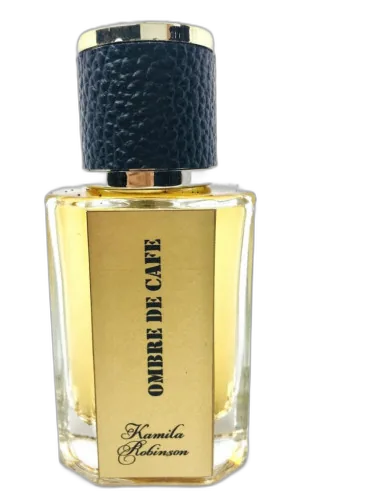
Kamila Robinson
Ombré Dе Café (тень От Кофе) Kamila Robinson
Shared accords: citrus, coffee, fruity
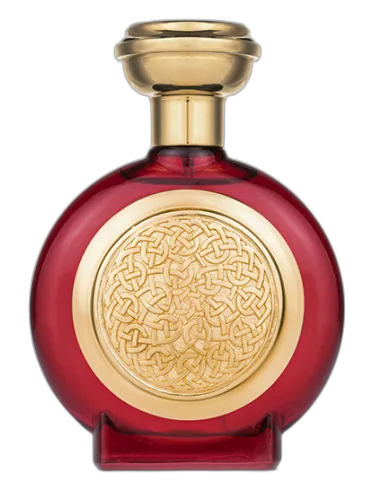
Boadicea the Victorious
Rouge Temptation Boadicea The Victorious
Shared accords: fruity, musky, powdery
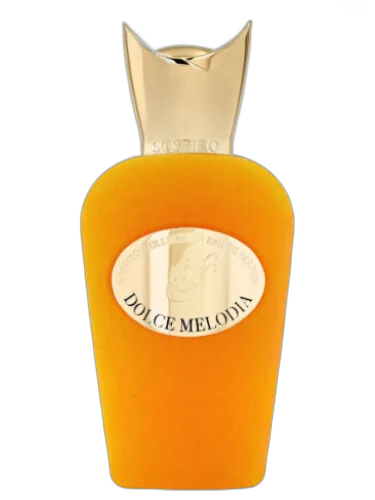
Sospiro Perfumes
Dolce Melodia Sospiro Perfumes
Shared accords: citrus, fruity, musky

Amado
Arabian Rose Amado
Shared accords: citrus, fruity, musky
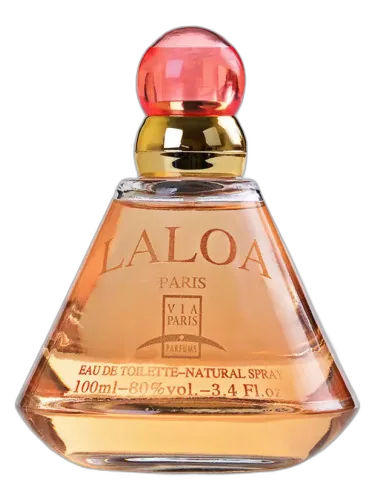
Via Paris Parfums
Laloa Via Paris Parfums
Shared accords: citrus, fruity, musky