
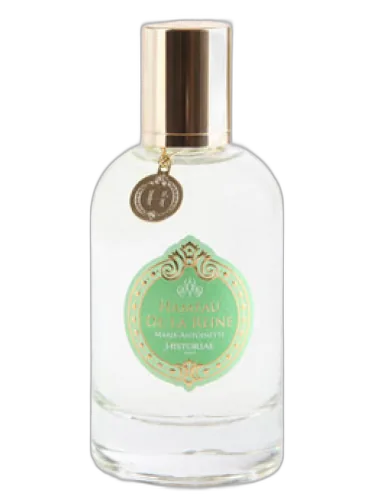

Hameau De La Reine Historiae
At a glance
Is Hameau De La Reine Historiae worth trying?
Hameau de la Reine by Historiae is a Floral Green fragrance for women.
- Best match
- Special Occasion wear in Spring
- Performance feel
- Good longevity with Moderate sillage
- Signature profile
- green, aromatic, fresh spicy with Tomato Leaf, Black currant leaf, Fig Leaf
The first impression
Hameau de la Reine by Historiae is a Floral Green fragrance for women. Hameau de la Reine was launched in 2012. The nose behind this fragrance is Bertrand Duchaufour. Top notes are Tomato Leaf, Black currant leaf, Fig Leaf and Bergamot; middle notes are Ivy, Galbanum, Mock Orange, Geranium, Peony and Rose; base notes are Vetiver, White Wood, Musk, Honey and Patchouli.
What shapes the scent
The perfumer behind it

Bertrand Duchaufour
Bertrand Duchaufour is a renowned French perfumer with a prolific career spanning many brands. He has created fragrances for Acqua di Parma, including Blu Mediterraneo - Cipresso Di Toscana and Colonia Assoluta, as well as for Aedes de Venustas, such as Café Tabac and Copal Azur. His style is known for its complexity and use of natural ingredients.
Notes pyramid
Top Notes
First impression · 15-30 min
 Tomato Leaf
 Black currant leaf
 Fig Leaf
 Bergamot
Heart Notes
Core character · 2-4 hours
 Ivy
Ivy
 Galbanum
 Mock Orange
 Geranium
 Peony
Peony
 Rose
Rose
Base Notes
Lasting impression · 4+ hours
 Vetiver
 White Wood
 Musk
Musk
 Honey
Honey
 Patchouli
The mood it creates
The Lover Archetype: Portrait of Hameau De La Reine Historiae
Essence
This person is most closely aligned with the Enchantress-a figure who weaves reality with memory, allure with melancholy. The Enchantress is not merely seductive; she is a curator of beauty, a guardian of the past, and a conjurer of atmospheres. Hameau De La Reine Historiae, with its pastoral elegance and whispers of 18th-century Versailles, mirrors her essence: a soul suspended between the idyllic and the ephemeral.
She does not merely wear fragrance-she embodies it. The scent’s notes of rose, hay, and warm wood are not just olfactory preferences but extensions of her inner world. Like the queen’s hamlet at Versailles, she cultivates an existence that is both refined and deliberately removed from the mundane.
Style & Aesthetic
Her tastes are an intricate tapestry of the romantic and the historical. She surrounds herself with objects that carry patina-antique books with foxed edges, porcelain teacups with hairline cracks, dried flowers pressed between pages. Her wardrobe favors flowing silks and muted pastels, garments that seem to belong to another era without descending into costume.
Philosophically, she is drawn to the idea of eternal recurrence-not in Nietzsche’s exact sense, but in her belief that beauty, once lost, can be resurrected through memory. She does not fear time; she seeks to outwit it by preserving moments like pressed petals.
Her relationships are deep but selective. She does not suffer fools, nor does she tolerate those who dismiss beauty as frivolity. Her friendships are slow to form but enduring, built on shared sensibilities rather than convenience. In love, she is neither possessive nor indifferent-she is a muse who demands to be met on her own terms.
Shadow
Yet the Enchantress is not without her shadows. Her reverence for the past can slip into escapism-a reluctance to engage with the present unless it meets her aesthetic standards. She may dismiss modernity as vulgar, refusing to acknowledge that even the past was once someone else’s present.
Her idealism can curdle into disillusionment. When reality fails to match her visions, she withdraws, constructing ever more elaborate retreats in her mind. She risks becoming a ghost in her own life, haunting the edges of the world rather than living in it.
There is also a quiet arrogance in her discernment. She may mistake her refined tastes for moral superiority, quietly scorning those who lack her sensibilities. Her disdain for the ordinary can make her seem aloof, even cruel, to those who do not share her obsessions.
Conclusion
Her greatest strength is her ability to transform the ordinary into the extraordinary. A simple walk through an autumn garden becomes a meditation on impermanence; a faded letter is not just paper but a relic of human longing. She sees meaning where others see only objects.
She is not passive in her nostalgia-she actively shapes her surroundings to reflect her inner vision. Her home is not a museum but a living tableau, where every object has been chosen with intention. She does not merely consume art; she inhabits it.
Her sensitivity grants her an almost preternatural empathy. She intuits unspoken sorrows in others, offering not solutions but silent understanding. She is the confidante who listens without judgment, the friend who remembers the anniversaries of forgotten griefs.
If you like this, try these
Fragrances with a comparable profile - shared accords, notes, and character.

Maison Martin Margiela
On A Date Maison Martin Margiela
Shared top notes: bergamot
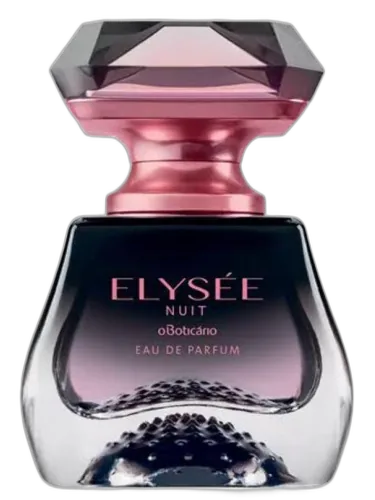
O Boticário
Elysée Nuit O Boticário
Shared top notes: bergamot
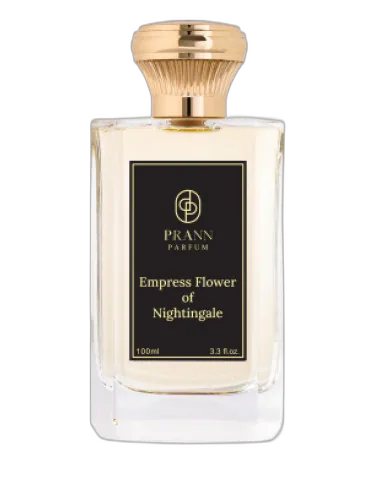
Prann
Empress Flower Of Nightingale Prann
Shared heart notes: geranium, peony, rose
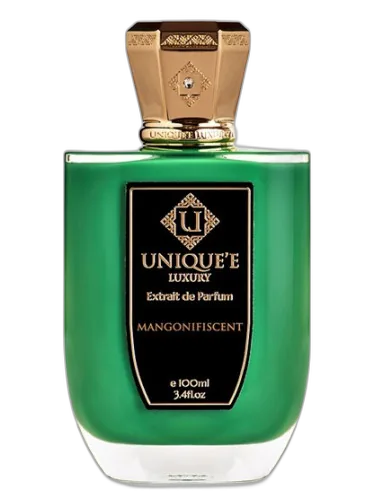
Unique'e Luxury
Mangonifiscent Unique'e Luxury
Shared top notes: bergamot
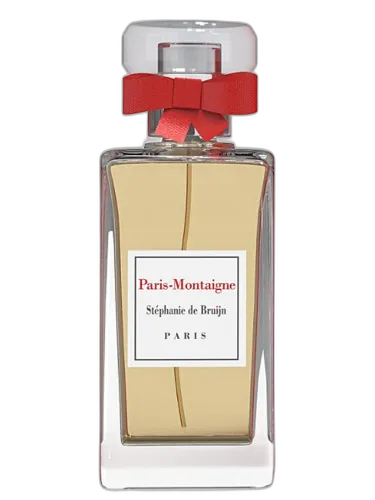
Stéphanie de Bruijn - Parfum sur Mesure
Paris – Montaigne Stéphanie De Bruijn - Parfum Sur Mesure
Shared top notes: bergamot