
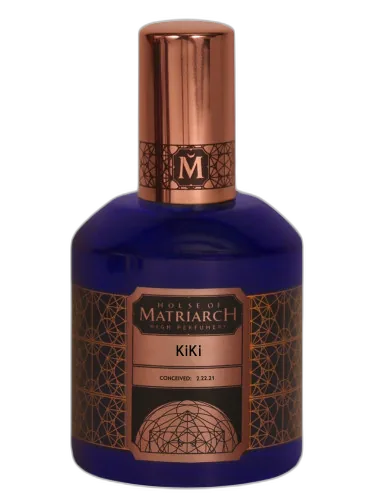
Kiki House Of Matriarch
At a glance
Is Kiki House Of Matriarch worth trying?
KiKi by House of Matriarch is a fragrance for women and men.
- Best match
- Evening wear in Fall
- Performance feel
- Very Good longevity with Moderate sillage
- Signature profile
- powdery, violet, green with Parma Violet, Matcha Tea, Mushroom
The first impression
KiKi by House of Matriarch is a fragrance for women and men. KiKi was launched in 2021. The nose behind this fragrance is Christi Meshell. Top notes are Parma Violet, Matcha Tea, Mushroom and Star Anise; middle notes are Oolong tea, Rose Petals and Woody Notes; base notes are Tea, Iris, Sandalwood, Tonka Bean and Myrrh.
What shapes the scent
The perfumer behind it

Christi Meshell
Christi Meshell is the founder and perfumer of House of Matriarch, a niche fragrance house based in the Pacific Northwest. Her extensive catalog includes A World Of Blue, Albatross, Alpha, Amanita, Amberchris, Ambre Vie, and Antimony. Her scents are known for their natural and organic ingredients, often inspired by the landscapes of the region.
Notes pyramid
Top Notes
First impression · 15-30 min
 Parma Violet
 Matcha Tea
 Mushroom
 Star Anise
Heart Notes
Core character · 2-4 hours
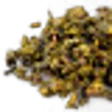 Oolong tea
Rose Petals
Oolong tea
Rose Petals
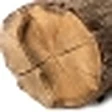 Woody Notes
Base Notes
Lasting impression · 4+ hours
 Tea
Tea
 Iris
Iris
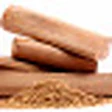 Sandalwood
 Tonka Bean
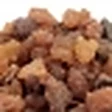 Myrrh
Myrrh
The mood it creates
The Alchemist Archetype: Portrait of Kiki House Of Matriarch
Essence
This person is an Alchemist-a seeker of transformation, a weaver of the unseen into the tangible. They are drawn to Kiki by House of Matriarch not merely for its scent, but for its mystique, its defiance of convention, its suggestion of something sacred hidden beneath the surface. The Alchemist does not wear fragrance; they inhabit it, as if it were an elixir distilled from their own essence.
They are the kind of person who believes in the alchemy of experience-that life is not just lived, but transmuted. They see the mundane as raw material waiting to be refined into gold. This is not mere idealism; it is a quiet insistence that beauty and meaning must be crafted, not passively received.
Style & Aesthetic
Their style is an exercise in controlled eccentricity. They favor textures that tell a story-vintage silks, hand-carved jewelry, garments that seem to carry whispers of another time. Their home is a curated sanctuary, where every object is chosen not for trend but for resonance: a well-worn book of poetry, a single black orchid in a ceramic vase, the faintest trace of incense lingering in the air.
Music, for them, is not background noise but a ritual. They might lose themselves in the haunting minimalism of Arvo Pärt or the raw, untamed energy of early PJ Harvey. Their taste in art leans toward the symbolic-surrealist paintings, alchemical engravings, anything that hints at hidden layers.
Their daily life is a series of small ceremonies. Morning coffee is not just caffeine but a meditation; a walk is not just exercise but a chance to observe the play of light on pavement. They thrive in liminal spaces-dawn, dusk, the quiet hours when the world feels suspended between realities.
Professionally, they are often drawn to creative or esoteric fields-perfumery, writing, psychotherapy, or even something unconventional like herbalism or tarot reading. They resist the 9-to-5 not out of laziness, but because they need work that feels like an extension of their soul.
Philosophy & Values
They reject the notion that life must be reduced to utility. For them, existence is a canvas, and meaning is not found but forged. They are drawn to philosophies that embrace paradox-Zen koans, Jungian depth psychology, the idea that darkness is not the absence of light but its necessary counterpart.
They value authenticity above all, but their definition of authenticity is fluid. To them, the self is not a fixed entity but a work in progress, shaped by will and introspection. They distrust dogma, preferring the open-ended question to the rigid answer.
Relationships
They attract others effortlessly, yet remain just out of reach. Their charm lies in their ability to make people feel seen, as if they alone understand some hidden truth about them. But this very quality can become a barrier-their relationships are often intense but fleeting, as if they fear the weight of permanence.
Romantically, they are drawn to those who mirror their own complexity. They crave depth but may sabotage stability, mistaking comfort for stagnation. Their shadow emerges here: a tendency to romanticize the idea of connection while resisting its demands.
Shadow
Their greatest strength-their ability to transform the ordinary into the extraordinary-can become their cage. In their quest for depth, they may dismiss simplicity as shallowness. Their love of symbolism can turn into escapism, where reality is always something to be decoded rather than lived.
They may also struggle with a subtle arrogance, a belief that their sensitivity makes them superior to those who live more straightforwardly. This is their shadow: the danger of mistaking obscurity for wisdom, of preferring the appearance of depth to the messiness of real engagement.
Conclusion
The lover of Kiki is neither purely artist nor mystic, but something in between-a modern alchemist who seeks to turn the base metal of existence into something luminous. Their flaw is their virtue taken to excess: the refusal to accept that some things need no transmutation to be beautiful.
Yet, in their best moments, they remind us that life is not just to be endured, but enchanted. And perhaps that is the greatest alchemy of all.
If you like this, try these
Fragrances with a comparable profile - shared accords, notes, and character.
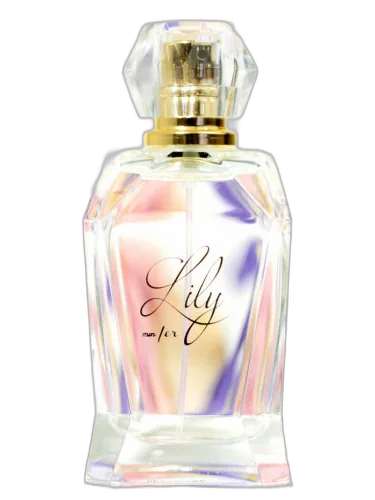
Liliana Deschamps
Lily Mon 1er Liliana Deschamps
Shared heart notes: rose petals
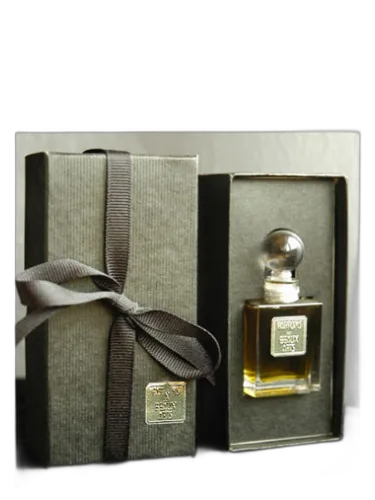
DSH Perfumes
June Bride Dsh Perfumes
Shared base notes: iris, sandalwood
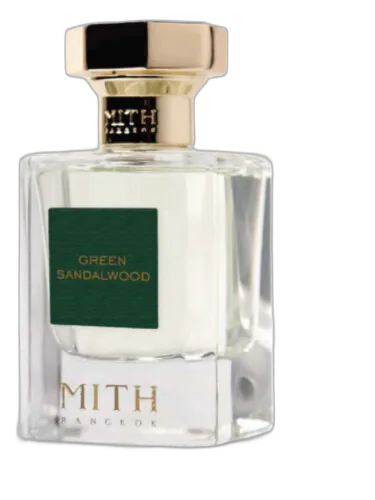
Mith
Green Sandalwood Mith
Shared base notes: sandalwood

Wide Society
Nubes Wide Society
Shared base notes: myrrh, sandalwood, tonka bean
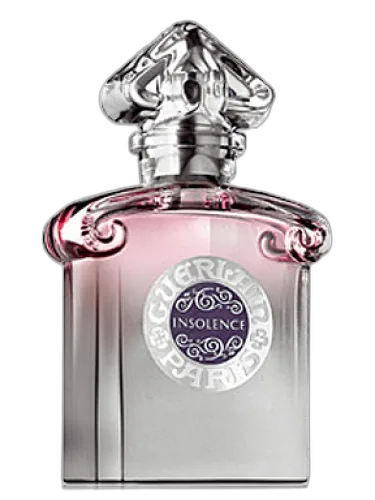
Guerlain
Insolence Limited Edition Guerlain
Shared base notes: iris, sandalwood, tonka bean