
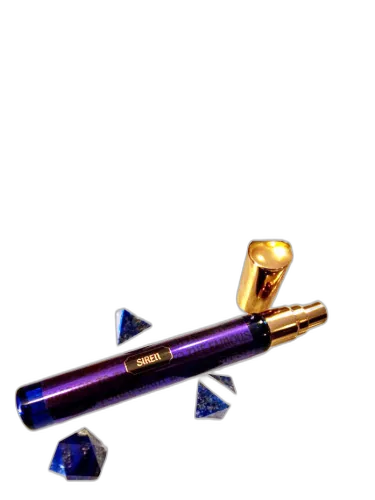

Siren House Of Matriarch
At a glance
Is Siren House Of Matriarch worth trying?
Siren by House of Matriarch is a Floral Woody Musk fragrance for women and men.
- Best match
- Evening, Special Occasion wear in Spring, Fall
- Performance feel
- Very Good longevity with Moderate sillage
- Signature profile
- woody, powdery, iris with Saffron, Narcissus, Iris
The first impression
Siren by House of Matriarch is a Floral Woody Musk fragrance for women and men. Siren was launched in 2017. The nose behind this fragrance is Christi Meshell. Top notes are Saffron and Narcissus; middle notes are Iris, Tea Rose, Cedar and Orange Blossom; base notes are Sandalwood, Moroccan Rose, Ambrette (Musk Mallow), Agarwood (Oud) and Amber.
What shapes the scent
The perfumer behind it

Christi Meshell
Christi Meshell is the founder and perfumer of House of Matriarch, a niche fragrance house based in the Pacific Northwest. Her extensive catalog includes A World Of Blue, Albatross, Alpha, Amanita, Amberchris, Ambre Vie, and Antimony. Her scents are known for their natural and organic ingredients, often inspired by the landscapes of the region.
Notes pyramid
Top Notes
First impression · 15-30 min
 Saffron
 Narcissus
Heart Notes
Core character · 2-4 hours
 Iris
Iris
 Tea Rose
 Cedar
Cedar
 Orange Blossom
Base Notes
Lasting impression · 4+ hours
 Sandalwood
Moroccan Rose
Sandalwood
Moroccan Rose
 Ambrette (Musk Mallow)
 Agarwood (Oud)
 Amber
Amber
The mood it creates
The Lover Archetype: Portrait of Siren House Of Matriarch
Essence
To wear Siren by House of Matriarch is to embrace the intoxicating duality of allure and danger-a fragrance that does not whisper but commands. The person who chooses this scent is no mere admirer of perfumes; they are a conjurer of presence, a wielder of magnetism. Their essence is that of the Enchantress, a Jungian archetype that embodies seduction, transformation, and the power to draw others into their orbit.
Shadow
But every enchantment has its cost. The Enchantress’s greatest strength-their ability to captivate-can become their greatest weakness. They risk becoming trapped in their own performance, mistaking the persona for the self. There is a hollowness that can creep in when one is too accustomed to being admired rather than known.
Their charm can curdle into manipulation, their mystery into evasion. They may grow impatient with those who cannot keep up with their shifting selves, dismissing them as dull or unworthy. And in their pursuit of transformation, they may lose sight of what is real, mistaking illusion for truth.
Their relationships, while intense, can be fleeting-not because they lack depth, but because they fear stagnation. The moment something becomes predictable, they feel the urge to reinvent, to escape. This can leave others wounded in their wake, wondering if they were ever truly seen.
Conclusion
This is a person who understands the alchemy of influence. Their tastes are refined but never conventional-they prefer the darkly poetic over the merely pretty. Their wardrobe is a study in contrasts: flowing silks that suggest movement, sharp tailoring that conveys precision, and perhaps a single piece of antique jewelry, heavy with history. They do not follow trends; they create them, or else they ignore them entirely.
Their philosophy is one of self-creation. They believe in the fluidity of identity, that a person is not fixed but can be remade through will and artistry. They are drawn to the mystical, the esoteric-tarot, alchemy, or the works of Baudelaire and Rimbaud may occupy their bookshelves. Yet they are not mere dreamers; they are strategists, aware that beauty and charm are tools as much as they are pleasures.
In relationships, they are magnetic but elusive. They inspire devotion but rarely offer permanence. Their lovers often speak of them in fragments-a glance, a phrase, a night that felt like a spell. They do not give themselves easily, for to do so would diminish their power. Yet those who earn their trust find a fiercely loyal companion, one who understands the depths of human emotion because they have navigated them so often.
If you like this, try these
Fragrances with a comparable profile - shared accords, notes, and character.
Granado
Violeta Granado
Shared heart notes: cedar, iris
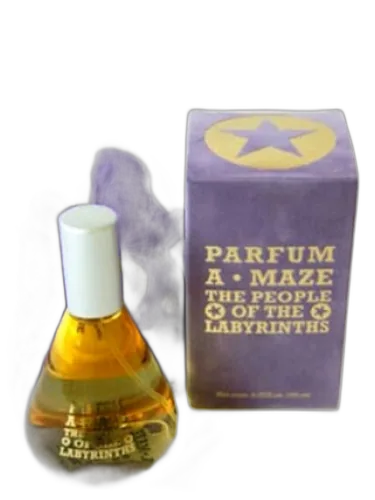
The People Of The Labyrinths
A.maze The People Of The Labyrinths
Shared top notes: saffron
Al-Kindi
Zâferan Al-kindi
Shared top notes: saffron
Ex Nihilo
Vendomania Ex Nihilo
Shared top notes: saffron
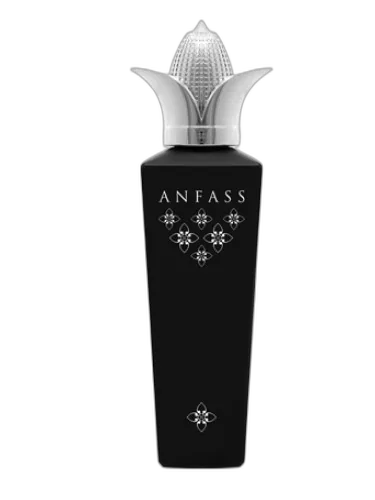
Anfas
El Zafran Anfas
Shared top notes: saffron