
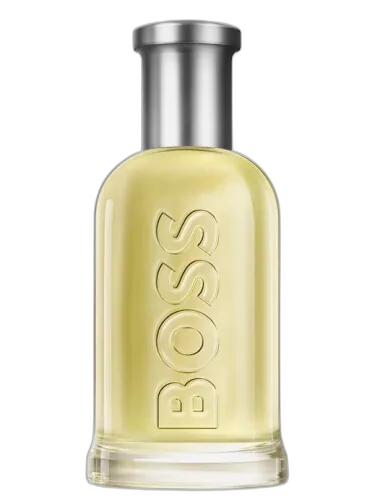
Boss Bottled Hugo Boss
Fragrance Story
Boss Bottled by Hugo Boss is a Woody Spicy fragrance for men. Boss Bottled was launched in 1998. Boss Bottled was created by Annick Menardo and Christian Dussoulier. Top notes are Apple, Plum, Bergamot, Lemon, Oakmoss and Geranium; middle notes are Cinnamon, Mahogany and Carnation; base notes are Vanilla, Sandalwood, Cedar, Vetiver and Olive Tree.
Composition Profile
About the Perfumer

Annick Menardo
Annick Menardo is a French perfumer known for her work at Firmenich and her bold, modern compositions. She often blends gourmand, woody, and leathery accords, creating fragrances that are both striking and wearable. Her portfolio includes the rich, smoky Figment Man for Amouage and the sophisticated, floral-amber Portrayal Woman, as well as the iconic Azzaro Visit.
Fragrance Notes
Top Notes
First impression · 15-30 min
 Apple
Apple
 Plum
Plum
 Bergamot
 Lemon
Lemon
 Oakmoss
 Geranium
Heart Notes
Core character · 2-4 hours
 Cinnamon
 Mahogany
 Carnation
Base Notes
Lasting impression · 4+ hours
 Vanilla
 Sandalwood
 Cedar
Cedar
 Vetiver
 Olive Tree
Character Profile
The Sovereign Archetype: Portrait of Boss Bottled Hugo Boss
Essence
The one who favors Boss Bottled by Hugo Boss is, at their core, a Ruler-an archetype of control, competence, and authority. They are the architect of their own destiny, a person who thrives on structure, influence, and the quiet confidence of knowing their worth. The scent itself-warm, woody, with a refined spice-mirrors their essence: polished but assertive, traditional yet subtly daring.
This is not the flamboyant conqueror or the tyrant; this is the executive, the strategist, the one who commands respect not through force but through presence. They do not need to shout; their aura speaks for them.
Style & Aesthetic
Their world is one of measured ambition. They prefer clean lines-both in their wardrobe and in their life. Their home is modern but not sterile, with leather-bound books, dark wood furniture, and perhaps a well-curated whiskey collection. They dress sharply, favoring tailored suits or crisp, minimalist casualwear. Every detail is intentional, from the knot of their tie to the shine of their shoes.
Professionally, they excel in leadership roles-finance, law, entrepreneurship-where strategy and influence matter. They are not reckless gamblers but calculated risk-takers, always thinking three moves ahead. Their philosophy is pragmatic: Power is not taken; it is earned through discipline and foresight.
Philosophy & Values
They believe in meritocracy-that effort and intelligence should dictate one’s place in the world. They respect tradition but are not bound by it; they adapt what works and discard what doesn’t. Their moral compass is firm but not rigid; they understand that rules are tools, not chains.
In relationships, they are loyal but expect the same in return. They do not suffer fools gladly, yet they are not cruel-merely impatient with incompetence. Their love is steady, not effusive; they show care through action rather than grand gestures.
Shadow
Yet, the Ruler’s strength is also their weakness. Their need for control can calcify into rigidity. They may mistake dominance for leadership, dismissing dissent as disloyalty. Their confidence can harden into arrogance, their pragmatism into coldness.
Beneath the composed exterior, there is sometimes a fear-of chaos, of irrelevance, of losing their grip. They may struggle to relinquish control, even when it would serve them. Vulnerability is a foreign land, and they would rather stand alone than admit uncertainty.
Conclusion
The Ruler is both admired and isolated, respected but not always loved. They build empires but may forget to enjoy them. Yet, in their best moments, they are the steady hand in the storm, the one who leads not for glory, but because someone must.
And when they walk into a room, the air shifts-not with intimidation, but with the quiet certainty of a person who knows their place in the world.
Similar Fragrances
Fragrances with a comparable profile - shared accords, notes, and character.
Hugo Boss
Boss Bottled Hugo Boss
Shared accords: aromatic, cinnamon, citrus
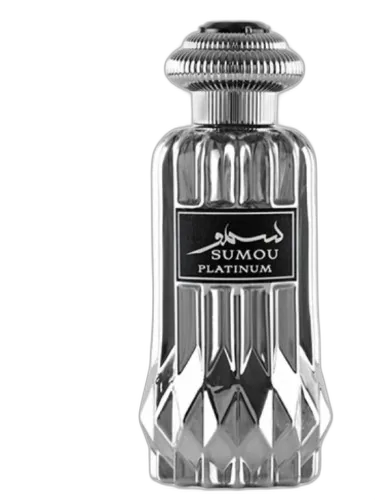
Lattafa Perfumes
Sumou Platinum Lattafa Perfumes
Shared accords: aromatic, cinnamon, citrus
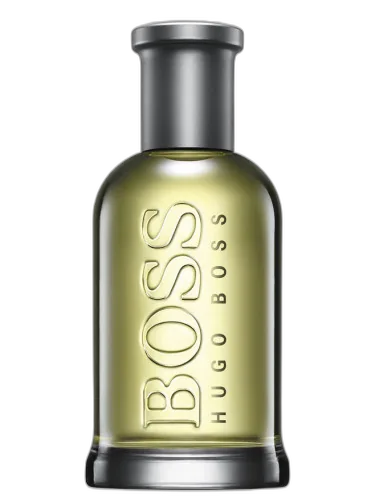
Hugo Boss
Boss Bottled 20th Anniversary Edition Hugo Boss
Shared accords: aromatic, cinnamon, citrus
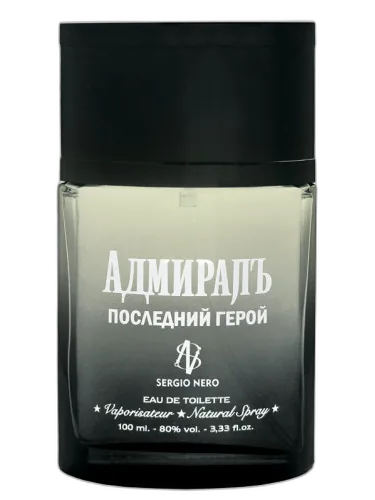
Sergio Nero
Admiral Posledniy Geroy Sergio Nero
Shared accords: aromatic, cinnamon, citrus

El Nabil
Musc Azur El Nabil
Shared accords: cinnamon, fresh, green