
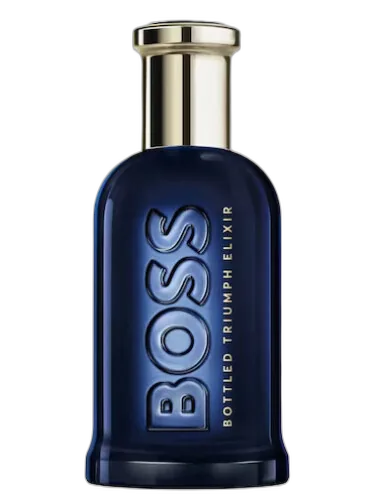

Boss Bottled Triumph Elixir Hugo Boss
At a glance
Is Boss Bottled Triumph Elixir Hugo Boss worth trying?
Boss Bottled Triumph Elixir by Hugo Boss is a fragrance for men.
- Best match
- Evening wear in Fall
- Performance feel
- Very Good longevity with Strong sillage
- Signature profile
- patchouli, woody, earthy with Violet Leaf, Vetiver, Patchouli Leaf
The first impression
Boss Bottled Triumph Elixir by Hugo Boss is a fragrance for men. This is a new fragrance. Boss Bottled Triumph Elixir was launched in 2024. Boss Bottled Triumph Elixir was created by Annick Menardo and Suzy Le Helley. Top note is Violet Leaf; middle note is Vetiver; base note is Patchouli Leaf.
What shapes the scent
The perfumer behind it

Annick Menardo
Annick Menardo is a French perfumer known for her work at Firmenich and her bold, modern compositions. She often blends gourmand, woody, and leathery accords, creating fragrances that are both striking and wearable. Her portfolio includes the rich, smoky Figment Man for Amouage and the sophisticated, floral-amber Portrayal Woman, as well as the iconic Azzaro Visit.
Notes pyramid
Top Notes
First impression · 15-30 min
 Violet Leaf
Heart Notes
Core character · 2-4 hours
 Vetiver
Base Notes
Lasting impression · 4+ hours
 Patchouli Leaf
The mood it creates
The Sovereign Archetype: Portrait of Boss Bottled Triumph Elixir Hugo Boss
Essence
The person who chooses Boss Bottled Triumph Elixir is one who commands presence without overt dominance. This fragrance-rich, warm, and assertive, yet refined-speaks of a man who understands power as something to be wielded with precision rather than brute force. His essence aligns most closely with the Sovereign, an archetype rooted in mastery, leadership, and the quiet confidence of one who has earned his place.
His life is a testament to deliberate action. He does not stumble into success; he constructs it, brick by brick, with the patience of a strategist and the vision of a king. His tastes are classical yet modern-tailored suits that suggest authority without ostentation, a preference for understatement over flash. He values craftsmanship, whether in his watch, his whiskey, or the way he conducts himself in conversation.
Philosophically, he believes in order as the foundation of meaning. Chaos is not an enemy to be feared but a force to be tamed, shaped into something productive. His values center on discipline, responsibility, and the unspoken contract of leadership: to those who follow, he owes guidance; to those who resist, he offers no indulgence.
In relationships, he is neither overly sentimental nor coldly detached. He expects loyalty but gives it in equal measure. His love is not a wildfire but a steady flame-reliable, enduring, but never reckless. He chooses partners who understand the weight of commitment, who do not mistake his restraint for indifference.
Shadow
Yet the Sovereign’s strength is also his vulnerability. His need for control can harden into rigidity, his confidence into arrogance. He may mistake his own judgment for absolute truth, dismissing dissent as ignorance rather than considering its merit. The very discipline that elevates him can isolate him-few dare to challenge him, and fewer still truly know him.
There is a tension in his nature: the desire to be respected can slip into a fear of being irrelevant. He may cling to tradition not out of wisdom but insecurity, mistaking adaptability for weakness. The fragrance he wears-bold, unyielding-mirrors this duality. It is both his armor and his blind spot, a reminder that even the most self-assured rulers must sometimes question their own throne.
Conclusion
His lifestyle is one of measured indulgence. He enjoys the finer things but does not drown in them. A well-aged scotch, a thoughtfully curated library, the silence of an early morning before the world demands his attention-these are his luxuries. He does not chase pleasure for its own sake but seeks experiences that deepen his understanding of the world.
Yet beneath the composed exterior lies a man who knows the weight of his choices. Every victory is tempered by the knowledge that power is fleeting; every decision carries consequence. He is not naive enough to believe in permanence, but he is wise enough to act as though his legacy matters.
In the end, the man who wears Boss Bottled Triumph Elixir is not merely playing a role-he has become it. The Sovereign does not rule because he craves dominion, but because he cannot imagine a life without purpose. And in that purpose, he finds both his greatness and his limits.
If you like this, try these
Fragrances with a comparable profile - shared accords, notes, and character.
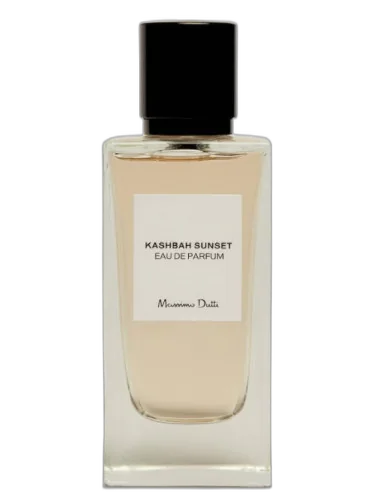
Massimo Dutti
Kashbah Sunset Eau De Parfum Massimo Dutti
Shared heart notes: vetiver
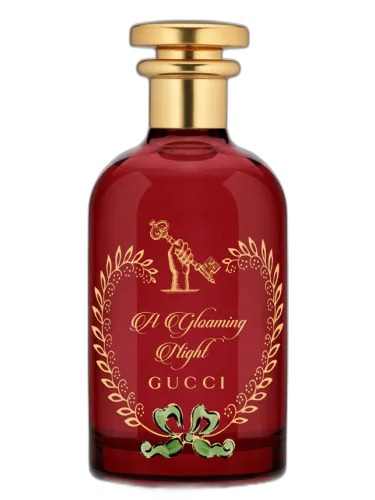
Gucci
A Gloaming Night Gucci
Shared heart notes: vetiver
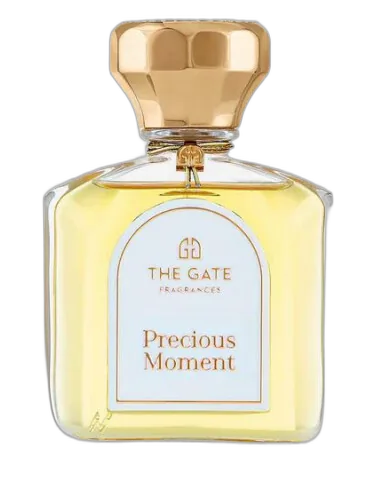
The Gate Fragrances Paris
Precious Moment Extrait De Parfum The Gate Fragrances Paris
Shared base notes: patchouli leaf
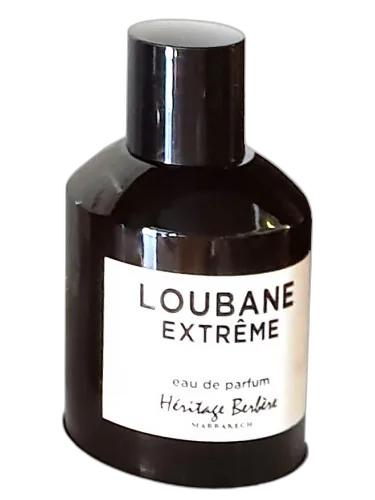
Héritage Berbère
Loubane Extreme Héritage Berbère
Shared heart notes: vetiver
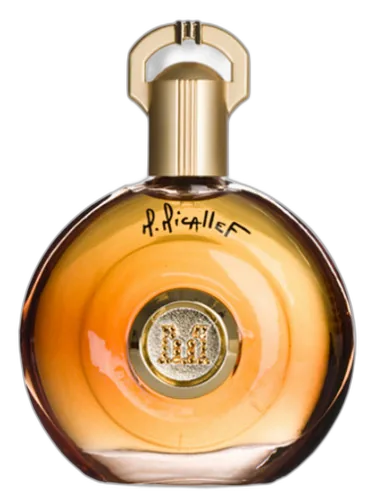
M. Micallef
Patchouli M. Micallef
Shared top notes: violet leaf