
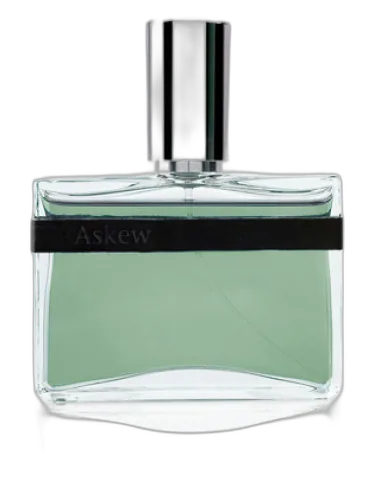

Askew Humiecki & Graef
At a glance
Is Askew Humiecki & Graef worth trying?
Askew by Humiecki & Graef is a Leather fragrance for men.
- Best match
- Evening wear in Fall, Winter
- Performance feel
- Good longevity with Strong sillage
- Signature profile
- leather, warm spicy, citrus with Leather, Ginger, Grapefruit
The first impression
Askew by Humiecki & Graef is a Leather fragrance for men. Askew was launched in 2009. Askew was created by Christophe Laudamiel and Christophe Hornetz.
What shapes the scent
The perfumer behind it

Christophe Hornetz
Christophe Hornetz is a perfumer known for his work with the niche brand Humiecki & Graef. He created fragrances such as Abime, Askew, and Blask, which are noted for their avant-garde and conceptual approach. His compositions often explore abstract themes and unusual olfactory combinations.
Notes pyramid
All Notes
Complete scent profile
 Leather
 Ginger
 Grapefruit
 Vetyver
 Birch
Birch
 Cardamom
 Mimosa
The mood it creates
The Alchemist Archetype: Portrait of Askew Humiecki & Graef
Essence
The Alchemist seeks transformation, transmuting base elements into gold. Askew embodies this archetype through its daring juxtaposition of leather, ginger, and grapefruit with warm spices and earthy vetiver. It is a scent of controlled chaos, where the raw and refined collide. The wearer is not content with the surface; they delve into the depths, seeking to understand the hidden connections between disparate things. This fragrance is their crucible, a place where opposites are forged into a singular, compelling identity.
Style & Aesthetic
Their aesthetic is one of deliberate, studied imperfection. They favor textures that tell a story: worn leather, raw silk, unpolished wood. Their wardrobe is a curated collection of pieces that have been lived in, each with a history. They might pair a perfectly tailored jacket with scuffed boots, finding beauty in the contrast. Their spaces are filled with objects that have been collected, not bought-a fossil, a piece of driftwood, a vintage book. They understand that true style is not about newness, but about the patina of time and experience.
Philosophy & Values
They believe in the power of transformation and the beauty of the process. For them, the journey is as important as the destination. They value authenticity over perfection, and complexity over simplicity. They are drawn to the alchemical principle of "solve et coagula"-dissolve and coagulate-understanding that creation often requires destruction. They are skeptical of easy answers and quick fixes, preferring to sit with discomfort and uncertainty until a new synthesis emerges. Their core value is integrity, the alignment of inner truth with outer expression.
Relationships
In relationships, they are drawn to those who are also on a path of self-discovery. They seek partners who are not afraid of their own shadows, who are willing to engage in deep, sometimes difficult conversations. They are loyal but require space for their own transformations. They can be intense, their presence demanding a certain level of engagement. They are not interested in superficial connections; they seek a bond that can withstand the fires of change. They are the friend who will challenge you, not just comfort you.
Lifestyle
Their life is a series of experiments. They might be a chef who deconstructs classic dishes, a musician who blends genres, or a scientist who questions established paradigms. They have rituals that ground them-a morning meditation, a daily walk, a specific tea ceremony-but these are not rigid; they evolve. They are drawn to places of transition: train stations, airports, the edges of cities. They find inspiration in the liminal, the spaces between. Their home is a laboratory of the self, filled with books, instruments, and half-finished projects.
Shadow
The shadow of the Alchemist is the danger of becoming lost in the process. They can become so focused on transformation that they never arrive at a stable self. They may be prone to cynicism, seeing everything as a raw material to be manipulated, and struggle to appreciate simple, unmediated joy. Their intensity can be isolating, and they may push away those who cannot keep up with their constant evolution. The risk is that they become a perpetual outsider, forever in the crucible, never emerging as gold.
Conclusion
Askew is not a fragrance for the faint of heart. It is a scent for the Alchemist, the one who is willing to walk through the fire of transformation. It is a reminder that true beauty is not found in purity, but in the complex, often messy, process of becoming. To wear it is to embrace the journey of self-creation, to find the gold hidden in the grit.
If you like this, try these
Fragrances with a comparable profile - shared accords, notes, and character.

Ojar
Routes Nomades Eau De Parfum Ojar
Shared top notes: cardamom, ginger
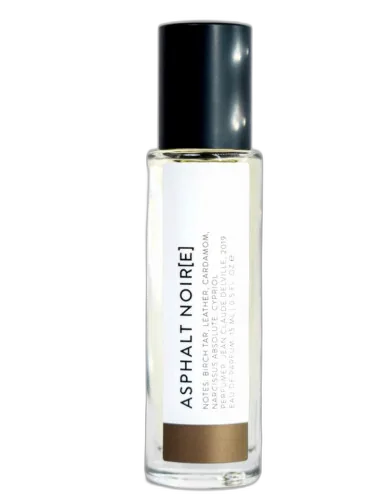
The Society of Scent
Asphalt Noir(e) The Society Of Scent
Shared top notes: cardamom, leather

Le Labo
Cuir 28 Dubai Le Labo
Shared top notes: leather
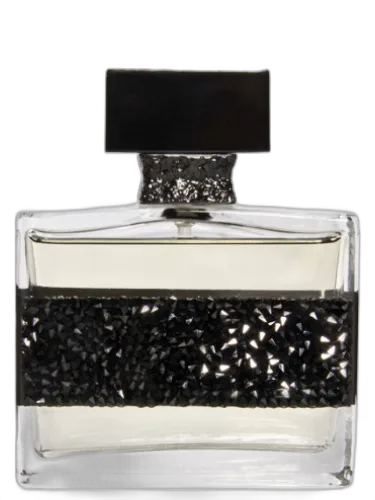
M. Micallef
Jewel For Him M. Micallef
Shared top notes: cardamom, grapefruit
JAFRA
Yitsu Master Jafra
Shared top notes: cardamom