


White Oud Illuminum
At a glance
Is White Oud Illuminum worth trying?
White Oud by Illuminum is a Woody Spicy fragrance for women and men.
- Best match
- Evening wear in Fall
- Performance feel
- Very Good longevity with Moderate sillage
- Signature profile
- woody, oud, aromatic with Coriander, Cumin, Java vetiver oil
The first impression
White Oud by Illuminum is a Woody Spicy fragrance for women and men. Top notes are Coriander and Cumin; middle note is Java vetiver oil; base notes are Laotian Oud, Musk and Oakmoss.
What shapes the scent
The perfumer behind it

Notes pyramid
Top Notes
First impression · 15-30 min
 Coriander
 Cumin
Cumin
Heart Notes
Core character · 2-4 hours
Java vetiver oil
Base Notes
Lasting impression · 4+ hours
 Laotian Oud
 Musk
Musk
 Oakmoss
The mood it creates
The Sage Archetype: Portrait of White Oud Illuminum
Essence
White Oud Illuminum is a fragrance of paradox-warm yet aloof, opulent yet restrained. It carries the smoky depth of oud, softened by creamy vanilla and brightened by crisp citrus. It does not announce itself with brashness but lingers like a half-remembered dream, subtle yet impossible to ignore. The person who chooses this scent is drawn to its duality-its ability to be both profound and elusive.
Style & Aesthetic
Their style is deliberate, a visual extension of their inner world. They favor clean lines, muted luxury, and textures that reward closer inspection-cashmere, aged leather, unpolished stone. Their wardrobe is not large, but each piece is chosen with the care of a philosopher selecting a book for their library.
Their home is a temple of serenity, where every object has earned its place. A single piece of abstract art hangs on the wall, not for decoration but for provocation. Their bookshelf is sparse but heavy with well-worn volumes-Nietzsche, Rilke, Borges-works that demand engagement rather than passive consumption.
In relationships, they are selective. They do not suffer fools gladly, but those who earn their respect find a loyal, if occasionally distant, companion. Their love is not effusive but profound, expressed in thoughtful gestures rather than grand declarations. They are drawn to people who mirror their own depth-those who understand that silence can be a form of intimacy.
Shadow
Yet, like all archetypes, the Sage has its shadow. Their pursuit of refinement can curdle into elitism, their love of solitude into isolation. They may mistake detachment for wisdom, dismissing emotions as messy distractions. At their worst, they become the Hermit, retreating so far into their own mind that they forget how to touch the world.
Their flaw is not malice but rigidity-an unwillingness to embrace life’s chaos. They may disdain spontaneity, fearing it as a threat to their carefully constructed equilibrium. Their greatest challenge is to learn that wisdom is not only found in stillness but also in surrender-to laughter, to passion, to the unpredictable currents of human connection.
Conclusion
At their core, this individual is defined by the Sage archetype. They are a seeker of wisdom, a collector of refined experiences, and a curator of their own inner world. Knowledge is their sanctuary, beauty their compass. They do not merely consume ideas; they distill them, turning raw experience into something polished and meaningful.
Their philosophy is one of discernment-they believe in the power of depth over breadth, in the quiet authority of the well-chosen word, the perfectly placed object, the precisely measured silence. They are not easily swayed by trends, for their tastes are cultivated through introspection rather than external validation.
If you like this, try these
Fragrances with a comparable profile - shared accords, notes, and character.

Nautica
Latitude Longitude Nautica
Shared top notes: coriander

Yili Olfactory Art
Desert 沙漠 Yili Olfactory Art
Shared top notes: coriander, cumin
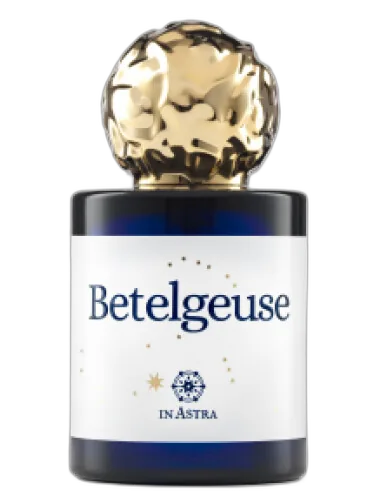
In Astra
Betelgeuse In Astra
Shared top notes: coriander

Dzintars
Edgars (эдгар) Dzintars
Shared top notes: coriander
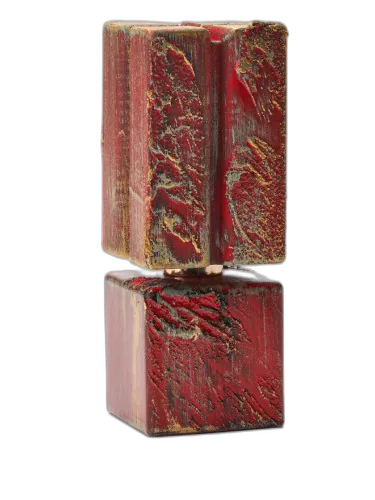
Adi Ale Van
The Book Of Wisdom - Elixir Fatal Adi Ale Van
Shared base notes: musk, oakmoss