


Telegrama Imaginary Authors
At a glance
Is Telegrama Imaginary Authors worth trying?
Telegrama by Imaginary Authors is a Aromatic Fougere fragrance for women and men.
- Best match
- Evening wear in Fall
- Performance feel
- Good longevity with Moderate sillage
- Signature profile
- powdery, lavender, woody with Lavender, Talc, Vanilla
The first impression
Telegrama by Imaginary Authors is a Aromatic Fougere fragrance for women and men. Telegrama was launched in 2019. The nose behind this fragrance is Josh Meyer.
What shapes the scent
The perfumer behind it

Josh Meyer
Josh Meyer founded Imaginary Authors and Dasein, creating fragrances such as A City On Fire, Winter Green, and A Whiff Of Waffle Cone. He also composed L.A. She Called But He Was Unreachable for Anthropologie. Meyer is known for his narrative-driven, evocative scents.
Notes pyramid
All Notes
Complete scent profile
 Lavender
 Talc
Talc
 Vanilla
 Teak Wood
 Amyris
 Linen
Linen
 Black Pepper
The mood it creates
The Wanderer Archetype: Portrait of Telegrama Imaginary Authors
Essence
Telegrama by Imaginary Authors is a fragrance that evokes nostalgia, distance, and quiet longing-a blend of black pepper, vanilla, and musk, wrapped in the crispness of typewriter ink and worn paper. It is neither loud nor timid, but rather exists in the liminal space between memory and possibility. The person who favors this scent is drawn to its duality: the warmth of familiarity and the chill of the unknown.
Style & Aesthetic
They are creatures of habit in small, deliberate ways-the same coffee shop every Sunday, the same pen for writing, the same record played at midnight when the world feels too loud. But their broader life is marked by change: sudden trips, career shifts, reinventions. They are not reckless, but they are willing to burn bridges if it means keeping their soul intact.
Work is either a calling or a cage-there is no middle ground. They thrive in creative fields where curiosity is rewarded, but they chafe under bureaucracy. If they cannot find meaning in their labor, they will abandon it, even at great cost.
Philosophy & Values
This person moves through the world with a quiet intensity, their mind always tracing invisible lines between ideas, places, and people. They are drawn to literature that explores existential themes-Borges, Pessoa, Woolf-works that dissolve the boundaries between reality and imagination. Their philosophy is not rigid but fluid, shaped by contradictions: they believe in both fate and free will, in love’s permanence and its inevitable transience.
They are not materialistic, yet they cherish objects with history-a vintage typewriter, a well-worn leather journal, a first edition of a book whose spine has softened with time. Their style leans toward the timeless rather than the trendy: tailored coats, soft cashmere, boots made for walking. They prefer muted colors, as if they are always half in shadow, half in light.
Relationships
In love and friendship, they are both present and distant. They crave deep connection but fear the weight of expectation. Their relationships are often epistolary in nature-long letters, late-night conversations, the kind of intimacy that exists in pauses as much as in words. They are drawn to people who mirror their complexity: those who can discuss Kierkegaard over whiskey but also sit in comfortable silence.
Yet their shadow emerges here as well. They may idealize people from afar, only to withdraw when reality fails to match the fantasy. They struggle with routine, sometimes leaving before they are left, mistaking stability for stagnation.
Shadow
Their greatest strength is their refusal to accept a life unlived. They see possibilities where others see dead ends, and their courage to step into the unknown is both inspiring and unsettling. But their shadow is the ghost that follows them-the fear that they will never truly belong, that their searching is just another form of running.
Yet perhaps this tension is what makes them who they are. The Seeker does not find peace in answers, but in the act of asking. And in the quiet hours, when the scent of Telegrama lingers on their skin, they are reminded that the journey itself is the destination-fragile, fleeting, and infinitely beautiful.
Conclusion
At their core, this individual embodies the Seeker-a Jungian archetype defined by restlessness, curiosity, and an insatiable hunger for meaning. The Seeker does not settle; they are forever in motion, whether physically, intellectually, or emotionally. They are the wanderer, the philosopher, the one who questions the map rather than following it.
Yet, like all archetypes, the Seeker has a shadow. Their relentless pursuit can become evasion-a refusal to commit, to plant roots, to accept that some answers are found not in movement but in stillness. They may romanticize the journey so deeply that they forget to arrive.
If you like this, try these
Fragrances with a comparable profile - shared accords, notes, and character.

LabSolue
212 Amyris Labsolue
Shared top notes: amyris, black pepper
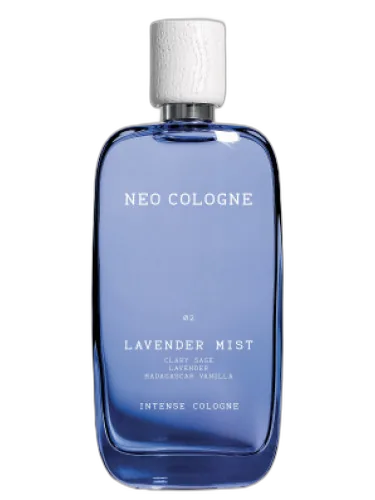
Neo Cologne
Lavender Mist Neo Cologne
Shared top notes: lavender, vanilla

Male Lab Pour Homme
Gantois Male Lab Pour Homme
Shared top notes: lavender

Lush
Lord Of Misrule Lush
Shared top notes: black pepper, vanilla

Prada
Luna Rossa Extreme Prada
Shared top notes: black pepper, lavender, vanilla