
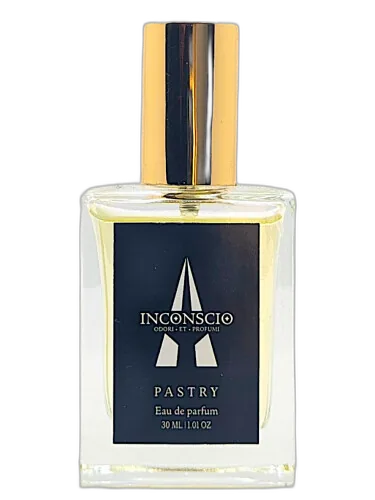

Pastry Inconscio Odori Et Profumi
At a glance
Is Pastry Inconscio Odori Et Profumi worth trying?
Pastry by Inconscio Odori et Profumi is a Citrus Gourmand fragrance for women and men.
- Best match
- Casual wear in Winter
- Performance feel
- Good longevity with Moderate sillage
- Signature profile
- citrus, sweet, vanilla with Lemon Zest, Tonka Bean, Custard
The first impression
Pastry by Inconscio Odori et Profumi is a Citrus Gourmand fragrance for women and men. This is a new fragrance. Pastry was launched in 2025. The nose behind this fragrance is Luigi Cacciatore.
What shapes the scent
The perfumer behind it

Luigi Cacciatore
Luigi Cacciatore is a perfumer known for his work with Inconscio Odori et Profumi, where he created La Notte, La Vucciria, Nero Gourmand, Pastry, and Tempesta Xiv. His fragrances often feature gourmand and dark elements. He is recognized for his bold and evocative style.
Notes pyramid
All Notes
Complete scent profile
 Lemon Zest
 Tonka Bean
 Custard
 Lemon Pie
 Vanilla Bean
 Caramel
 Biscuit
The mood it creates
The Innocent Archetype: Portrait of Pastry Inconscio Odori Et Profumi
Essence
To wear Pastry Inconscio Odori Et Profumi is to embrace the warmth of the hearth, the sweetness of indulgence, and the comfort of nostalgia. This fragrance-rich with the scent of baked goods, vanilla, and caramel-speaks to a soul who finds solace in the sensory pleasures of life. The person who adores this scent is not merely drawn to its sweetness, but to the deeper symbolism it carries: the archetype of the Nurturer, the one who feeds both body and spirit.
This individual thrives in spaces where warmth is cultivated-kitchens filled with the aroma of fresh bread, cozy corners with soft blankets, gatherings where laughter and food are shared freely. Their philosophy is simple yet profound: life should be savored, not merely endured. They believe in the power of small comforts to heal, to connect, to remind others that they are cared for.
Their tastes are tactile and nostalgic-they prefer the weight of a well-worn book, the texture of hand-knitted wool, the taste of a dessert that recalls childhood. Their style is unpretentious but deliberate, favoring soft fabrics, earthy tones, and subtle adornments that whisper rather than shout. They are drawn to art that evokes emotion-impressionist paintings, folk music, poetry that lingers like the aftertaste of honey.
In relationships, they are the steady presence, the one who remembers birthdays, who brings soup to the sick, who listens with patience. They derive fulfillment from making others feel seen and cherished. Their love language is service, expressed through acts of care-baking a cake for a friend’s sorrow, writing a letter to a distant loved one, holding space without judgment.
Shadow
Yet, like all archetypes, the Nurturer has a shadow. Their generosity can slip into self-neglect, their devotion into dependency. They may mistake their worth for their usefulness, believing they must earn love through endless giving. When unexamined, this leads to quiet resentment-the unspoken expectation that others should reciprocate in kind, though they rarely ask.
Their need to comfort can become a form of control-a subtle manipulation where care is given, but autonomy is stifled. "Eat, you’ll feel better," they say, unaware that not all wounds are healed by sugar. Their avoidance of conflict leads to passive-aggression, a sweetness that masks unspoken grievances. And when their efforts go unnoticed, they may retreat into martyrdom, lamenting that no one appreciates them-yet never voicing their needs directly.
The Nurturer’s greatest strength-their capacity for deep, unwavering care-is also their greatest vulnerability. They must learn that love is not a transaction, that their worth is inherent, not contingent on what they provide. The wisest among them come to understand that true nourishment is not just in feeding others, but in allowing themselves to be fed-to receive without guilt, to rest without shame.
They are the keepers of tenderness in a world that often forgets its value. And though their shadow may whisper that they are only as good as their last act of kindness, their light reminds them: to be soft is not to be weak. It is to choose, again and again, the sweetness of life-even when bitterness lingers.
If you like this, try these
Fragrances with a comparable profile - shared accords, notes, and character.
Akro
Bake Akro
Shared top notes: lemon zest

Somethin Special
Sugar Cookie Brulee Somethin Special
Shared accords: lactonic, sweet, vanilla
Theodoros Kalotinis
Lemon Tart Theodoros Kalotinis
Shared top notes: lemon zest

Ganache Parfums
Ice Cream Shoppe Ganache Parfums
Shared top notes: biscuit, caramel, tonka bean

Hilde Soliani
Crema Di Latte Hilde Soliani
Shared top notes: caramel