
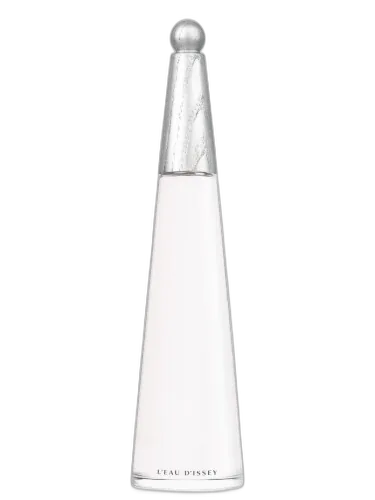

L'eau D'issey Eau De Parfum Intense Issey Miyake
At a glance
Is L'eau D'issey Eau De Parfum Intense Issey Miyake worth trying?
L'Eau d'Issey Eau de Parfum Intense by Issey Miyake is a Floral Green fragrance for women.
- Best match
- Casual wear in Summer
- Performance feel
- Good longevity with Moderate sillage
- Signature profile
- yellow floral, sweet, vanilla with Posidonia, Ylang Ylang, Vanilla
The first impression
L'Eau d'Issey Eau de Parfum Intense by Issey Miyake is a Floral Green fragrance for women. This is a new fragrance. L'Eau d'Issey Eau de Parfum Intense was launched in 2025. The nose behind this fragrance is Amandine Clerc-Marie. Top note is Posidonia; middle note is Ylang Ylang; base note is Vanilla.
What shapes the scent
The perfumer behind it

Amandine Clerc-Marie
Amandine Clerc-Marie is a French perfumer who trained at Givaudan and now works as a senior perfumer at Symrise. Her style often balances fresh, transparent accords with soft floral or citrus notes, creating versatile and wearable compositions. She is known for developing Angel Schlesser Pour Elle and its flankers, as well as the fruity-floral Scent Of Kiss My Heart for Armand Basi.
Notes pyramid
Top Notes
First impression · 15-30 min
 Posidonia
Heart Notes
Core character · 2-4 hours
 Ylang Ylang
Base Notes
Lasting impression · 4+ hours
 Vanilla
The mood it creates
The Archetype Archetype: Portrait of L'eau D'issey Eau De Parfum Intense Issey Miyake
Essence
The one who chooses L’Eau d’Issey Eau de Parfum Intense is not merely drawn to fragrance-they seek an olfactory philosophy. This scent, with its aquatic depth, smoky woods, and a whisper of spice, is the domain of The Sage, an archetype defined by wisdom, introspection, and an unshakable thirst for truth. They are the observer, the thinker, the one who deciphers the world before stepping into it. Their mind is their sanctuary, and their scent-cool yet complex-reflects the duality of their nature: serene on the surface, turbulent beneath.
Shadow
Yet wisdom untempered by warmth becomes cold. Their detachment, while a shield against chaos, can harden into emotional distance. They may dismiss feelings as irrational, mistaking their own objectivity for superiority. At their worst, they become the aloof critic, dissecting life without ever fully living it.
Their skepticism, though sharp, can curdle into cynicism. They may disdain those who live by instinct rather than analysis, forgetting that not all truths are reached through reason. Their greatest fear is being wrong-because their identity is so entwined with their intellect, a challenge to their knowledge feels like an attack on their self.
Conclusion
Their tastes are deliberate, never accidental. They prefer clean lines in design, spaces that breathe rather than suffocate, and art that demands interpretation rather than passive consumption. Their wardrobe is minimalist but never sterile-each piece chosen for its quiet statement, its ability to endure beyond trends. They might favor Japanese aesthetics-wabi-sabi, the beauty of impermanence-or Scandinavian restraint, where function and form are in equilibrium.
Philosophy is not an abstract interest but a lived discipline. They read Nietzsche for his critique of illusion, Camus for his embrace of the absurd, and perhaps Eastern thought for its balance. They do not seek answers so much as they refine their questions. Their values are rooted in authenticity; they despise pretense, though they are not immune to it.
In relationships, they are selective, valuing depth over quantity. Their friendships are few but unshakable, built on mutual respect for intellect and emotional honesty. Romantic partners must be their equal in curiosity-someone who does not fear the depths but dives willingly. Yet, intimacy is a challenge; they often retreat into their mind, mistaking solitude for self-sufficiency.
If you like this, try these
Fragrances with a comparable profile - shared accords, notes, and character.
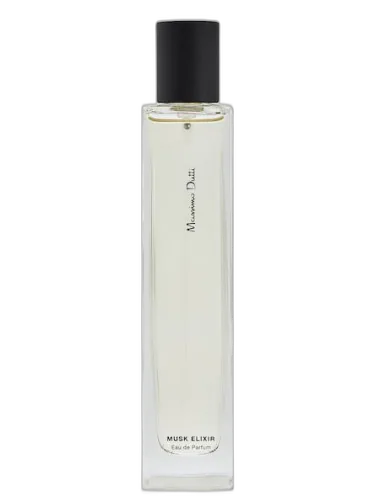
Massimo Dutti
Musk Elixir Massimo Dutti
Shared heart notes: ylang ylang

Valmont
Mica D'oro Valmont
Shared base notes: vanilla

Gucci
A Chant For The Nymph Gucci
Shared base notes: vanilla

Sol de Janeiro
Rio Radiance Sol De Janeiro
Shared heart notes: ylang ylang

Natura
Refrescante 2010 Natura
Shared base notes: vanilla