
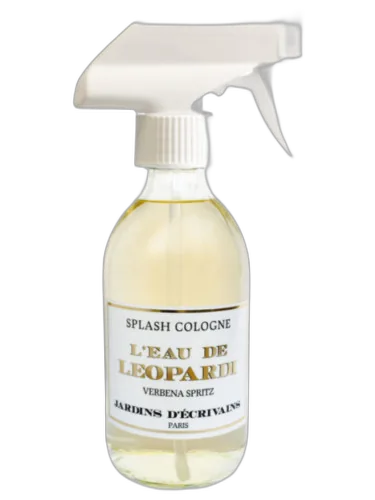

L’eau De Leopardi (verbena Spritz) Jardins D’ecrivains
Fragrance Story
L’Eau De Leopardi (Verbena Spritz) by Jardins d’Ecrivains is a fragrance for women and men. L’Eau De Leopardi (Verbena Spritz) was launched in 2018. The nose behind this fragrance is Anais Biguine.
Composition Profile
About the Perfumer

Anais Biguine
Anais Biguine is a French perfumer known for her work with independent niche houses such as Chapel Factory, Gri Gri Parfums, and Jardins d’Ecrivains. Her style often blends raw, smoky, or incense-like accords with unexpected gourmand or floral touches, as seen in creations like Chapel Factory’s Baptisma and Gri Gri Parfums’ Moko Maori. She is recognized for crafting evocative, narrative-driven scents that balance darkness with subtle sweetness.
Fragrance Notes
All Notes
Complete scent profile
 Neroli
 Sicilian Orange
 Bitter Orange
Verbena
Bitter Orange
Verbena
 Petitgrain
L’eau De Leopardi (verbena Spritz) Jardins D’ecrivains by Jardins d’Ecrivains offers a distinctive olfactory experience that stands out from other fragrances in its category.
Crafted with the finest ingredients and a blend of traditional and modern perfumery techniques, this fragrance represents the pinnacle of the perfumer's art.
L’eau De Leopardi (verbena Spritz) Jardins D’ecrivains embodies the distinctive style of Jardins d’Ecrivains while adding a unique chapter to their fragrance portfolio.
Character Profile
The Wanderer Archetype: Portrait of L’eau De Leopardi (verbena Spritz) Jardins D’ecrivains
Essence
This person is an embodiment of the Explorer-a soul driven by curiosity, independence, and an insatiable hunger for the new. The Explorer thrives on movement, whether physical or intellectual, and resists confinement in any form. L’eau De Leopardi, with its crisp verbena and effervescent spritz, mirrors their essence: bright, unburdened, and alive with possibility. Like the fragrance, they are refreshing yet elusive, leaving a trace of their presence but never lingering too long.
Style & Aesthetic
Their style is effortless yet deliberate-a mix of bohemian ease and tailored precision. Linen shirts, unstructured blazers, well-worn leather sandals, or sleek minimalist sneakers. They favor natural fabrics, earthy tones, and the occasional pop of color-like the zest of their fragrance. Their home, if they stay in one place long enough, is a curated collection of travel mementos: a Moroccan rug, a Japanese tea set, a stack of dog-eared books.
They are drawn to art that evokes movement-impressionist paintings, jazz improvisation, poetry that dances between clarity and abstraction. Their playlist is eclectic, shifting from Afrobeat to French chanson, mirroring their refusal to be pinned down.
Philosophy & Values
To them, life is an open road, an uncharted map. They reject dogma, preferring instead to carve their own path. Routine is a cage; spontaneity is oxygen. Their philosophy is one of experientialism-meaning is found not in answers, but in the act of seeking. They value freedom above all, often at the cost of stability. Their moral compass is guided by authenticity-they despise pretense and admire those who live boldly, unapologetically.
Yet, beneath this liberated exterior lies a quiet tension. The Explorer’s relentless pursuit of novelty can mask a deeper fear: the terror of stagnation. They may mistake motion for progress, mistaking the accumulation of experiences for true growth.
Relationships
Their charm is magnetic but fleeting. They draw people in with their wit, their stories, their effortless cool-yet intimacy is a paradox for them. They crave deep connection but fear the weight of expectation. Romantic partners may find themselves intoxicated by their spontaneity, only to later ache for consistency. Friends admire their adventurous spirit but learn not to rely on them for routine companionship.
They are not cruel, merely transient. Their love is real but restless, like a breeze that touches everything but settles nowhere. Those who understand them accept this; those who don’t are left bewildered, wondering why such a vibrant soul refuses to stay.
Shadow
The Explorer’s greatest strength is also their undoing. Their refusal to commit-to places, people, or even their own emotions-can leave them perpetually unrooted, a ghost drifting through experiences without ever fully inhabiting them. They may mistake avoidance for enlightenment, fleeing discomfort rather than facing it.
At their worst, they become the Escapist-using movement as a distraction from deeper existential voids. The thrill of the new fades quickly, leaving them chasing another high, another horizon. They may grow cynical, dismissing depth as delusion, mistaking their own detachment for wisdom.
Conclusion
When integrated, the Explorer does not abandon their wanderlust but tempers it with moments of stillness. They learn that true freedom is not the absence of ties but the ability to choose them consciously. They begin to see that roots need not be chains-they can be anchors, allowing them to venture further without losing themselves.
L’eau De Leopardi, then, is more than a scent-it is a manifesto. A declaration of their love for life’s fleeting beauty, for the way sunlight dances on water, for the joy of a moment unburdened by the past or future. They are the ones who remind us that to live is not merely to exist, but to taste, to touch, to wander-even if only in spirit.
And perhaps, in time, they will discover that the greatest journey is not outward, but inward.
Similar Fragrances
Fragrances with a comparable profile - shared accords, notes, and character.

Sana Jardin
Berber Blonde Sana Jardin
Shared accords: aromatic, citrus, fresh

LabSolue
23 Neroli Labsolue
Shared accords: aromatic, citrus, fresh

Wide Society
Acqua Travelis Wide Society
Shared accords: aromatic, citrus, fresh
Sylvaine Delacourte
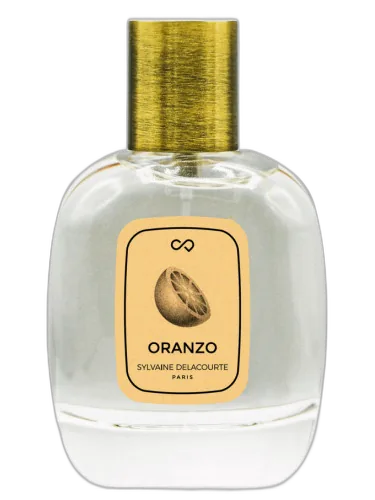
Oranzo Sylvaine Delacourte
Shared accords: aromatic, citrus, fresh

Nonfiction
Open Arms Nonfiction
Shared accords: aromatic, citrus, fresh