
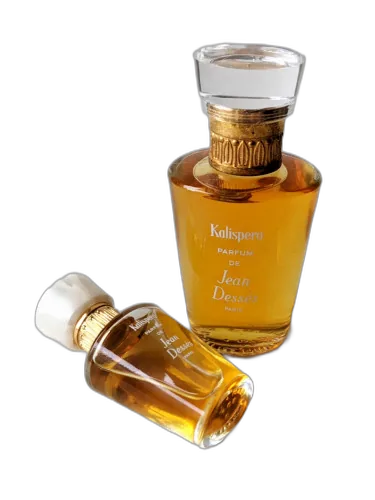
Kalispera Jean Dessès
At a glance
Is Kalispera Jean Dessès worth trying?
Kalispera by Jean Dessès is a Floral Fruity fragrance for women.
- Best match
- Casual, Office wear in Spring, Summer
- Performance feel
- Moderate longevity with Moderate sillage
- Signature profile
- floral, powdery, fresh spicy with Hyacinth, Aldehydes, Lily
The first impression
Kalispera by Jean Dessès is a Floral Fruity fragrance for women. Kalispera was launched in 1962. The nose behind this fragrance is Paul Vacher. Top notes are Hyacinth, Aldehydes, Lily, Bergamot, Orange Blossom and Tuberose; middle notes are Violet, Leather, Carnation, Jasmine and Patchouli; base notes are Musk, Nutmeg and Vetiver.
What shapes the scent
The perfumer behind it

Paul Vacher
Paul Vacher was a prolific perfumer who worked with Dior, Jean Dessès, Le Galion, and Long Lost Perfume. He created the chypre Diorling for Dior, as well as Gymkana and Kalispera for Jean Dessès. For Le Galion, he composed Galion D'or, Lily Of The Valley, Sortilège, and Whip (1953), showcasing his mastery of diverse styles from floral to oriental.
Notes pyramid
Top Notes
First impression · 15-30 min
 Hyacinth
 Aldehydes
 Lily
Lily
 Bergamot
 Orange Blossom
 Tuberose
Heart Notes
Core character · 2-4 hours
 Violet
 Leather
 Carnation
 Jasmine
 Patchouli
Base Notes
Lasting impression · 4+ hours
 Musk
Musk
 Nutmeg
 Vetiver
The mood it creates
The Creator Archetype: Portrait of Kalispera Jean Dessès
Essence
The Creator thrives at the intersection of imagination and craftsmanship. Kalispera’s aldehydic sparkle and floral abundance mirror this archetype’s ability to transform inspiration into tangible beauty. Like a painter’s palette, the fragrance layers hyacinth’s blue tones with tuberose’s creamy strokes, unified by the leather’s structuring presence.
This is a scent for those who see potential in blankness. The violet and jasmine suggest late-night studio sessions where ideas outpace the clock, while nutmeg’s warmth hints at the joy of sharing finished work. It’s a fragrance that celebrates process as much as product.
Style & Aesthetic
They wear clothes like carefully composed still lifes-a silk scarf knotted just so, vintage brooches repurposed as cufflinks. The aldehydes’ effervescence translates to an appreciation for textiles that catch light: dupioni silk, linen woven with metallic threads.
Their workspace is organized chaos-sketchbooks splayed open, swatches pinned to walls in chromatic gradients. The leather note grounds the floral exuberance, much like their drafting table anchors flights of fancy. Even their teacup becomes a vessel for inspiration, stained with pigment as often as tea.
Philosophy & Values
They believe beauty is a verb. Kalispera’s evolving accords-from citrus brightness to musky depth-reflect their conviction that art is never static. The patchouli’s earthiness keeps them rooted in tradition even as the aldehydes reach for innovation.
For them, creation is an act of optimism. The orange blossom’s sweetness isn’t naive but defiant, a refusal to let cynicism sterilize wonder. They measure success not in applause but in the shiver of possibility when brush first meets canvas.
Relationships
They collect people like rare pigments-the friend who knows eighteenth-century embroidery stitches, the barista who hums obscure jazz melodies. Romances often begin with collaborative energy, two minds sparking off each other like bergamot meeting spice.
Yet the musk’s persistence reveals their quiet need for witnesses. They’ll gift you a hand-bound book of your shared jokes, then pretend it was nothing. Their love language is paying attention-remembering your favorite flower (violet, obviously) and working it into the next creation.
Lifestyle
Mornings start with stretching both limbs and imagination-yoga poses followed by flipping through art books while the tea steeps. The green notes speak to their habit of keeping cuttings in vintage bottles, watching roots spider through glass.
They’ve turned routine into ritual: grinding pigments by hand, sharpening pencils to meditative points. The carnation’s spiciness emerges in moments of productive frustration, when they tear through a dozen drafts before striking gold. Projects litter their home like a garden in constant bloom.
Shadow
Perfectionism can paralyze. The aldehydes’ precision sometimes curdles into self-doubt, endless tweaking that prevents completion. That leather note hardens when they forget art requires vulnerability as much as skill.
Their generosity with creations masks difficulty receiving-the tuberose’s lushness wilts when compliments land. There are unsung collaborations where they absorbed others’ ideas like blotting paper, leaving their own contributions faint as the ghost of ylang on skin.
Conclusion
Kalispera is the scent of a brushstroke that somehow contains both discipline and abandon. It balances the cerebral (aldehydes) with the sensual (musk), much like its wearer negotiates between vision and execution. To spritz it is to commit to making-not because the world needs more objects, but because creation is how they breathe.
If you like this, try these
Fragrances with a comparable profile - shared accords, notes, and character.

Aquaflor
Mm Aquaflor
Shared heart notes: jasmine, violet

IDEO Parfumeurs
La Fleur Du Mexique Ideo Parfumeurs
Shared top notes: bergamot, hyacinth, orange blossom

Hors La Monde
Lady Shiloh Hors La Monde
Shared top notes: bergamot

Flora
Ландыш Серебристый (muguet Argente) Flora
Shared top notes: aldehydes
Северное сияние
Ландыш Серебристый (muguet Argente) Северное Сияние
Shared top notes: aldehydes