
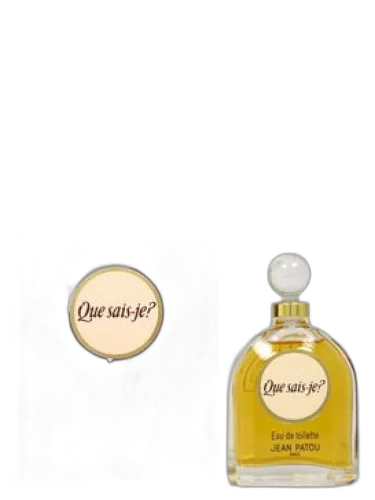
Que Sais Je? Jean Patou
At a glance
Is Que Sais Je? Jean Patou worth trying?
Que sais je? by Jean Patou is a fragrance for women.
- Best match
- Evening, Special Occasion wear in Fall, Winter
- Performance feel
- Good longevity with Moderate sillage
- Signature profile
- honey, sweet, nutty with Honey, Peach, Hazelnut
The first impression
Que sais je? by Jean Patou is a fragrance for women. Que sais je? was launched in 1925. The nose behind this fragrance is Henri Almeras.
What shapes the scent
The perfumer behind it

Henri Almeras
Henri Almeras was a renowned perfumer for Jean Patou, creating classics such as Joy, Amour Amour, and Colony. He is celebrated for his luxurious and complex floral compositions, particularly Joy, which became an icon of perfumery. His work defined an era of elegance and sophistication in fragrance.
Notes pyramid
All Notes
Complete scent profile
 Honey
Honey
 Peach
Peach
 Hazelnut
The mood it creates
The Sage Archetype: Portrait of Que Sais Je? Jean Patou
Essence
The Sage archetype is the eternal seeker of truth, driven by curiosity and a thirst for understanding. Que Sais Je? by Jean Patou embodies this questioning spirit, a fragrance that poses the very question of knowledge itself. The wearer is a philosopher wrapped in sweetness, a thinker who finds wisdom in the unexpected.
This scent opens with honey, peach, and hazelnut, a trio that is both comforting and intriguing. The honey is golden and luminous, the peach ripe with possibility, the hazelnut grounding and earthy. Together, they create a fragrance that is as much about the search as the discovery, a sweet puzzle waiting to be solved.
Style & Aesthetic
The Sage dresses for comfort and function, favoring natural fabrics and muted tones that do not distract from their inner world. Their style is understated but thoughtful, each piece chosen for its story or utility. They are more likely to be found in a library than a boutique.
Their aesthetic is one of collected curiosity. Their home is filled with books, maps, and artifacts from their travels. They surround themselves with objects that spark questions, not answers. Their appearance is secondary to their ideas, yet there is a quiet elegance in their simplicity.
Philosophy & Values
The Sage values knowledge above all else, believing that understanding is the path to freedom. They are lifelong learners, always enrolled in some course or deep in research. They question everything, including their own assumptions, and are not afraid to change their mind.
They hold that wisdom is not found in certainty but in the willingness to say "I don't know." The Sage is humble in their pursuit, knowing that the more they learn, the more they realize how much they have yet to discover. They seek truth, not victory in argument.
Relationships
The Sage is a patient listener and a generous teacher. They attract those who are curious and open-minded, forming bonds over shared ideas rather than shared activities. Their conversations are deep and meandering, exploring the edges of thought.
In romance, they seek a mind that challenges and inspires them. They are not interested in superficial connections but in a partnership of intellectual and emotional exploration. They need space for their solitary pursuits but offer the same freedom to their partner.
Lifestyle
Their days are structured around learning and reflection. Mornings might be spent journaling or reading, afternoons in study or conversation. They have a ritual of walking to clear their mind, often with a podcast or audiobook for company.
Evenings are for quiet pursuits, perhaps a documentary, a lecture, or writing. They travel to learn, not to escape, seeking out museums, historical sites, and conversations with locals. Their home is a sanctuary of thought, with every room a space for contemplation.
Shadow
The Sage's shadow is detachment and analysis paralysis. Their love of knowledge can become a form of avoidance, using study to escape the messiness of life. They may struggle to act, forever waiting for more information before making a decision.
There is a risk of becoming so absorbed in their inner world that they neglect their body and relationships. The Sage must remember that wisdom is not just accumulated but lived, and that some truths can only be found in experience, not books.
Conclusion
Que Sais Je? by Jean Patou is the scent of a mind in motion, a fragrance for those who embrace the question as much as the answer. It is a sweet invitation to explore, to wonder, and to never stop seeking, a reminder that the most profound knowledge is the awareness of our own ignorance.
If you like this, try these
Fragrances with a comparable profile - shared accords, notes, and character.
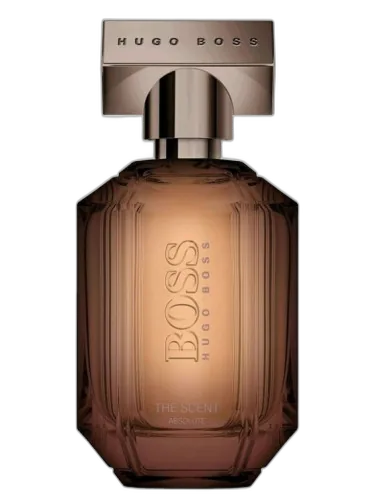
Hugo Boss
Boss The Scent For Her Absolute Hugo Boss
Shared top notes: honey, peach
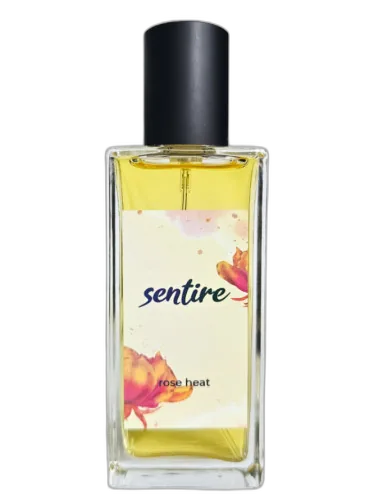
Sentire
Rose Heat Sentire
Shared top notes: honey, peach
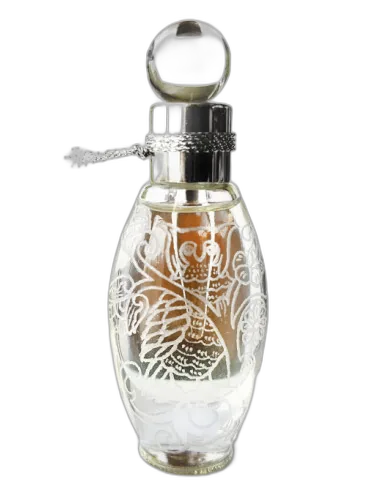
Ladanika
Owl Совушка-сова Ladanika
Shared top notes: hazelnut
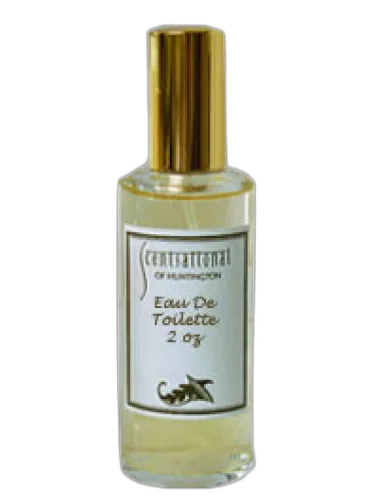
Scentsational of Huntington
Honey Blossom Scentsational Of Huntington
Shared top notes: honey, peach
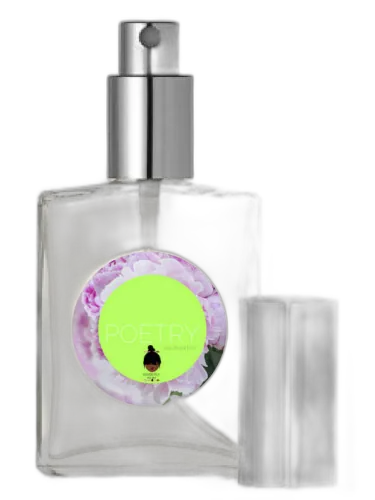
Kimberly New York
Poetry Kimberly New York
Shared top notes: peach