


Smaragd Jean-pierre Sand
At a glance
Is Smaragd Jean-pierre Sand worth trying?
Smaragd by Jean-Pierre Sand is a Floral Woody Musk fragrance for women.
- Best match
- Evening wear in Fall
- Performance feel
- Very Good longevity with Moderate sillage
- Signature profile
- sweet, woody, fruity with Blueberry, Tamarind, Pink Pepper
The first impression
Smaragd by Jean-Pierre Sand is a Floral Woody Musk fragrance for women. Top notes are Blueberry, Tamarind and Pink Pepper; middle notes are Coffee blossom, Rose and Violet; base notes are Massoia, Patchouli and Vanilla.
What shapes the scent
The perfumer behind it

Jean-Pierre Sand
Jean-Pierre Sand is an independent perfumer with a niche approach, as seen in his Löwe and Smaragd fragrances. His style leans toward bold, unconventional blends with a focus on texture and depth. Though his portfolio is compact, it highlights his experimental spirit. Sand's work appeals to those seeking distinctive, artisanal scents.
Notes pyramid
Top Notes
First impression · 15-30 min
 Blueberry
 Tamarind
 Pink Pepper
Heart Notes
Core character · 2-4 hours
 Coffee blossom
 Rose
Rose
 Violet
Base Notes
Lasting impression · 4+ hours
 Massoia
 Patchouli
 Vanilla
The mood it creates
The Sage Archetype: Portrait of Smaragd Jean-pierre Sand
Essence
Smaragd Jean-Pierre Sand is not a fragrance for the faint of spirit. Its green, mineralic depth-cool yet alive, like moss clinging to ancient stone-speaks to a mind that thrives in the liminal space between intellect and intuition. The person who chooses this scent is drawn to the enigmatic, the layered, the quietly profound. They are, above all, a Sage, an archetype defined by wisdom, introspection, and the relentless pursuit of truth.
Shadow
Yet wisdom, when untempered by warmth, can become a fortress. The Sage’s greatest flaw is their detachment, a tendency to observe life rather than fully inhabit it. They may mistake analysis for experience, dissecting emotions until they lose their vitality. At times, they withdraw into their own mind, leaving others outside the gates of their introspection.
Their pursuit of truth can harden into rigidity. They disdain superficiality, but this aversion may curdle into contempt for those who do not share their exacting standards. They are prone to skepticism, sometimes to the point of cynicism-questioning motives so relentlessly that they risk seeing deceit where there is only human frailty.
In love, they may struggle with vulnerability. They prefer the safety of the mind to the chaos of the heart. Their partners may long for more spontaneity, more abandon-qualities the Sage admires in theory but resists in practice.
Conclusion
To encounter this person is to step into a mind that moves like water over polished rock-fluid, deliberate, shaping thought with quiet precision. They are not the loudest in the room, nor do they wish to be. Their presence is felt in the spaces between words, in the weight of their silences. They wear knowledge lightly, never as a weapon, but as an offering.
Their tastes are refined but never ostentatious. They prefer the understated elegance of raw linen, unpolished wood, and the muted hues of forest and stone. Their home is a sanctuary of books, dried botanicals, and carefully chosen artifacts-each object a fragment of a larger narrative. They do not chase trends; they curate meaning.
Philosophy is not an abstract exercise for them, but a lived discipline. They are drawn to Stoicism, Zen, and the existentialists-systems that demand self-awareness without self-indulgence. They believe in the alchemy of perception: that reality is shaped by the mind, yet they do not succumb to solipsism. Their values are rooted in integrity, intellectual honesty, and the quiet dignity of self-mastery.
In relationships, they are selective but deeply loyal. They do not suffer fools, yet they are patient with those who seek understanding. Their love is not effusive but steadfast-a slow-burning ember rather than a wildfire. They attract others who value depth over spectacle, substance over charm.
If you like this, try these
Fragrances with a comparable profile - shared accords, notes, and character.

Rasasi
Maa Arwaak Rasasi
Shared top notes: pink pepper, tamarind

Estiara
Dark Night Estiara
Shared top notes: pink pepper, tamarind
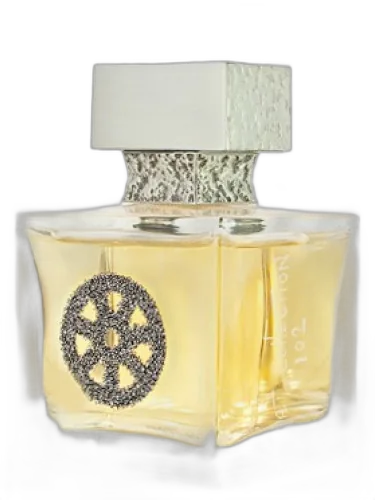
M. Micallef
Art Collection 102 M. Micallef
Shared heart notes: rose, violet

Rabanne
Black Xs For Her Rabanne
Shared top notes: pink pepper, tamarind
Contém 1g
Meu Ritmo Contém 1g
Shared top notes: pink pepper