
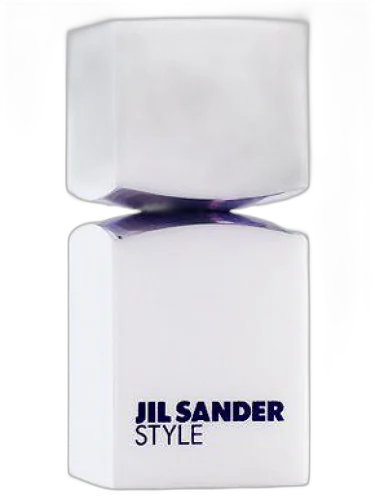

Style Jil Sander
At a glance
Is Style Jil Sander worth trying?
Style by Jil Sander is a Floral Woody Musk fragrance for women.
- Best match
- Evening wear in Fall, Winter
- Performance feel
- Good longevity with Moderate sillage
- Signature profile
- powdery, floral, vanilla with Pink Pepper, Cardamom, Mango
The first impression
Style by Jil Sander is a Floral Woody Musk fragrance for women. Style was launched in 2006. The nose behind this fragrance is Bernard Ellena. Top notes are Pink Pepper, Cardamom, Mango and Freesia; middle notes are Iris, Violet, Magnolia and Jasmine; base notes are Vanilla, Musk and Amber.
What shapes the scent
The perfumer behind it

Bernard Ellena
Bernard Ellena has created fragrances for a wide range of brands, including Beloved Woman for Amouage, Simply Her for Avon, Colors De Benetton and Tribu for Benetton, Eau De Paradis and L'eau By Vanessa Bruno for Biotherm, Madeleine for Brocard, and About Men for Bruno Banani. His portfolio demonstrates versatility across floral, fresh, and woody genres. Ellena's compositions are known for their clarity and elegant simplicity.
Notes pyramid
Top Notes
First impression · 15-30 min
 Pink Pepper
 Cardamom
 Mango
Mango
 Freesia
Heart Notes
Core character · 2-4 hours
 Iris
Iris
 Violet
 Magnolia
 Jasmine
Base Notes
Lasting impression · 4+ hours
 Vanilla
 Musk
Musk
 Amber
Amber
The mood it creates
The Sage Archetype: Portrait of Style Jil Sander
Essence
The one who wears Style by Jil Sander is a seeker of clarity, a disciple of refined simplicity. Their archetype is the Sage-the thinker, the minimalist, the one who distills life into its purest forms. Like the fragrance itself-clean, structured, yet subtly complex-they embody the pursuit of wisdom through restraint. They do not shout; they speak with precision. They do not adorn themselves in excess; they refine their presence until every detail carries weight.
Yet, the Sage is not merely an observer. They are a curator of meaning, believing that truth is found in what is omitted as much as in what is expressed. Their shadow, however, is the Dogmatist-the risk of mistaking their own clarity for absolute truth, of becoming rigid where they once were discerning.
Style & Aesthetic
Their wardrobe is a manifesto. Crisp lines, muted tones, fabrics that whisper rather than scream. They favor the elegance of absence-no superfluous buttons, no distracting patterns. Every garment is chosen not for trend but for permanence, as if dressing for a future where taste is timeless.
This extends beyond clothing. Their home is a sanctuary of uncluttered spaces, where light falls deliberately and objects serve a purpose beyond decoration. A single vase on a wooden table, a book left open on a chair-these are not accidents but compositions. They understand that emptiness is not a void but a canvas.
Yet, there is danger here. In their pursuit of purity, they may disdain the messy, the imperfect, the human. They might mistake sterility for sophistication, forgetting that warmth often resides in the unrefined.
They rise early, not out of obligation but because dawn is when the world is still unspoiled. Their routines are rituals: the slow sip of black coffee, the deliberate walk through quiet streets. They work with focus, often in creative or analytical fields-design, architecture, writing, consulting-where precision is power.
They travel not to escape but to refine their perspective. A week in a secluded cabin, a day in a museum with only a notebook-these are their pilgrimages. They do not collect souvenirs; they collect sensations, impressions.
Yet, their discipline can become austerity. In their quest for the essential, they may forget that life is also meant to be lived, not just distilled.
Philosophy & Values
They believe in the power of the essential. Life, to them, is an exercise in editing-cutting away the noise to reveal the signal. They are drawn to philosophies of minimalism, Zen Buddhism, and the Stoic art of detachment. Their mantra: Less, but better.
They value intellect but distrust intellectualism. They prefer depth over breadth, silence over chatter. In conversation, they listen more than they speak, but when they do speak, their words are measured, deliberate. They have little patience for frivolity, yet they are not cold-merely selective with their energy.
The shadow of this discipline is a quiet arrogance. They may dismiss what they deem "unnecessary" with a subtle condescension, failing to see that others find meaning in what they consider clutter.
Relationships
They do not give their time freely. Relationships, like their wardrobe, are curated. They have few friends, but those they keep are bound by mutual respect and unspoken understanding. Romantic partners must meet an unarticulated standard-not of status, but of essence. They seek someone who understands the weight of silence, who does not mistake restraint for indifference.
Their love is not effusive but profound. They show care through acts, not words-a perfectly brewed cup of coffee left on the bedside table, a book gifted because "you needed to read this." But their reluctance to express vulnerability can be mistaken for detachment. Their shadow is emotional minimalism-pruning away not just excess but sometimes the heart itself.
Shadow
The Sage’s greatest strength-their discernment-can become their prison. In their reverence for the essential, they may reject the chaotic beauty of spontaneity. They might grow impatient with those who do not share their exacting standards, mistaking their own taste for truth.
The fragrance they wear-Style-is a mirror. Clean, yes, but with a quiet depth, a whisper of something beyond the surface. The challenge for them is to remember that purity does not demand perfection. That sometimes, the most profound truths are found not in what is absent, but in what remains, unrefined.
If you like this, try these
Fragrances with a comparable profile - shared accords, notes, and character.

Croatian Perfume House
Just Wow Lady Chic Croatian Perfume House
Shared top notes: cardamom, freesia

Jil Sander
Style Summer Jil Sander
Shared top notes: freesia, pink pepper

NIVIRU
11:11 Pm Niviru
Shared heart notes: iris, jasmine, violet
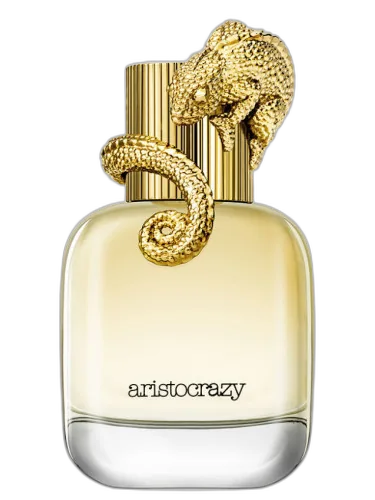
Aristocrazy
Intuitive Aristocrazy
Shared top notes: cardamom, pink pepper

Croatian Perfume House
The Scent Of Osijek Croatian Perfume House
Shared top notes: cardamom, freesia