
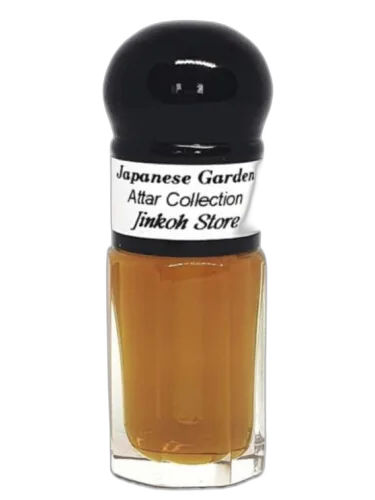

Japanese Garden Jinkoh Store
At a glance
Is Japanese Garden Jinkoh Store worth trying?
Japanese Garden by Jinkoh Store is a Floral fragrance for women and men.
- Best match
- Casual wear in Spring
- Performance feel
- Moderate longevity with Moderate sillage
- Signature profile
- fruity, rose, woody with Goji Berries, Hinoki Wood, Ginger
The first impression
Japanese Garden by Jinkoh Store is a Floral fragrance for women and men. The nose behind this fragrance is Marius Pana.
What shapes the scent
The perfumer behind it

Marius Pana
Marius Pana is a perfumer for Grande Perfumes and Jinkoh Store, creating scents like Ambresso, Cuore Grande, and Ananda Qi & Iris. His work frequently features oud, iris, and amber, with a focus on rich, resinous compositions. He specializes in complex, oriental-inspired fragrances.
Notes pyramid
All Notes
Complete scent profile
 Goji Berries
 Hinoki Wood
 Ginger
 Rose
Rose
 Matcha Tea
The mood it creates
The Sage Archetype: Portrait of Japanese Garden Jinkoh Store
Essence
This person is most closely aligned with the Sage-an archetype defined by wisdom, introspection, and a deep reverence for knowledge. The Sage seeks truth not through dogma, but through quiet observation and contemplation. The fragrance they choose, Japanese Garden Jinkoh Store, reflects this: a scent that evokes stillness, refinement, and the subtle interplay of nature and artifice. Like the incense that drifts through a Zen temple, their presence is understated yet profound, leaving traces of thoughtfulness in their wake.
Style & Aesthetic
Their aesthetic is deliberate, never accidental. Clothing is structured yet soft-linen, raw silk, muted earth tones-each piece chosen for texture and longevity rather than trend. They favor handmade ceramics, aged paper, and unpolished wood, objects that bear the marks of time and use.
In art, they are drawn to wabi-sabi, the beauty of imperfection. A cracked teacup holds more meaning to them than a flawless one. Music is often sparse-traditional Japanese koto, Erik Satie’s Gymnopédies, or the silence between notes.
But their refined tastes can veer into elitism. They may dismiss what they deem "common" or "unrefined," forgetting that wisdom must sometimes descend from the ivory tower to walk among the ordinary.
Their daily rituals are sacred. Morning tea is not just a drink but a meditation. They may keep a journal, not for recording events, but for distilling thoughts into their purest form. Their home is a sanctuary-uncluttered, with every object serving a purpose or holding meaning.
Work, if they choose it, is something that aligns with their values-perhaps a scholar, a curator, a calligrapher, or a gardener. They are not driven by ambition but by the integrity of the craft.
Yet, their discipline can harden into rigidity. They may resist change, clinging to routines long after they cease to serve them. The shadow of the Sage is the Hermit-one who withdraws so completely that they forget how to live among others.
Philosophy & Values
For them, life is not about accumulation but distillation-a slow refinement of experience into meaning. They value depth over breadth, preferring a single well-worn book to a shelf of untouched volumes. Their philosophy is rooted in aesthetic minimalism, not as a trend but as a discipline. They believe beauty is found in restraint, in the spaces between words, in the quiet after the chime of a temple bell.
Yet, this reverence for wisdom can become a shadow-an over-intellectualization of life. They may mistake contemplation for action, waiting for perfect understanding before engaging with the world. Their pursuit of truth can sometimes isolate them, making them seem aloof or detached from the raw, messy vitality of human emotion.
Relationships
They do not seek many companions, but the few they keep are cherished deeply. Conversations with them are like slow-burning incense-measured, fragrant, lingering. They listen more than they speak, offering insights only when asked. Their love is quiet but enduring, expressed in small gestures: a perfectly chosen book, a shared silence at dawn.
Yet, their reserve can be mistaken for coldness. They may struggle with vulnerability, preferring the safety of intellect over the risk of raw emotion. Partners or friends may long for more spontaneity, more unguarded passion, but the Sage’s instinct is to retreat into contemplation rather than surrender to feeling.
Conclusion
They are both luminous and distant, like the moon over a still pond. Their wisdom is their greatest gift, but it can also be their prison. To truly embody the Sage, they must learn when to step out of the garden and into the world-when to let the incense burn down to ashes, and when to light it anew.
If you like this, try these
Fragrances with a comparable profile - shared accords, notes, and character.

Armand Basi
L'eau Pour Homme Blue Tea Armand Basi
Shared top notes: rose

Avon
Exclusive Avon
Shared accords: aromatic, fresh spicy, green

Cinq Mondes
Rituel De Kyoto Cinq Mondes
Shared top notes: ginger, rose

Montale
Greyland Montale
Shared top notes: ginger, rose

Lalique
Perles De Lalique Lalique
Shared top notes: rose