


Vanilla Paradise Jinkoh Store
At a glance
Is Vanilla Paradise Jinkoh Store worth trying?
Vanilla Paradise by Jinkoh Store is a Oriental Vanilla fragrance for women and men.
- Best match
- Evening wear in Winter
- Performance feel
- Very Good longevity with Moderate sillage
- Signature profile
- sweet, tobacco, vanilla with Tobacco, Coffee CO2, Castoreum
The first impression
Vanilla Paradise by Jinkoh Store is a Oriental Vanilla fragrance for women and men. Vanilla Paradise was launched in 2021.
What shapes the scent
The perfumer behind it

Jinkoh Store
Jinkoh Store focuses on rich, indulgent fragrances that highlight luxurious ingredients. Their scents often feature warm, comforting notes like vanilla, creating a sense of opulence and familiarity. The brand’s approach emphasizes simplicity and depth, appealing to those who appreciate bold yet harmonious compositions. Jinkoh Store’s offerings evoke a sense of indulgence and timeless elegance.
Notes pyramid
All Notes
Complete scent profile
 Tobacco
 Coffee CO2
 Castoreum
 Vanilla
 Banana
 Cambodian Oud
 Heliotrope
 Musk
Musk
The mood it creates
The Innocent Archetype: Portrait of Vanilla Paradise Jinkoh Store
Essence
To wear Vanilla Paradise Jinkoh Store is to embrace warmth, comfort, and subtle depth-a fragrance that blends the sweetness of vanilla with the grounding richness of incense. The person who chooses this scent is not one for sharp edges or fleeting impressions; they seek a world softened by familiarity, where beauty lies in the quiet, the nourishing, the enduring. They are, at their core, a Nurturer-an archetype rooted in care, stability, and the art of creating sanctuary.
Yet, like all archetypes, the Nurturer has its shadow. Their devotion to comfort can become stagnation; their love for others can slip into dependency. To understand them fully is to see both the hearth they tend and the walls they sometimes build around it.
Style & Aesthetic
Their tastes are an extension of their essence-warm, textured, inviting. They favor natural materials: worn leather, thick-knit wool, the grain of aged wood. Their home is a carefully curated refuge, filled with soft lighting, well-loved books, and the faint scent of spiced tea. They appreciate craftsmanship, not for its prestige, but for its honesty-objects that age gracefully, like their own spirit.
In art, they are drawn to the impressionists, where light blurs into emotion, or to the quiet intensity of still-life paintings-ordinary things made sacred. Music for them is tactile: the deep resonance of cello, the hum of a well-tuned piano, the kind of sound that lingers in the bones.
But there is a tension here. Their love for the familiar can harden into resistance to the new. They might dismiss avant-garde art as pretentious or reject modern design as cold, not out of true disdain, but from an instinctive retreat into what they already trust.
Their days are structured around small, meaningful rituals-morning tea in the same favorite cup, evening walks along familiar paths. They thrive in roles that allow them to sustain and heal: therapists, teachers, bakers, gardeners. Even if their work is not explicitly caregiving, they infuse it with attentiveness, turning routine into something sacred.
Yet routine can become a cage. They may resist change even when it is necessary, staying in unfulfilling jobs or outdated habits because the unknown feels like a threat to their sense of safety.
Philosophy & Values
They believe, fundamentally, in the power of presence. To them, love is not grand gestures but the steady accumulation of small acts-a meal cooked with attention, a listening ear, the silent understanding of shared space. Their morality is not built on abstract principles but on the immediate, tangible needs of those around them.
Yet this philosophy has its limits. Their focus on the personal can blind them to larger injustices, making them more likely to soothe suffering than to challenge its causes. They may mistake endurance for virtue, staying in unhealthy relationships because leaving would feel like abandonment.
Relationships
In love, they are devoted, sometimes to a fault. They do not seek passion that burns out quickly but a slow, enduring flame. Their partners often describe them as "home"-a compliment that carries both warmth and weight. They are the ones who remember anniversaries, who know how their friends take their coffee, who will sit with someone in grief without needing to fill the silence.
But their shadow emerges when care becomes control. They may struggle to let others grow beyond the roles they’ve assigned them-the child who must always need them, the partner who must always lean on them. Their fear of irrelevance can make them cling, mistaking self-sufficiency in others for rejection.
Shadow
The Nurturer’s greatest flaw is their reluctance to let go. Their strength-their ability to create stability-can become a weakness when they confuse love with possession. They may resent those who outgrow their care, interpreting independence as betrayal. And in their quietest moments, they might wonder: If I am not needed, who am I?
But in their best form, they are the quiet force that makes life bearable, even beautiful. They are the ones who remind us that not all heroes wear armor-some wear aprons, some hold hands, some simply stay.
To wear Vanilla Paradise Jinkoh Store is to carry that truth in every breath: that sweetness, like strength, can be found in the ordinary, the enduring, the deeply human.
If you like this, try these
Fragrances with a comparable profile - shared accords, notes, and character.
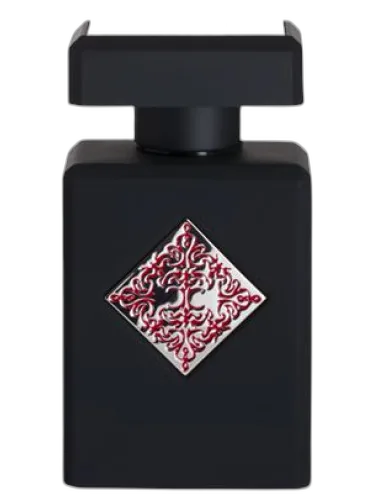
Initio Parfums Prives
Absolute Aphrodisiac Initio Parfums Prives
Shared top notes: castoreum, musk, vanilla

EcoParfum
Amber And Oud Амбра И Уд Ecoparfum
Shared top notes: cambodian oud, castoreum, musk

The Dua Brand
The Opera The Dua Brand
Shared top notes: musk, vanilla

DS&Durga
Spent Musket Oil Ds&durga
Shared top notes: musk, tobacco

Royal Toad
2324 In Berlin Royal Toad
Shared top notes: heliotrope, musk, tobacco