
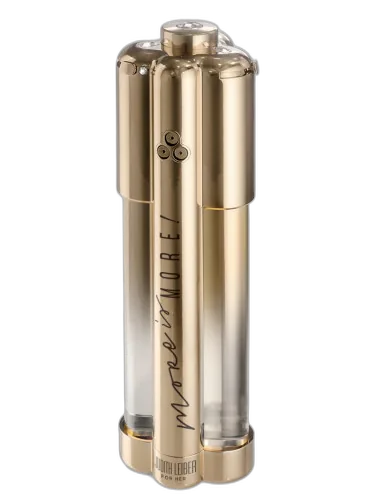

More Gourmand! Judith Leiber
At a glance
Is More Gourmand! Judith Leiber worth trying?
More Gourmand! by Judith Leiber is a Oriental Vanilla fragrance for women.
- Best match
- Evening wear in Winter
- Performance feel
- Very Good longevity with Strong sillage
- Signature profile
- woody, vanilla, citrus with Mandarin Orange, Black Currant, Rose Oil
The first impression
More Gourmand! by Judith Leiber is a Oriental Vanilla fragrance for women. More Gourmand! was launched in 2020. The nose behind this fragrance is Jérôme di Marino. Top notes are Mandarin Orange and Black Currant; middle notes are Rose Oil and Gingerbread; base notes are Cashmere Wood and Vanilla.
What shapes the scent
The perfumer behind it

Jérôme di Marino
Jérôme di Marino is a French perfumer with a diverse portfolio spanning luxury and niche brands. He has created Balade Aux Tuileries for Agatha Paris, Valensole Lavender for Alfred Dunhill, and Lunar Vetiver for Amouroud. His work also includes Mon Petit Chou for Blumarine and several fragrances for Burberry, such as Burberry Her Elixir De Parfum and Windsor Tonic. Di Marino is recognized for his ability to blend classic and contemporary elements.
Notes pyramid
Top Notes
First impression · 15-30 min
 Mandarin Orange
 Black Currant
Heart Notes
Core character · 2-4 hours
 Rose Oil
 Gingerbread
Base Notes
Lasting impression · 4+ hours
Cashmere Wood
 Vanilla
The mood it creates
The Alchemist Archetype: Portrait of More Gourmand! Judith Leiber
Essence
The person who adores More Gourmand! by Judith Leiber is, at their core, a Hedonist-an archetype that revels in sensory pleasure, indulgence, and the art of savoring life. This is not mere gluttony, but a refined pursuit of delight, where taste, scent, and texture become sacred rituals. The Hedonist does not merely consume; they transform the mundane into the exquisite.
Yet, like all archetypes, the Hedonist has a shadow-one that risks excess, self-indulgence, and a fleeting attachment to pleasure that may leave deeper hungers unsatisfied.
Style & Aesthetic
Their wardrobe is an extension of their ethos-rich fabrics, deep hues, textures that invite touch. They favor velvet blazers, silk blouses, leather gloves, garments that feel as luxurious as they look. Even their jewelry is chosen for its weight, its warmth-gold that glows against skin, gemstones that catch the light like candied fruit.
Their signature fragrance, More Gourmand!, is not just a scent but a statement: I am here to be savored. It is unapologetically sweet, yet complex-like a dessert that lingers on the tongue, revealing layers of spice and warmth.
Philosophy & Values
To them, pleasure is not frivolous-it is a philosophical stance. They reject the puritanical notion that joy must be earned through suffering. Instead, they believe that beauty and delight are necessary for the soul’s nourishment.
"Why deny yourself the sweetness of existence?" they might ask. "Life is bitter enough-why not savor what is good?"
Yet, this philosophy has its perils. When taken to extremes, it can lead to escapism, where indulgence becomes a way to avoid discomfort rather than a celebration of life. The shadow Hedonist may chase sensation after sensation, never truly satisfied, always needing more.
Relationships
They are generous hosts, delighting in the act of feeding others-literally and metaphorically. A dinner party at their home is an event, each course designed to evoke wonder. They believe that love is best expressed through shared pleasure-a perfectly brewed cup of tea, a hand-picked bouquet, a playlist crafted to set the mood.
Yet, their shadow may struggle with superficiality. If they mistake indulgence for intimacy, they may surround themselves with admirers but lack true depth in their connections. The Hedonist must learn that not all nourishment comes from sweetness-sometimes, the most meaningful bonds are forged in vulnerability, not just pleasure.
Shadow
The Hedonist’s greatest danger is addiction to comfort. When life becomes too bitter, they may retreat into a world of sensory pleasure, avoiding necessary struggles. Their shadow self may grow restless, always seeking the next thrill, never satiated.
But when balanced, the Hedonist is a connoisseur of life, teaching others that joy is not a sin-it is an art. They remind us that to live well is not merely to survive, but to taste, to touch, to savor.
In the end, their love for More Gourmand! is more than a preference-it is a manifesto. Life is short. Why not make it delicious?
Conclusion
Their world is one of abundance, not necessarily in wealth, but in the richness of experience. They surround themselves with textures that beg to be touched-velvet cushions, silk scarves, the weight of fine china in their hands. Their home is a carefully curated sanctuary, where even the air is perfumed with warmth: vanilla, caramel, amber-notes that wrap around them like a second skin.
They are drawn to opulence, but not the cold, sterile kind. Their luxury is tactile, inviting, almost edible. A dessert wine sipped from a crystal glass, a leather-bound book whose pages smell faintly of vanilla, a cashmere throw draped over an armchair-these are their treasures.
If you like this, try these
Fragrances with a comparable profile - shared accords, notes, and character.
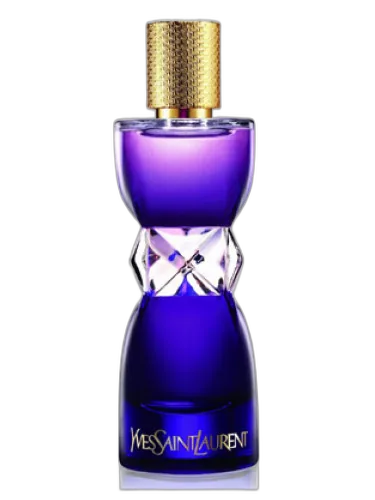
Yves Saint Laurent
Manifesto L'elixir Yves Saint Laurent
Shared top notes: mandarin orange
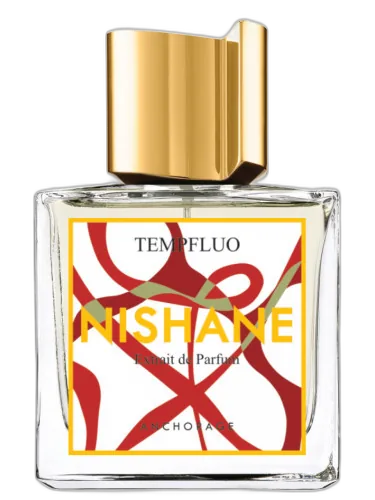
Nishane
Tempfluo Nishane
Shared top notes: mandarin orange
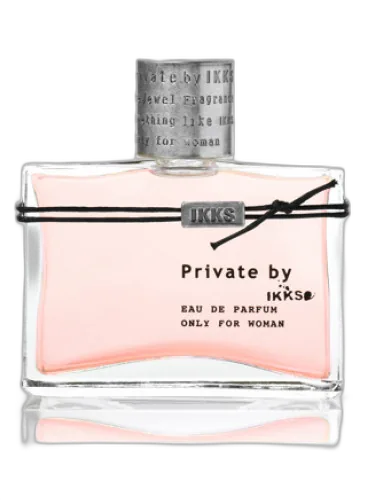
IKKS
Private Ikks
Shared top notes: black currant, mandarin orange
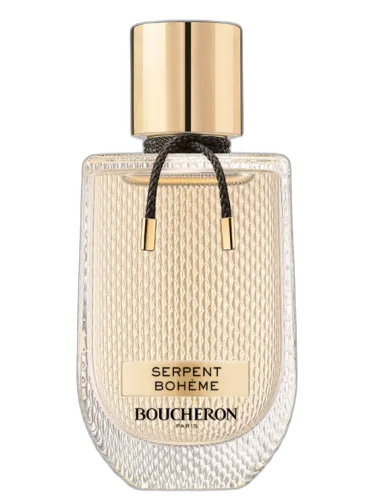
Boucheron
Serpent Bohème Boucheron
Shared top notes: black currant, mandarin orange
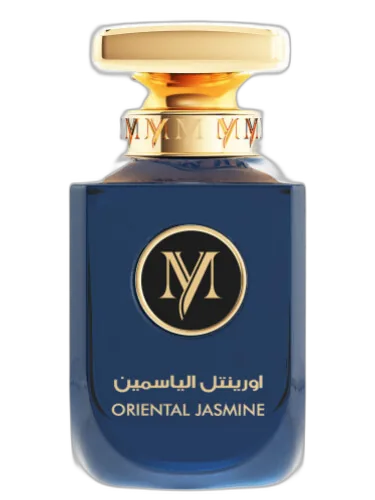
My Perfumes Select
Oriental Jasmine My Perfumes Select
Shared top notes: black currant, mandarin orange