
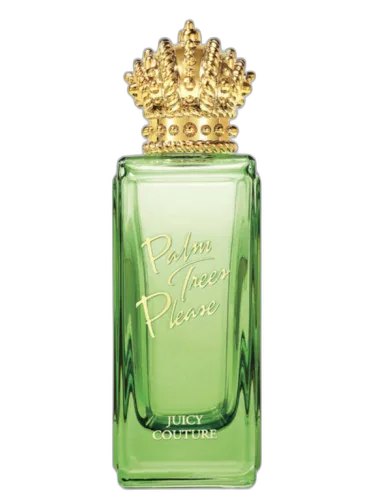

Palm Trees Please Juicy Couture
At a glance
Is Palm Trees Please Juicy Couture worth trying?
Palm Trees Please by Juicy Couture is a Floral Green fragrance for women.
- Best match
- Casual wear in Summer
- Performance feel
- Good longevity with Moderate sillage
- Signature profile
- green, white floral, powdery with Lemon Blossom, Matcha Tea, Black Currant
The first impression
Palm Trees Please by Juicy Couture is a Floral Green fragrance for women. Palm Trees Please was launched in 2019. Palm Trees Please was created by Alienor Massenet, Maurice Roucel and Symrise. Top notes are Lemon Blossom, Matcha Tea, Black Currant and Nectarine; middle notes are Green Leaves, Jasmine Sambac, Ivy and Ylang-Ylang; base notes are Angelica, Musk, Sandalwood and Labdanum.
What shapes the scent
The perfumer behind it

Alienor Massenet
Alienor Massenet is a French perfumer known for her work with major fragrance houses, including Givaudan. Her style balances modern elegance with subtle complexity, often highlighting floral and woody contrasts. Notable creations include the luminous Rose Lumiere for Armand Basi and the enigmatic Black Swan for Brocard.
Notes pyramid
Top Notes
First impression · 15-30 min
 Lemon Blossom
 Matcha Tea
 Black Currant
 Nectarine
Heart Notes
Core character · 2-4 hours
 Green Leaves
Jasmine Sambac
Green Leaves
Jasmine Sambac
 Ivy
Ivy
 Ylang-Ylang
Base Notes
Lasting impression · 4+ hours
 Angelica
 Musk
Musk
 Sandalwood
 Labdanum
The mood it creates
The Lover Archetype: Portrait of Palm Trees Please Juicy Couture
Essence
The one who adores Palm Trees Please by Juicy Couture is, at their core, an embodiment of The Lover archetype-a devotee of pleasure, beauty, and sensory indulgence. This fragrance, with its tropical coconut, sun-warmed citrus, and creamy vanilla, is not merely a scent but a manifesto: life should be sweet, warm, and unapologetically enjoyed. The Lover does not merely exist; they savor. Their philosophy is simple yet profound: Why resist delight when it is so freely offered?
Yet, like all archetypes, The Lover has a shadow-a tendency toward excess, a reluctance to engage with life’s sharper edges, and at times, a fragility beneath the golden glow.
Philosophy & Values
To them, pleasure is not frivolous-it is an act of resistance against the gray mundanity of modern life. They reject the puritanical notion that suffering confers meaning. Instead, they find depth in joy, wisdom in indulgence. Their moral code is simple: Do no harm, but take your fill.
They value connection-not in the abstract, but in the tangible warmth of shared laughter, fingertips brushing over a shared plate of food, the way a friend’s eyes crinkle when they smile. They believe in love as an active verb, expressed through touch, through presence, through the offering of beauty.
Yet, this philosophy has its limits. Their aversion to discomfort can make them avoid difficult conversations. They may mistake surface harmony for true intimacy, preferring the ease of a sunlit afternoon to the necessary storms that clear the air.
Relationships
In love, they are generous, attentive, almost devotional. They excel in the language of affection-thoughtful gestures, lingering kisses, the kind of attention that makes others feel seen. Their relationships are often intense, for they love with their whole body, not just their heart.
But their shadow lurks here too. The same intensity that makes them magnetic can tip into possessiveness. Their need for harmony may lead them to swallow their own discontent, only for it to emerge later as passive aggression or sudden withdrawal. They fear abandonment, not because they are weak, but because they have built their world on the belief that love should be as constant as the sun-and are unprepared for its occasional eclipses.
Shadow
The Lover’s greatest weakness is their reluctance to face darkness-both in the world and within themselves. They may numb discomfort with another glass of wine, another flirtation, another purchase. Their pursuit of pleasure, if unchecked, can become a form of avoidance.
They may also struggle with impermanence. The very things they adore-the warmth of summer, the peak of a romance, the first sip of a perfect cocktail-are fleeting. When faced with loss, they can become brittle, as if their golden exterior might crack under the weight of grief.
Conclusion
To love the world as they do is both their gift and their burden. They remind us that beauty is not a distraction from life but one of its essential truths. Yet, they must learn that even the most radiant life casts shadows-and that true depth comes from embracing both.
They are not naive. They know the world is flawed. But they choose, again and again, to tilt their face toward the light. And in doing so, they offer others permission to do the same.
If you like this, try these
Fragrances with a comparable profile - shared accords, notes, and character.
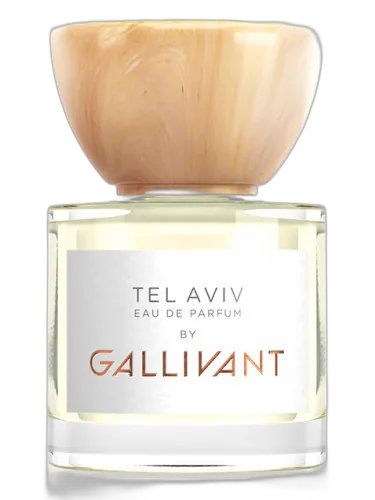
Gallivant
Tel Aviv Gallivant
Shared top notes: black currant
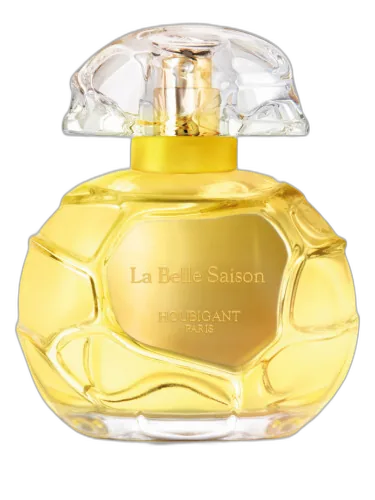
Houbigant
La Belle Saison Houbigant
Shared base notes: labdanum, musk, sandalwood
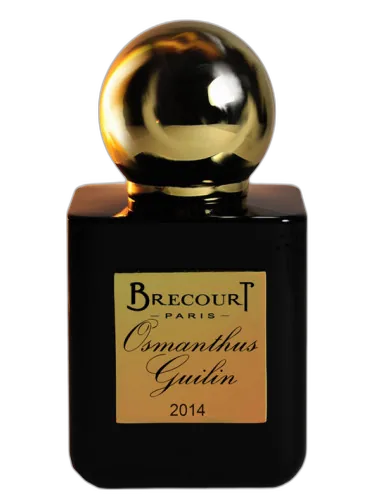
Brecourt
Osmanthus Guilin Brecourt
Shared heart notes: jasmine sambac
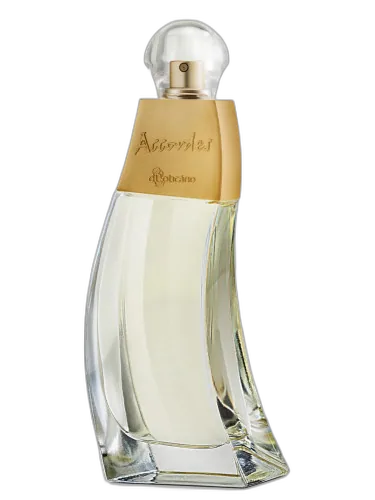
O Boticário
Accordes O Boticário
Shared top notes: black currant
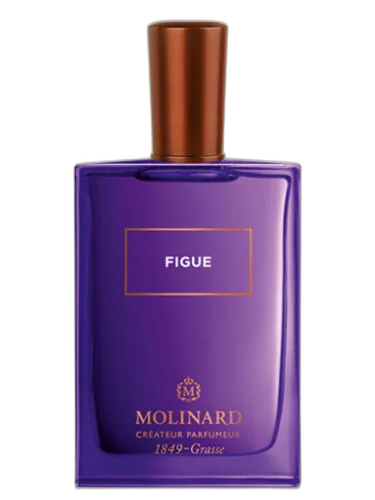
Molinard
Figue Eau De Parfum Molinard
Shared top notes: black currant