
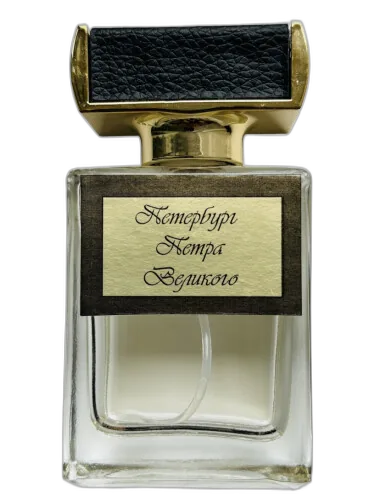
Petersburgo Petra Pervogo (петербург Петра Великого) Kamila Robinson
Fragrance Story
Petersburgo Petra Pervogo (Петербург Петра Великого) by Kamila Robinson is a Oriental Woody fragrance for women and men. This is a new fragrance. Petersburgo Petra Pervogo (Петербург Петра Великого) was launched in 2023. The nose behind this fragrance is Kamila Robinson.
Composition Profile
About the Perfumer

Kamila Robinson
Kamila Robinson is a perfumer who creates fragrances under her own name. Her catalog includes 266st Pontiff's Harley, Afrodite, Autunno Atmosferico, Be Capone??, Brutal Man, Caer Hasta, Caramel Angel, and East Mcconauhey. Robinson's work spans a wide range of styles, from bold and masculine to sweet and whimsical.
Fragrance Notes
All Notes
Complete scent profile
 Woody Notes
 Blonde Woods
 gunpowder
 Leather
Black and Pink Pepper
Leather
Black and Pink Pepper
 Patchouli
 Cedar
Cedar
 Cognac
Petersburgo Petra Pervogo (петербург Петра Великого) Kamila Robinson by Kamila Robinson offers a distinctive olfactory experience that stands out from other fragrances in its category.
Crafted with the finest ingredients and a blend of traditional and modern perfumery techniques, this fragrance represents the pinnacle of the perfumer's art.
Petersburgo Petra Pervogo (петербург Петра Великого) Kamila Robinson embodies the distinctive style of Kamila Robinson while adding a unique chapter to their fragrance portfolio.
Character Profile
The Ruler Archetype: Portrait of Petersburgo Petra Pervogo (петербург Петра Великого) Kamila Robinson
Essence
To wear Petersburgo Petra Pervogo by Kamila Robinson is to embody an aura of calculated grandeur-a scent that evokes the ambition of Peter the Great, the founder of St. Petersburg, a city carved from marshland into an imperial jewel. This fragrance is not for the passive dreamer but for the architect of destiny, the one who shapes the world rather than merely inhabiting it. The person who chooses this scent is most closely aligned with the Ruler archetype, a figure of authority, vision, and disciplined will.
This individual moves through life with an unshakable sense of purpose. They are drawn to structure, legacy, and mastery-whether in their career, personal style, or intellectual pursuits. Their tastes are refined but never ostentatious; they prefer the weight of history in their choices, whether in the cut of a tailored coat, the lines of a Baroque building, or the precision of a well-aged whiskey. Their philosophy is one of order through strength-they believe that chaos is only raw material waiting to be shaped.
In relationships, they are not domineering but expect loyalty and competence. They attract those who admire their clarity of vision, yet they may struggle with partners who resist their natural inclination to lead. Their friendships are often built on mutual respect rather than casual affection; they prefer a small circle of trusted allies to a wide network of acquaintances.
Shadow
Yet power, even when wielded wisely, carries its burdens. The Ruler’s shadow emerges in rigidity, an inability to yield when adaptability would serve them better. They may mistake control for wisdom, dismissing intuition or spontaneity as weakness. Their high standards can become isolation-others may admire them but hesitate to approach, sensing an unspoken demand for perfection.
In love, they may struggle with vulnerability, seeing emotional openness as a loss of sovereignty. They expect their partners to match their self-discipline, which can lead to frustration when others fall short. Their greatest fear is irrelevance-the thought that their influence might wane, that their legacy could be forgotten. This fear can drive them to overwork, to coldness, to a life so carefully constructed that it becomes a gilded cage.
Conclusion
Their greatest strength lies in their ability to impose form upon chaos. They are the strategist in the boardroom, the curator of their own life’s narrative, the one who sees ten steps ahead while others hesitate. They thrive in roles where they can build, govern, or innovate-entrepreneurs, executives, artists with a grand vision. Their confidence is not arrogance but the quiet certainty of someone who has tested their own limits and knows what they can achieve.
Aesthetic discipline defines them. They may collect art, not for trend but for permanence-Rembrandt’s chiaroscuro, the stoic elegance of Russian literature, the deliberate weight of a Rolex watch. Their home is a reflection of their mind: organized, intentional, with every object serving a purpose or symbolizing an ideal.
Similar Fragrances
Fragrances with a comparable profile - shared accords, notes, and character.
Kamila Robinson
Petersburgo Petra Pervogo (петербург Петра Великого) Kamila Robinson
Shared accords: fresh spicy, leather, patchouli

Precious Liquid
White Incense Precious Liquid
Shared accords: fresh spicy, leather, patchouli
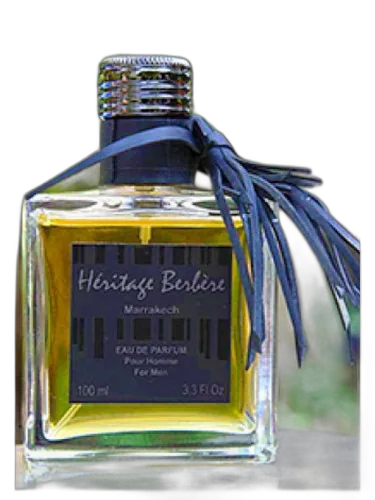
Héritage Berbère
Hb Homme 03 Héritage Berbère
Shared accords: fresh spicy, leather, patchouli
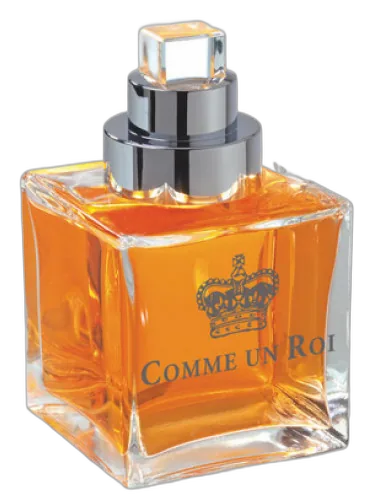
Frederic M
Comme Un Roi Frederic M
Shared accords: fresh spicy, leather, patchouli
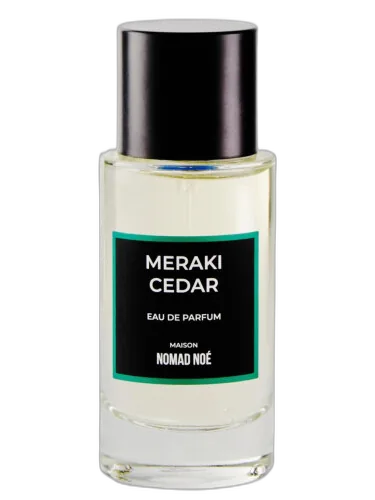
Maison Nomad Noé
Meraki Cedar Maison Nomad Noé
Shared accords: fresh spicy, leather, patchouli