
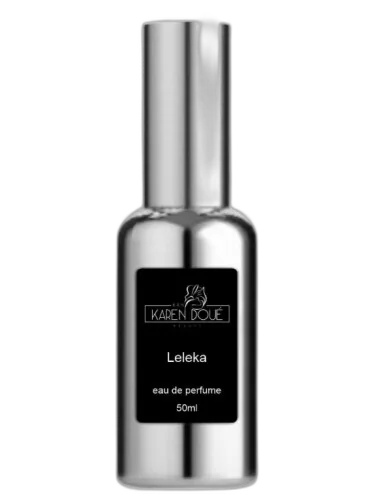

Leleka Karen Doué
Fragrance Story
Leleka by Karen Doué is a Floral Woody Musk fragrance for women. The nose behind this fragrance is Anna Shevchuk. Top notes are Mimosa, Green Leaves, Lily-of-the-Valley and Water Notes; middle notes are Oakmoss, Vetiver, Peony, Grass, Rose and Lavender; base notes are Hay, Musk, Amber, Vanilla and Dried Fallen Leaves.
Composition Profile
About the Perfumer

Anna Shevchuk
Anna Shevchuk is a perfumer known for her work with the Karen Doué brand, where she has created a diverse range of fragrances. Her olfactory style balances classic elegance with modern versatility, evident in compositions like A True Lady and Biker. Notable creations include Afternoon Tea, Ampir, and Autumn, which showcase her ability to craft distinct, character-driven scents.
Fragrance Notes
Top Notes
First impression · 15-30 min
 Mimosa
 Green Leaves
 Lily-of-the-Valley
Water Notes
Lily-of-the-Valley
Water Notes
Heart Notes
Core character · 2-4 hours
 Oakmoss
 Vetiver
 Peony
Peony
 Grass
Grass
 Rose
Rose
 Lavender
Base Notes
Lasting impression · 4+ hours
 Hay
Hay
 Musk
Musk
 Amber
Amber
 Vanilla
 Dried Fallen Leaves
Leleka Karen Doué by Karen Doué offers a distinctive olfactory experience that stands out from other fragrances in its category.
Crafted with the finest ingredients and a blend of traditional and modern perfumery techniques, this fragrance represents the pinnacle of the perfumer's art.
Leleka Karen Doué embodies the distinctive style of Karen Doué while adding a unique chapter to their fragrance portfolio.
Character Profile
The Sage Archetype: Portrait of Leleka Karen Doué
Essence
Leleka Karen Doué is a fragrance that whispers of quiet confidence-a blend of bergamot, fig, and cedar, evoking both warmth and restraint. It does not clamor for attention but lingers, subtle yet unforgettable. The person who chooses this scent is drawn to its understated elegance, its balance of earthiness and refinement. They are not one for ostentation, yet their presence carries weight.
This individual is, at their core, a Sage-an archetype defined by wisdom, introspection, and a relentless pursuit of truth. The Sage seeks knowledge not for power, but for understanding. They are the observer, the thinker, the one who listens more than they speak, yet when they do, their words are deliberate and meaningful.
Shadow
Yet the Sage is not without their burdens. Their greatest strength-their mind-can become a prison. They may overanalyze emotions, dissecting love and pain until both lose their vitality. At times, they retreat too far into thought, mistaking contemplation for living. Their pursuit of truth can harden into skepticism, making them slow to trust or quick to dismiss what cannot be neatly explained.
Their independence, while admirable, may border on aloofness. They resist vulnerability, fearing it as irrationality. In moments of stress, they withdraw, rationalizing solitude as wisdom when it may simply be avoidance.
Conclusion
Their mind is a well-tended garden-cultivated, rich with insight, yet never overgrown with dogma. They value clarity over certainty, nuance over absolutes. Philosophy, literature, and art are not mere pastimes but essential nourishment. They might be drawn to Stoicism, Eastern thought, or existentialism, not as rigid doctrines but as lenses through which to examine life.
Their style reflects their inner world: minimal yet intentional, favoring natural textures, muted tones, and timeless cuts. They appreciate craftsmanship-well-made leather, hand-thrown ceramics, the weight of a good book in their hands. Luxury, to them, is not in logos but in quiet excellence.
Relationships are few but deep. They do not crave crowds but cherish those who can engage in long, meandering conversations about ideas, dreams, and the unspoken currents beneath daily life. Their love is steady, their loyalty unwavering-but they demand intellectual and emotional honesty in return.
Similar Fragrances
Fragrances with a comparable profile - shared accords, notes, and character.
Karen Doué
Leleka Karen Doué
Shared accords: aquatic, floral, fresh

Ineke
Balmy Days & Sundays Ineke
Shared accords: floral, fresh, green

Zeromolecole
Clori Zeromolecole
Shared accords: aquatic, floral, fresh

Laboratorio Olfattivo
Décou-vert Laboratorio Olfattivo
Shared accords: aquatic, floral, fresh

Khaikin
Narcissus Grove — Нарциссовая Роща Khaikin
Shared accords: aquatic, floral, fresh