


Fars Limited Edition Katana Parfums
At a glance
Is Fars Limited Edition Katana Parfums worth trying?
Fars Limited Edition by Katana Parfums is a fragrance for women and men.
- Best match
- Evening wear in Fall
- Performance feel
- Excellent longevity with Strong sillage
- Signature profile
- warm spicy, woody, yellow floral with Ylang-Ylang, Saffron, Black Pepper
The first impression
Fars Limited Edition by Katana Parfums is a fragrance for women and men. This is a new fragrance. Fars Limited Edition was launched in 2022.
What shapes the scent
The perfumer behind it

Katana Parfums
Katana Parfums crafts bold fragrances with a modern edge, often exploring rich oriental and woody accords. Their Fars Limited Edition showcases a confident blend of spice and depth, appealing to those who seek distinctive scents. The brand balances tradition with contemporary flair, creating perfumes that leave a lasting impression. Each composition reflects precision and intensity, much like the namesake blade.
Notes pyramid
All Notes
Complete scent profile
 Ylang-Ylang
 Saffron
 Black Pepper
Turmeric
Black Pepper
Turmeric
 Ho Wood
 Cloves
 Agarwood (Oud)
 Balsamic Notes
 Peru Balsam
 Cedar
Cedar
 Guaiac Wood
 Pine Tree
 Castoreum
 Musk
Musk
 Lemon
Lemon
 Orange
The mood it creates
The Fars Limited Edition Katan Archetype: Portrait of Fars Limited Edition Katana Parfums
Essence
This person is most closely defined by the Samurai archetype-a fusion of discipline, artistry, and controlled intensity. Like the katana itself, they embody sharpness and elegance, a blade honed by both battle and contemplation. The Samurai is not merely a fighter but a philosopher-warrior, someone who values mastery over brute force, precision over chaos. Their choice of Fars Limited Edition Katana Parfums reflects this duality: a fragrance that balances steel-like clarity with the subtle warmth of rare woods and spices.
Style & Aesthetic
Their tastes are refined but never ostentatious. They prefer minimalism with intention-clean lines in clothing, uncluttered spaces, and objects that serve a purpose beyond mere decoration. Their wardrobe leans toward monochrome tones, punctuated by the occasional deep red or indigo, reminiscent of traditional Japanese craftsmanship.
In fragrance, they gravitate toward scents that evoke contrast: smoky incense against fresh citrus, leather softened by vanilla, or oud wrapped in bergamot. They appreciate complexity but despise excess-every note must have its place, just as every movement in a duel must be deliberate.
They thrive on ritual. Morning might begin with black coffee, a few moments of stillness, and a deliberate choice of attire-each action a reaffirmation of control. They train their body as they do their mind, whether through martial arts, weightlifting, or long-distance running.
Work is another arena for discipline. They are meticulous, often excelling in fields requiring strategy and precision-engineering, design, or even entrepreneurship. They despise mediocrity but must guard against perfectionism, which can paralyze as much as it refines.
Philosophy & Values
They live by a personal code, one that prizes honor not in the feudal sense, but as an internal compass. Truthfulness, self-discipline, and resilience are their pillars. They believe in strength through restraint, that power is most potent when wielded with precision.
Yet, their philosophy is not rigid dogma. They understand the necessity of adaptation, of bending like bamboo rather than snapping like dry wood. They may meditate on the teachings of Miyamoto Musashi or the Stoics, but they also recognize that wisdom must be lived, not merely recited.
Relationships
They are selective in their bonds, valuing depth over breadth. Their friendships are few but unshakable, built on mutual respect rather than convenience. In love, they are intense but not possessive-a partner must be their equal, someone who understands that devotion is not submission but a shared journey.
Yet, their shadow emerges here: emotional austerity. They may struggle with vulnerability, mistaking openness for weakness. Their silence can be mistaken for coldness, and their high standards may alienate those who cannot meet them.
Shadow
Every archetype has its dark reflection. For the Samurai, it is the tendency toward merciless judgment-both of themselves and others. When unbalanced, they may become overly rigid, mistaking flexibility for failure. Their high standards can curdle into impatience with human frailty, including their own.
They may also struggle with isolation, believing that true strength requires solitude. But the blade that never leaves its sheath grows brittle; the warrior who never lowers their guard forgets the warmth of trust.
Conclusion
The ideal lies in harmony between blade and hand. They must learn that true mastery includes knowing when to sheathe the sword, when to let the world in without fear of imperfection. Their fragrance-steel and smoke, warmth and edge-mirrors this balance.
They are not just a fighter, but a warrior-poet, one who understands that the greatest battles are often fought within.
If you like this, try these
Fragrances with a comparable profile - shared accords, notes, and character.

FL Parfums
Eclectique Pour Homme Fl Parfums
Shared top notes: black pepper, ylang-ylang

Dior
Purple Oud Dior
Shared top notes: agarwood (oud), orange, saffron

One Diffusion
One Diffusion W-108 One Diffusion
Shared top notes: cedar, lemon, orange
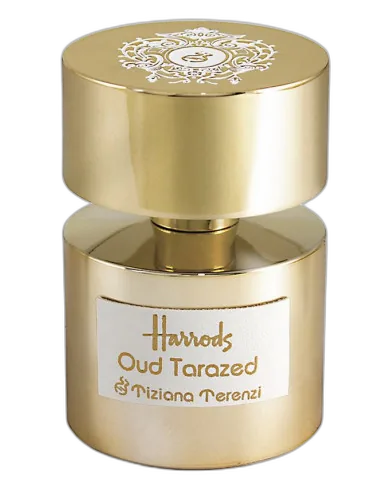
Tiziana Terenzi
Oud Tarazed Tiziana Terenzi
Shared top notes: black pepper, lemon, saffron
SweDoft
X Oud Swedoft
Shared top notes: agarwood (oud), musk, saffron