
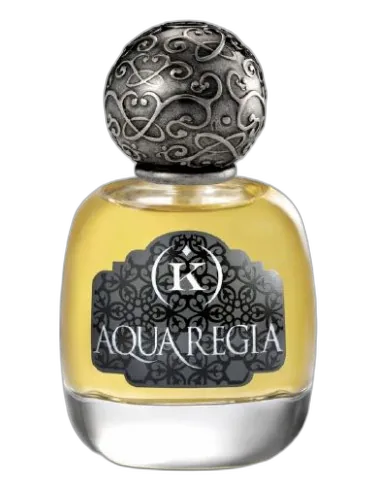
Aqua Regia Kemi Blending Magic
At a glance
Is Aqua Regia Kemi Blending Magic worth trying?
Aqua Regia by Kemi Blending Magic is a Woody Chypre fragrance for women and men.
- Best match
- Evening wear in Fall
- Performance feel
- Very Good longevity with Strong sillage
- Signature profile
- woody, aromatic, camphor with Bergamot, Rose, Eucalyptus
The first impression
Aqua Regia by Kemi Blending Magic is a Woody Chypre fragrance for women and men. Aqua Regia was launched in 2016. The nose behind this fragrance is Chris Maurice. Top notes are Bergamot and Rose; middle notes are Eucalyptus and Musk; base notes are Vetiver, Vanila, Agarwood (Oud) and Patchouli.
What shapes the scent
The perfumer behind it

Chris Maurice
Chris Maurice is a perfumer with a wide-ranging portfolio that includes work for Aqualis, Artal Perfumes, Assaf, Astrophil & Stella, Azman, and Bey Parfum. His creations include Egoli, Forbidden Rose, Darley, Love Is Lost, Moonage Daydream, Riad Jasmine, Song For A Wanderer, and Abyssoria. His style varies from floral and romantic to dark and mysterious.
Notes pyramid
Top Notes
First impression · 15-30 min
 Bergamot
 Rose
Rose
Heart Notes
Core character · 2-4 hours
 Eucalyptus
 Musk
Musk
Base Notes
Lasting impression · 4+ hours
 Vetiver
 Vanila
 Agarwood (Oud)
 Patchouli
The mood it creates
The Alchemist Archetype: Portrait of Aqua Regia Kemi Blending Magic
Essence
To wear Aqua Regia Kemi Blending Magic is to embody transformation itself-a fragrance that dissolves boundaries, merges contradictions, and transmutes the ordinary into gold. The person who chooses this scent is not merely drawn to its olfactory complexity; they are, at their core, an Alchemist, one of Jung’s most potent archetypes. They seek the philosopher’s stone within themselves, the elusive point where opposites unite, where the base becomes precious, where the self is both crucible and catalyst.
Shadow
But the Alchemist is not without their peril. Their greatest strength-the ability to dissolve and reform-can become a flaw when taken to excess. They may grow restless, discarding relationships, careers, or identities before they fully mature, mistaking motion for progress. Their love of paradox can tip into contrarianism, rejecting tradition not for wisdom’s sake but for the thrill of defiance.
Their shadow emerges when the quest for transformation becomes an escape from the self. They may romanticize chaos, mistaking destruction for alchemy, leaving scorched earth where they meant to plant seeds. At their worst, they become the false alchemist-one who manipulates others in the name of growth, who confuses control with mastery, who mistakes the illusion of change for its substance.
Conclusion
Their tastes are an amalgamation of the rare and the refined. They might favor art that blurs genres-surrealism meeting minimalism, or classical music infused with electronic dissonance. Their wardrobe balances structure and fluidity: tailored jackets with flowing fabrics, or vintage pieces reimagined in modern cuts. They are drawn to places where history and futurism collide-abandoned factories turned into galleries, ancient libraries housing digital archives.
Philosophically, they reject binaries. Good and evil, masculine and feminine, chaos and order-these are not fixed poles but ingredients in an endless reaction. They believe in the necessity of decay for rebirth, of destruction for creation. Their values are rooted in authenticity through transformation-they do not fear change but court it, seeing stagnation as the only true failure.
Relationships are their most volatile experiments. They attract those who crave depth, who are unafraid of being reshaped in the crucible of intimacy. Yet they are wary of those who demand permanence, for they know that even gold, once molten, must cool into form. Their love is intense but never possessive; they seek partners who are alchemists in their own right, fellow travelers in the pursuit of self-evolution.
If you like this, try these
Fragrances with a comparable profile - shared accords, notes, and character.
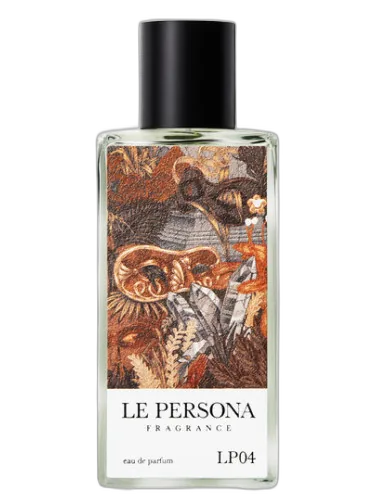
Le Persona
Lp04 Golden Gem Le Persona
Shared top notes: bergamot, rose
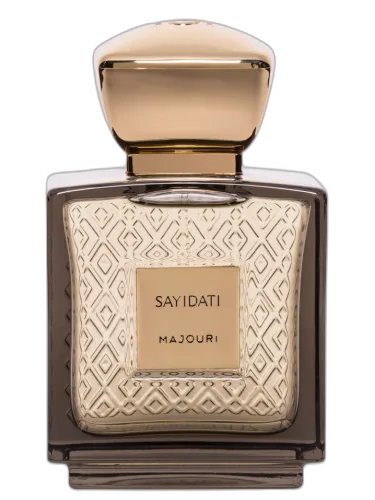
Majouri
Sayidati Majouri
Shared top notes: bergamot, rose

Suhad Perfumes
Nada Suhad Perfumes
Shared top notes: rose
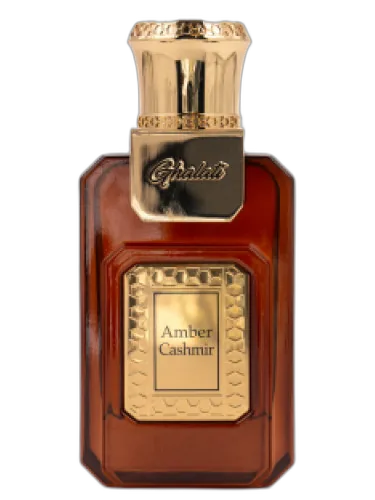
Ghalati
Amber Cashmir Ghalati
Shared top notes: bergamot, rose

Agar Aura
Cuir Chypre Agar Aura
Shared top notes: bergamot, rose