
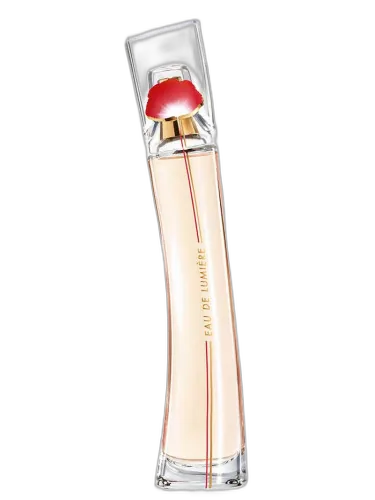

Flower By Kenzo Eau De Lumière Kenzo
Fragrance Story
Flower by Kenzo Eau de Lumière by Kenzo is a Floral fragrance for women. Flower by Kenzo Eau de Lumière was launched in 2017. Flower by Kenzo Eau de Lumière was created by Alberto Morillas and Amandine Clerc-Marie. Top notes are Calabrian bergamot and Cassis; middle notes are Jasmine, Bulgarian Rose, Peach and Ylang-Ylang; base notes are Violet, White Musk and Heliotrope.
Composition Profile
About the Perfumer

Alberto Morillas
Alberto Morillas is a master perfumer based in Geneva, Switzerland, and a longtime collaborator with Firmenich. His style is known for refined, luminous compositions that balance natural elegance with modern clarity. He created the bold leather and spice of Amouage Opus VII - Reckless Leather, the fresh citrus depth of Acqua di Parma Colonia Intensa, and the woody warmth of Aedes de Venustas Palissandre D'or. His work has shaped contemporary perfumery across both niche and luxury houses.
Fragrance Notes
Top Notes
First impression · 15-30 min
 Calabrian bergamot
Cassis
Calabrian bergamot
Cassis
Heart Notes
Core character · 2-4 hours
 Jasmine
Bulgarian Rose
Jasmine
Bulgarian Rose
 Peach
Peach
 Ylang-Ylang
Base Notes
Lasting impression · 4+ hours
 Violet
White Musk
Violet
White Musk
 Heliotrope
Character Profile
The Flower By Kenzo Eau De Lum Archetype: Portrait of Flower By Kenzo Eau De Lumière Kenzo
Essence
At the core of this person’s being lies the Innocent-an archetype defined by purity, optimism, and an unshakable belief in beauty. Like the fragrance itself-a delicate interplay of luminous florals, powdery softness, and a whisper of citrus-they embody a sense of lightness and wonder. The Innocent does not merely see the world; they see its potential, its hidden radiance. They are drawn to what is gentle, ephemeral, and untouched by cynicism.
Yet, the Innocent is not naive in the way of a child. Their optimism is a choice, a philosophy. They have seen shadows but refuse to let them define reality. Instead, they cultivate an inner garden where hope blooms even in winter.
Shadow
But every archetype has its shadow. For the Innocent, it is a reluctance to face darkness head-on. Their optimism can become a shield, a way to avoid the messier, more painful aspects of life. When confronted with conflict, they withdraw-not out of cowardice, but because they fear that engaging with ugliness might tarnish their inner light.
This avoidance can make them passive in moments that demand action. They may romanticize relationships or situations that are fundamentally flawed, refusing to acknowledge red flags because they disrupt their vision of harmony. Their greatest fear is not failure, but disillusionment-the moment when they must admit that the world is not as soft as they wish it to be.
Yet, it is this very tension-between their radiant idealism and the inevitable shadows of reality-that makes them compelling. They are not blind to suffering; they simply choose to transmute it into something bearable, even beautiful. Their strength lies in their refusal to let bitterness take root.
But true growth for them comes when they learn that light is not the absence of darkness, but the courage to exist alongside it. When they embrace this, their optimism matures into wisdom. Their fragrance-once merely a symbol of untouched purity-becomes something richer: the scent of resilience, of a spirit that has seen storms but still chooses to bloom.
They are, in the end, a living paradox: delicate yet enduring, dreamy yet profound. And in their quiet way, they remind the world that sometimes, the most radical act is simply to believe in light.
Conclusion
Their tastes are refined but never ostentatious. They prefer soft textures, flowing silhouettes, and muted pastels, as if dressing in the same palette as their fragrance-whites, pale pinks, and golds. Their home is an extension of this aesthetic: airy spaces with fresh flowers, sheer curtains that dance in the breeze, and carefully chosen objects that carry meaning rather than mere decoration.
Philosophically, they believe in the power of small joys. A perfectly brewed cup of tea, the scent of rain on warm pavement, the way sunlight filters through leaves-these are the moments that sustain them. They reject the notion that life must be harsh to be real. Instead, they argue that beauty is its own kind of truth, one that softens the edges of existence.
In relationships, they are warm but guarded. They attract others effortlessly-people are drawn to their serenity, their ability to make even mundane moments feel sacred. Yet, they rarely let anyone too close. Their vulnerability is veiled in elegance; they fear that deep intimacy might shatter their carefully maintained harmony.
Similar Fragrances
Fragrances with a comparable profile - shared accords, notes, and character.

Lumodos
Love Supernova Lumodos
Shared accords: citrus, floral, fruity

Natura
Violeta Natura
Shared accords: citrus, floral, fruity

Miss Selfridge
Beau Miss Selfridge
Shared accords: citrus, fruity, musky
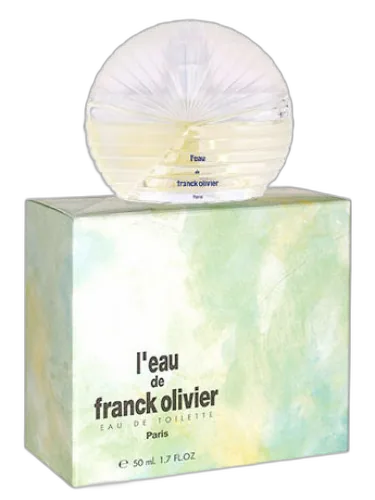
Franck Olivier
L'eau De Franck Olivier Franck Olivier
Shared accords: floral, fruity, musky

Dominican Perfumes
White Orchid Dominican Perfumes
Shared accords: citrus, floral, fruity