
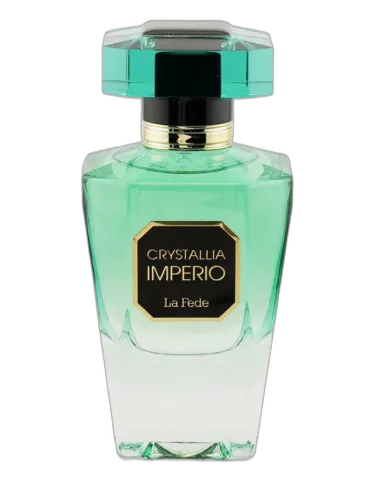

La Fede Crystallia Imperio Khadlaj Perfumes
At a glance
Is La Fede Crystallia Imperio Khadlaj Perfumes worth trying?
LA FEDE CRYSTALLIA IMPERIO by Khadlaj Perfumes is a fragrance for women.
- Best match
- Evening wear in Winter
- Performance feel
- Excellent longevity with Strong sillage
- Signature profile
- fruity, white floral, fresh with Apple, Bubble Gum, Jasmine
The first impression
LA FEDE CRYSTALLIA IMPERIO by Khadlaj Perfumes is a fragrance for women. LA FEDE CRYSTALLIA IMPERIO was launched during the 2020's. Top note is Apple; middle notes are Bubble Gum, Jasmine and Caramel; base notes are Crystal Amber and Sandalwood.
What shapes the scent
The perfumer behind it

Notes pyramid
Top Notes
First impression · 15-30 min
 Apple
Apple
Heart Notes
Core character · 2-4 hours
 Bubble Gum
 Jasmine
 Caramel
Base Notes
Lasting impression · 4+ hours
 Crystal Amber
 Sandalwood
The mood it creates
The Alchemist Archetype: Portrait of La Fede Crystallia Imperio Khadlaj Perfumes
Essence
This person is governed by the Ruler archetype, the sovereign force that seeks order, mastery, and transcendence. They do not merely wear a fragrance-they wield it as an extension of their will, a distillation of their essence. La Fede Crystallia Imperio, with its crystalline clarity and imperial depth, mirrors their desire to command their own destiny while radiating an aura of refined power.
Yet, like all rulers, they walk a fine line between nobility and tyranny, between enlightened leadership and the cold grip of control. Their life is a carefully orchestrated symphony-every note deliberate, every silence meaningful.
Style & Aesthetic
Their taste is baroque in restraint-opulent, yet never excessive. They favor textures that suggest both strength and sensuality: cashmere that feels like armor, silk that moves like liquid metal. Their wardrobe is a curated arsenal, each piece chosen for its ability to project authority without shouting.
In art, they are drawn to the symbolic and the sublime-Caravaggio’s chiaroscuro, the geometric precision of Art Deco, the haunting minimalism of Arvo Pärt’s compositions. They appreciate beauty that demands something of the observer, that refuses to be passive.
Their days are structured, not out of rigidity, but because they understand that freedom is born from discipline. They rise early, not from obligation, but because the quiet hours before dawn belong to them alone. Their home is a sanctuary-spare but sumptuous, a place where every object has earned its right to exist.
They indulge, but never excessively. A glass of aged whiskey is not just a drink, but a ritual. A meal is not merely sustenance, but an act of reverence. They do not deny themselves pleasure, but they refuse to be ruled by it.
Philosophy & Values
They believe in intentionality-that life is not something that happens to them, but something they sculpt. Their philosophy is one of self-deification, not in the egotistical sense, but in the Nietzschean ideal of becoming the artist of one’s own existence. They do not wait for permission to be extraordinary; they declare it.
Their values are rooted in excellence, autonomy, and legacy. They despise mediocrity, not out of arrogance, but because they see wasted potential as a kind of spiritual crime. They seek to leave an imprint on the world, whether through their work, their relationships, or the sheer force of their presence.
Relationships
They attract others effortlessly-their magnetism is undeniable. But intimacy is a paradox for them. They crave loyalty and depth, yet their own need for control can make vulnerability a battleground. Their love is fierce, almost devotional, but it comes with expectations: to be seen, to be matched, to be worthy.
They are not cruel, but they can be unyielding. Those who disappoint them are not cast out with malice, but with the quiet finality of a judge delivering a verdict. Their shadow here is isolation-the risk of becoming so self-contained that even their closest bonds feel like diplomatic treaties rather than living, breathing connections.
Shadow
Yet, for all their mastery, there is a cost. The Ruler’s shadow is pride-the belief that they alone know the correct way, that their vision is infallible. When challenged, they may respond not with curiosity, but with dismissal. Their strength can calcify into dogma, their confidence into hubris.
And beneath it all, there is the quiet fear: what if control is an illusion? What if, for all their efforts, they are as subject to chaos as anyone else? This fear is the crack in their crystalline facade, the vulnerability they rarely acknowledge.
Conclusion
They are not perfect, nor do they wish to be. Perfection is static; they are alive, dynamic, evolving. La Fede Crystallia Imperio is their olfactory crown-a scent that does not beg for attention, but assumes it.
They rule not through force, but through presence. And though their shadow follows them, it is not a weakness, but a reminder: even the most sovereign souls must sometimes kneel before the unknown.
If you like this, try these
Fragrances with a comparable profile - shared accords, notes, and character.

Victoria's Secret
Tease Sugar Fleur Victoria's Secret
Shared top notes: apple

Hugo Boss
Boss Orange Eau De Parfum Hugo Boss
Shared top notes: apple
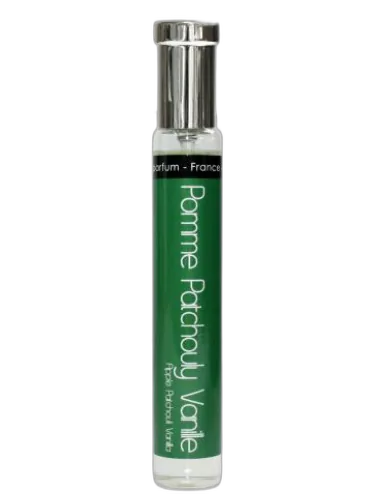
Adopt Parfums
Pomme Patchouly Vanille Adopt Parfums
Shared top notes: apple

Botanique
Orchard Botanique
Shared top notes: apple
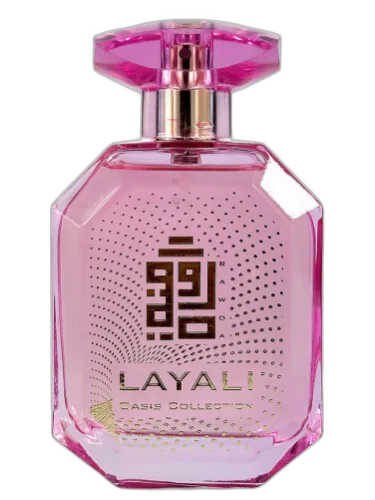
Rawda Perfumes
Layali Rawda Perfumes
Shared top notes: apple