
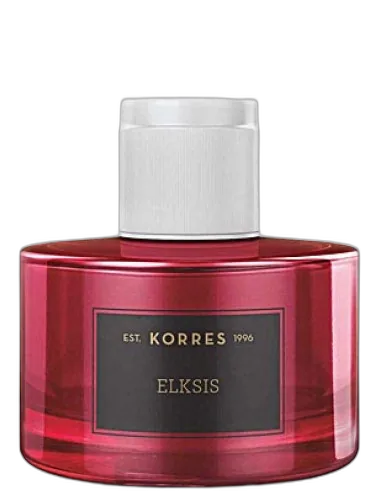

Elksis Korres
At a glance
Is Elksis Korres worth trying?
Elksis by Korres is a Floral fragrance for women.
- Best match
- Evening, Special Occasion wear in Fall, Winter
- Performance feel
- Good longevity with Moderate sillage
- Signature profile
- woody, white floral, vanilla with Jasmine, Woodsy Notes, Madagascar Vanilla
The first impression
Elksis by Korres is a Floral fragrance for women. Elksis was launched in 2015. Elksis was created by George Korres and Lena Korres. Top note is Jasmine; middle note is Woodsy Notes; base notes are Madagascar Vanilla and Sandalwood.
What shapes the scent
The perfumer behind it

George Korres
George Korres is a Greek perfumer and the founder of the Korres brand, which draws on natural ingredients and traditional remedies. He has created a wide range of fragrances including Aktis, Avra, Elksis, Mira, Mykonian Breeze, Neos, and Tharros. His scents often feature fresh, herbal, and citrus notes inspired by the Greek landscape.
Notes pyramid
Top Notes
First impression · 15-30 min
 Jasmine
Heart Notes
Core character · 2-4 hours
 Woodsy Notes
Base Notes
Lasting impression · 4+ hours
Madagascar Vanilla
 Sandalwood
The mood it creates
The Lover Archetype: Portrait of Elksis Korres
Essence
The one who wears Elksis by Korres is drawn to its duality-the warmth of vanilla and tonka bean entwined with the sharpness of pink pepper and cardamom. This fragrance is not loud, nor does it demand attention; it lingers, suggesting depth rather than proclaiming it. Such a person is defined by the Lover archetype, for they seek beauty, intimacy, and sensory richness in all things. Their life is an ongoing pursuit of connection-to people, to art, to the world itself-but this pursuit is not without its shadows.
They are not a hedonist in the reckless sense, but rather a sensualist of the mind and body. Pleasure, for them, is not mere indulgence but a philosophy-a way of experiencing truth through the senses. They believe that to live fully is to taste, to touch, to inhale the world deeply.
Relationships
They do not collect friends, but the bonds they form are intense, almost devotional. They are the confidant who remembers the exact way you take your coffee, the lover who traces the contours of your wrist as if memorizing them. Their relationships are built on intimacy, not convenience.
Yet this depth has its cost. They can become possessive, mistaking intensity for permanence. When a connection fades, they feel it like a physical loss, a wound that lingers. Their shadow is clinging-the fear that beauty is fleeting, that love is never enough. They may oscillate between abandon and withdrawal, giving too much or retreating into solitude.
Shadow
Their greatest strength-their capacity for passion-can also undo them. When unbalanced, they may lose themselves in pursuit of sensation, mistaking novelty for meaning. They might chase lovers like fragrances, sampling each but never fully committing. Or they might idealize a single person, projecting onto them an impossible perfection.
There is also a quiet melancholy beneath their warmth. They are acutely aware of time’s passage-how a scent fades, how a moment cannot be held. This awareness can sharpen their appreciation for life, but it can also paralyze them with nostalgia, trapping them in memories of what was instead of what is.
Conclusion
Their tastes are deliberate, curated with an eye for the elegant and the understated. They prefer natural fabrics-linen, cashmere, silk-that feel alive against the skin. Their home is filled with textures: a well-worn leather chair, a hand-thrown ceramic vase, the faint scent of dried lavender in a drawer. They are drawn to art that evokes emotion rather than intellect-impressionist paintings, jazz that sways between melancholy and joy, poetry that speaks of longing.
Their philosophy is one of presence. They distrust dogma, preferring instead the wisdom of the body-the way a shared meal can dissolve barriers, the way a lover’s touch can convey more than words. They are not naive; they know the world is harsh. But they choose, consciously, to cultivate beauty where they can.
If you like this, try these
Fragrances with a comparable profile - shared accords, notes, and character.
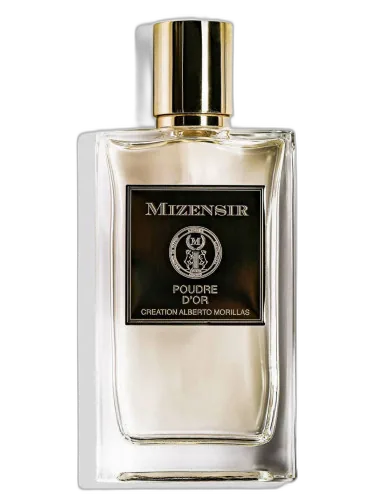
Mizensir
Poudre D'or Mizensir
Shared top notes: jasmine
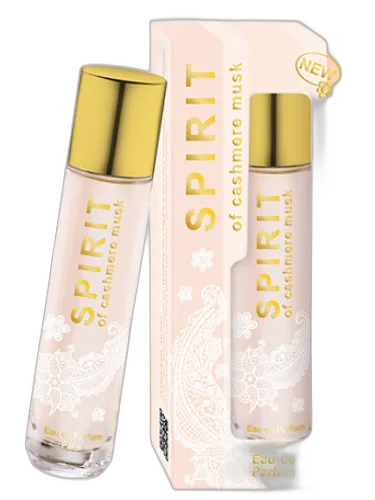
Spirit
Spirit Of Cashmere Musk Spirit
Shared top notes: jasmine
Au Pays de la Fleur d’Oranger
Jasmin Reve Au Pays De La Fleur D’oranger
Shared top notes: jasmine
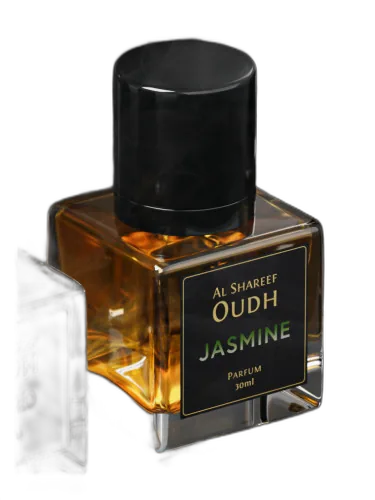
Al Shareef Oudh
Jasmine Al Shareef Oudh
Shared top notes: jasmine
Louis Vuitton
Turbulences Louis Vuitton
Shared top notes: jasmine