


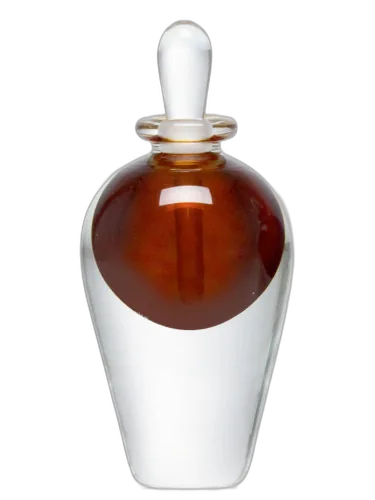
Ambre Vert Kreolfleurage Parfums
Fragrance Story
Ambre Vert by Kreolfleurage Parfums is a fragrance for women and men. Ambre Vert was launched in 1990. The nose behind this fragrance is Pit Hugelmann.
Composition Profile
About the Perfumer

Pit Hugelmann
Pit Hugelmann is a perfumer associated with Kreolfleurage Parfums, a brand inspired by Caribbean culture and nature. He created Ambre Vert, a fragrance blending amber with green, vegetal notes, and Bwanwar, which evokes tropical woods and spices. His work reflects a deep connection to the landscapes and traditions of the French overseas territories.
Fragrance Notes
All Notes
Complete scent profile
 Grass
Grass
 Patchouli
 Takamaka
 Cinnamon
 Ylang-Ylang
 Herbal Notes
 Hibiscus
 Cardamom
 Ginger
Character Profile
The Sage Archetype: Portrait of Ambre Vert Kreolfleurage Parfums
Essence
Ambre Vert by Kréolfleurage Parfums is a fragrance of paradox-warm yet fresh, resinous yet green, ancient yet alive. It carries the depth of amber, smoothed by vetiver and brightened by citrus, evoking a mind that dwells in contemplation yet remains anchored in the present. The person who chooses this scent is drawn to complexity, to the interplay of shadow and light-not just in fragrance, but in thought, in life. They are, above all, a Sage, the Jungian archetype of wisdom, knowledge, and the relentless pursuit of truth.
Style & Aesthetic
The Sage’s style is understated but deliberate. They favor natural textures-linen, wool, unpolished wood-materials that age gracefully, gaining character rather than losing it. Their wardrobe is a muted palette of earth tones, with occasional flashes of deep green or amber, mirroring their fragrance.
They surround themselves with objects that tell stories: a well-worn leather journal, a vintage telescope, a shelf of books annotated in the margins. Their home is not cluttered, but neither is it sterile-every item has been chosen with intention, as if each carries a fragment of meaning.
Philosophy & Values
To the Sage, life is a library, a labyrinth of ideas waiting to be deciphered. They are not content with superficial answers; they crave depth, nuance, the hidden connections between things. Their philosophy is one of curiosity tempered by skepticism-they question everything, even their own beliefs, refining them like an alchemist purifying gold.
They value intellectual freedom above dogma, preferring the fluidity of thought to rigid systems. Yet, they are not detached scholars; their wisdom is meant to be lived, not merely pondered. They seek to understand human nature, not just in books but in the quiet observations of daily life-the way a friend hesitates before speaking, the flicker of doubt in a lover’s eyes.
Relationships
The Sage does not seek crowds, but they are not hermits. They prefer small, meaningful connections-conversations that stretch into the night, friendships built on mutual curiosity rather than obligation. In love, they are slow to trust but fiercely loyal once they do. Their partner must be both a student and a teacher, someone who challenges them without demanding conquest.
Yet, their greatest flaw in relationships is emotional distance. The Sage can become so absorbed in thought that they forget to feel. They analyze love instead of surrendering to it, dissecting emotions until they lose their warmth. Their shadow is the Recluse, the version of themselves who withdraws too far into intellect, leaving others stranded at the gates of their mind.
Shadow
The Sage’s greatest strength-their relentless pursuit of truth-can curdle into intellectual pride. They may dismiss emotions as irrational, or worse, believe their understanding of the world is superior. This is their tragedy: the more they know, the more they risk losing touch with the raw, messy vitality of life.
At their worst, they become the Dogmatist of Doubt, someone so committed to questioning that they refuse to believe in anything at all. They may grow cynical, mistaking skepticism for wisdom, forgetting that some truths are felt, not proven.
Conclusion
The Sage’s journey is one of integration-learning to marry intellect with intuition, analysis with empathy. When they succeed, they become not just thinkers but guides, using their insight to illuminate paths for others without dictating the way.
They are the quiet voice in the room who speaks only when they have something worth saying. The one who listens deeply, observes keenly, and, when the moment is right, offers a truth that feels like amber-warm, enduring, and luminous.
Similar Fragrances
Fragrances with a comparable profile - shared accords, notes, and character.
Kreolfleurage Parfums
Ambre Vert Kreolfleurage Parfums
Shared accords: cinnamon, earthy, floral

Precious Liquid
Fresh Vetyver Precious Liquid
Shared accords: earthy, floral, fresh
Frazer Parfum
Chapter Six Frazer Parfum
Shared accords: earthy, floral, green

Arts&Scents
Wild Cat Musk Arts&scents
Shared accords: floral, fresh, green

Paris Elysees
Vodka Night Paris Elysees
Shared accords: earthy, floral, green