
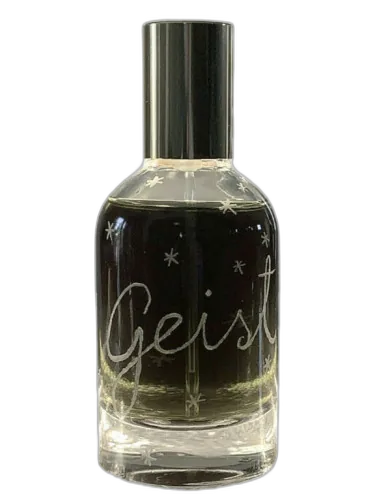
Geist La Curie
At a glance
Is Geist La Curie worth trying?
Geist by La Curie is a Oriental fragrance for women and men.
- Best match
- Evening wear in Fall
- Performance feel
- Excellent longevity with Strong sillage
- Signature profile
- earthy, woody, aromatic with Soil Tincture, Fir, Oakmoss
The first impression
Geist by La Curie is a Oriental fragrance for women and men. Geist was launched in 2019. The nose behind this fragrance is Lesli Wood Peterson.
What shapes the scent
The perfumer behind it

Lesli Wood Peterson
Lesli Wood Peterson is the perfumer behind La Curie's collection, including Ash, Cyllene, Faunus, Geist, Incendo, Larrea, No. 1, and Odyssey. Her creations often explore dark, atmospheric, and resinous themes. She brings a distinctive, nature-inspired edge to niche perfumery.
Notes pyramid
All Notes
Complete scent profile
 Soil Tincture
 Fir
Fir
 Oakmoss
 Ink
Ink
 Hemlock
Chocolate
Hemlock
Chocolate
 Leather
 Ambergris
The mood it creates
The Alchemist Archetype: Portrait of Geist La Curie
Essence
To wear Geist La Curie is to embrace the scent of transformation-a fragrance that blurs the line between decay and rebirth, between the sacred and the profane. The person who chooses this scent does not merely seek to smell pleasant; they seek to evoke, to unsettle, to alchemize perception itself. Their soul is a crucible where contradictions dissolve into something greater-something both unsettling and sublime.
The dominant archetype here is The Alchemist, the eternal seeker who transmutes base matter into gold, darkness into wisdom. Like the medieval mystics who sought the philosopher’s stone, this individual is drawn to the hidden, the esoteric, the liminal spaces where meaning is forged. They are not content with surface appearances; they crave depth, transformation, and the revelation of what lies beneath.
This archetype thrives on paradox-they find beauty in the grotesque, wisdom in decay, and divinity in the mundane. Their life is an ongoing experiment, a series of self-imposed trials meant to refine their essence. Yet, like all alchemists, they risk becoming lost in their own labyrinth of symbols, mistaking the process for the destination.
Style & Aesthetic
Their appearance is an extension of their philosophy-deliberately ambiguous, layered, and symbolic. They might favor vintage garments with a gothic or surrealist edge, fabrics that whisper of forgotten eras, textures that invite touch yet repel easy categorization. Their style is not about fashion but about semiotics-every piece is a sigil, a fragment of a larger narrative.
They are drawn to the uncanny-art that disturbs as much as it enchants. Their taste in music, literature, and visual art leans toward the baroque, the decadent, or the avant-garde. They might adore the films of David Lynch, the writings of Angela Carter, or the paintings of Remedios Varo. Beauty, for them, must contain a hint of menace to be truly compelling.
They thrive in liminal spaces-dimly lit cafés, antique bookshops, abandoned buildings reclaimed by nature. Their home is a cabinet of curiosities, filled with relics, oddities, and artifacts that serve as talismans of personal meaning.
Their daily rituals are deliberate and symbolic. They might keep a journal in cipher, collect bones or dried flowers, or practice divination not out of superstition but as a form of psychological spelunking. They are drawn to esoteric practices, though they approach them with a scholar’s skepticism-less out of belief than out of fascination with the mind’s capacity for myth-making.
Philosophy & Values
Their worldview is one of radical metamorphosis. They believe that nothing is static-not identity, not morality, not even reality itself. They are drawn to thinkers like Nietzsche, Bataille, and the surrealists, who revel in the dissolution of boundaries. For them, life is not about stability but about perpetual becoming.
They value authenticity above all, but their definition of authenticity is fluid. It is not about consistency but about the courage to embrace contradictions. They despise dogma, yet they may construct private mythologies so intricate that they become dogma in disguise. Their morality is not fixed but situational-they judge actions by their transformative potential rather than by rigid codes.
Relationships
They do not seek companionship for comfort but for catalytic intensity. Their relationships are laboratories where identities are tested and reshaped. They attract those who are drawn to mystery but may repel those who crave simplicity.
In love, they are both devoted and elusive. They demand depth but resist possession. Their partners must be willing to navigate shifting emotional landscapes, where passion and detachment coexist. They are not cruel by nature, but their need for transformation can make them seem indifferent to the wounds they leave behind.
Their friendships are curated and intense, often revolving around shared obsessions rather than casual camaraderie. They have little patience for small talk; every conversation must be a ritual, an exchange of symbols.
Shadow
Every alchemist risks becoming consumed by their own experiments. Their relentless pursuit of transformation can turn into self-annihilation-an endless cycle of deconstruction without reconstruction. They may grow so enamored with their own symbolism that they lose touch with the tangible world, becoming lost in a maze of their own making.
Their greatest flaw is emotional inaccessibility. They fear stagnation so deeply that they may sabotage stability, mistaking chaos for enlightenment. Their relationships suffer when their partners grow weary of their shifting selves, craving something-or someone-solid.
At their worst, they become the recluse, withdrawing into a private universe where reality bends to their will but ceases to connect with others. The very depth they seek becomes a prison of their own design.
Conclusion
The lover of Geist La Curie is neither saint nor sinner but a philosopher of the senses, forever dancing on the edge of revelation and ruin. They are the modern alchemist, turning the leaden weight of existence into fleeting gold-only to watch it dissolve again, as all things must.
Their life is not one of answers but of perpetual questions, and in that endless inquiry lies both their brilliance and their tragedy.
If you like this, try these
Fragrances with a comparable profile - shared accords, notes, and character.
Alkemia Perfumes
Wing Of Bat Alkemia Perfumes
Shared top notes: ambergris, leather, oakmoss
O'Driu
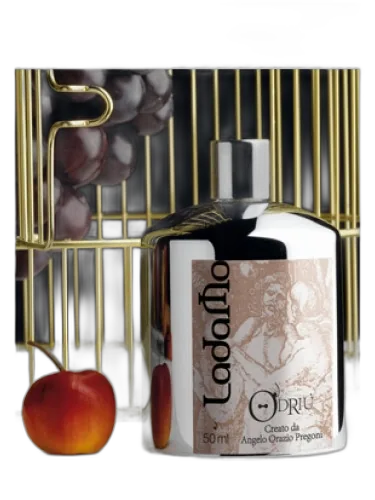
Ladamo O'driu
Shared top notes: soil tincture

Il Profumiere
Resina Quercia Il Profumiere
Shared top notes: leather
Bruno Acampora
Young Hearts – Pure Essence Bruno Acampora
Shared top notes: oakmoss
Papillon Artisan Perfumes
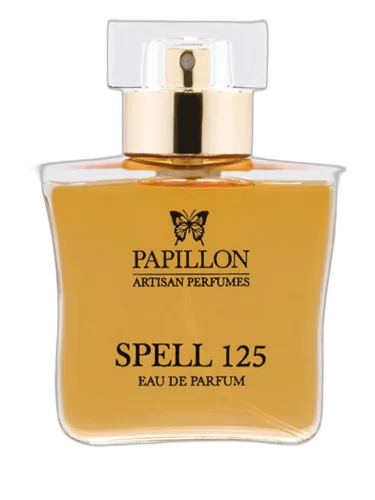
Spell 125 Papillon Artisan Perfumes
Shared top notes: ambergris, hemlock