
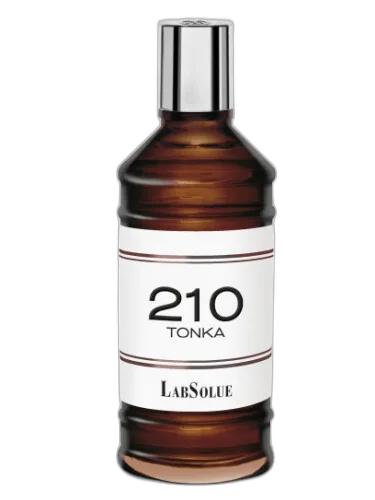

210 Tonka Labsolue
At a glance
Is 210 Tonka Labsolue worth trying?
210 Tonka by LabSolue is a fragrance for women and men.
- Best match
- Evening wear in Fall
- Performance feel
- Very Good longevity with Moderate sillage
- Signature profile
- citrus, vanilla, white floral with Orange Blossom, Tonka Bean, Lavender
The first impression
210 Tonka by LabSolue is a fragrance for women and men. The nose behind this fragrance is Aliénor Massenet.
What shapes the scent
The perfumer behind it

Alienor Massenet
Alienor Massenet is a French perfumer known for her work with major fragrance houses, including Givaudan. Her style balances modern elegance with subtle complexity, often highlighting floral and woody contrasts. Notable creations include the luminous Rose Lumiere for Armand Basi and the enigmatic Black Swan for Brocard.
Notes pyramid
All Notes
Complete scent profile
 Orange Blossom
 Tonka Bean
 Lavender
 Vanilla
 Neroli
 Lemon
Lemon
The mood it creates
The Alchemist Archetype: Portrait of 210 Tonka Labsolue
Essence
To wear 210 Tonka Labsolue is to embrace transformation-not the kind that announces itself with fanfare, but the quiet, deliberate alchemy of the self. This fragrance, with its warm, resinous tonka bean, smoky labdanum, and a whisper of vanilla, speaks to someone who seeks depth in the subtle, who finds beauty in the interplay of shadow and light. They are, at their core, an Alchemist-an archetype defined by curiosity, refinement, and the relentless pursuit of meaning.
Their life is an experiment in aesthetic and intellectual distillation. They do not merely consume; they refine. Whether in art, conversation, or personal style, they are drawn to the layered, the complex, the slightly enigmatic. Their wardrobe is a study in controlled contrasts-luxurious fabrics in muted tones, structured silhouettes softened by an undone cuff or an asymmetrical drape. They favor the understated over the ostentatious, yet their restraint is itself a statement.
Philosophically, they are drawn to the idea that life is a series of transmutations-that raw experience can be refined into wisdom, pain into poetry, banality into something transcendent. They may quote Rilke or Pessoa in passing, not to impress, but because these voices echo their own inner dialogue. Their values are rooted in authenticity, but not the crude kind-rather, authenticity as a crafted ideal, something to be honed over time.
Shadow
Yet the Alchemist’s pursuit of perfection carries its own dangers. Their tendency to refine can become a form of evasion-an endless polishing of ideas that never see the light of action. At times, they withdraw into their own mind, mistaking introspection for progress. Their disdain for the obvious can edge into elitism; they may dismiss what is simple or popular as unworthy of their attention.
In love, their idealism can be a double-edged sword. They may hold others-and themselves-to impossible standards, mistaking flaws for failures of alchemy rather than essential parts of being human. When disappointed, they retreat into solitude, where their thoughts grow more labyrinthine, more detached from the messiness of real connection.
Their greatest challenge is to accept that not everything can-or should-be distilled. Some truths are found in the unrefined, the spontaneous, the imperfect.
Conclusion
The Alchemist’s greatest strength is their ability to perceive hidden connections. They see the potential in things others dismiss-a faded photograph, an obscure philosophy, a person others overlook. This makes them extraordinary companions: they listen with an intensity that makes others feel truly seen, and they offer insights that linger long after the conversation ends.
In relationships, they are selective but devoted. They do not crave crowds; they cultivate depth. Their love is not possessive but catalytic-they seek partners who, like them, are engaged in the work of becoming. Their friendships are often lifelong, built on mutual respect for each other’s inner worlds.
Professionally, they thrive where creativity and intellect intersect-perhaps as a perfumer, a curator, a writer, or a strategist. They are not motivated by status, but by the quiet satisfaction of mastery. Their work is meticulous, almost ritualistic, as if each task were part of a grander design.
If you like this, try these
Fragrances with a comparable profile - shared accords, notes, and character.

LABOR8
Da'at 119 Labor8
Shared top notes: lavender, lemon

Emanuel Ungaro
Ungaro Pour L'homme Ii Emanuel Ungaro
Shared top notes: lavender, lemon, neroli
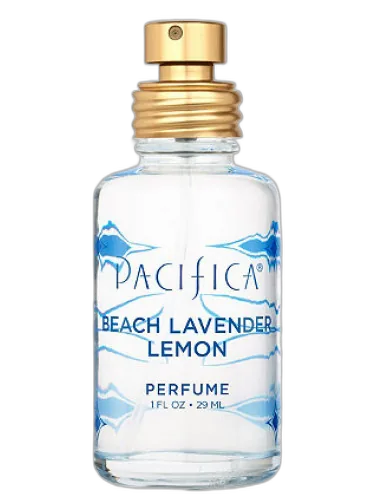
Pacifica
Beach Lavender Lemon Pacifica
Shared top notes: lavender, lemon, vanilla

Colornoise
Chill Colornoise
Shared top notes: lavender, tonka bean, vanilla

Montale
Boise Vanille Montale
Shared top notes: lavender, lemon, tonka bean