
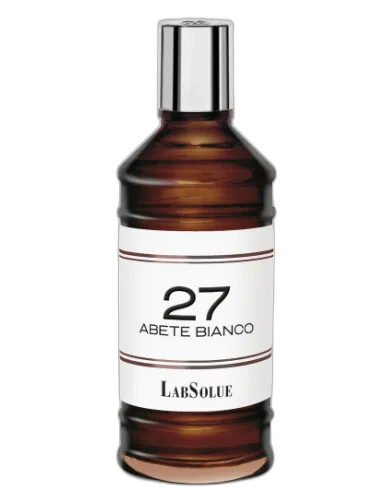

27 Abete Bianco Labsolue
At a glance
Is 27 Abete Bianco Labsolue worth trying?
27 Abete Bianco by LabSolue is a Woody Aromatic fragrance for women and men.
- Best match
- Casual wear in Winter
- Performance feel
- Good longevity with Moderate sillage
- Signature profile
- woody, aromatic, fresh spicy with Eucalyptus, Fir, Juniper Berries
The first impression
27 Abete Bianco by LabSolue is a Woody Aromatic fragrance for women and men. The nose behind this fragrance is Alberto Morillas.
What shapes the scent
The perfumer behind it

Alberto Morillas
Alberto Morillas is a master perfumer based in Geneva, Switzerland, and a longtime collaborator with Firmenich. His style is known for refined, luminous compositions that balance natural elegance with modern clarity. He created the bold leather and spice of Amouage Opus VII - Reckless Leather, the fresh citrus depth of Acqua di Parma Colonia Intensa, and the woody warmth of Aedes de Venustas Palissandre D'or. His work has shaped contemporary perfumery across both niche and luxury houses.
Notes pyramid
All Notes
Complete scent profile
 Eucalyptus
 Fir
Fir
 Juniper Berries
The mood it creates
The Lover Archetype: Portrait of 27 Abete Bianco Labsolue
Essence
The one who wears 27 Abete Bianco Labsolue is, above all, a seeker of clarity. This fragrance-cool, crisp, and resinous-evokes the solitude of alpine forests, the quiet wisdom of ancient trees, and the sharp purity of winter air. It is not a scent for those who crave warmth or sensuality; it is for those who find truth in stillness. Their dominant archetype is the Sage, the thinker who values knowledge, introspection, and the unadorned essence of things.
Yet the Sage is not merely a scholar. They are drawn to the liminal spaces-where thought meets intuition, where nature meets intellect. They do not merely observe the world; they dissect it, seeking patterns, meanings, and hidden symmetries. Their love for this fragrance reveals a soul that finds solace in austerity, in the kind of beauty that does not beg for attention but commands it through sheer presence.
Style & Aesthetic
Their style is deliberate, almost ascetic-clean lines, muted tones, fabrics that whisper rather than shout. They favor wool, linen, unpolished leather. Their home is sparse but not sterile; every object has been chosen for its function or its quiet resonance. A well-worn book, a single piece of driftwood, a black-and-white photograph of a misty landscape-these are their treasures.
They are drawn to philosophy, but not the kind that exists purely in abstraction. They prefer thinkers like Nietzsche, Schopenhauer, or the Stoics-those who wrestle with existence rather than systematize it. They may also harbor a love for poetry, particularly the kind that lingers in ambiguity, like Rilke or Pessoa. Music, if they indulge in it, is likely instrumental-minimalist piano, ambient soundscapes, or the deep hum of a cello.
Philosophy & Values
They value autonomy above all else. Not in the rebellious sense, but in the way a tree stands rooted yet free. They do not fear solitude; in fact, they require it. Their relationships are few but profound-they do not suffer fools, nor do they tolerate superficiality. When they love, it is with a quiet intensity, a loyalty that does not need to be spoken.
Yet this very strength is also their shadow. Their love of solitude can slip into isolation, their intellectual rigor into detachment. They may struggle with emotional expression, mistaking silence for depth and withdrawal for wisdom. Their partners or friends may at times feel like distant travelers in their mental landscape, always observing but never fully inhabiting their world.
Shadow
The Sage’s greatest flaw is hubris of the mind. They may believe that understanding a thing is the same as mastering it-that to name an emotion is to transcend it. They can become trapped in their own intellect, mistaking analysis for living. When wounded, they retreat further inward, hardening like frost on glass.
There is also a danger of aesthetic elitism-a subtle disdain for those who do not share their refined tastes. They may dismiss sentimentality as weakness, warmth as naivety. This is their blind spot: the refusal to accept that wisdom without compassion is merely cleverness in disguise.
Conclusion
For the Sage who wears Abete Bianco, true growth lies not in deeper isolation but in learning to embrace the mess of human connection. They must remember that the forest is not only made of trees-it is also the undergrowth, the decay, the tangled roots. To know the world, one must sometimes step out of the mind and into the pulse of life.
They will always be drawn to the crisp, the clear, the undisturbed. But the greatest wisdom is knowing when to let the snow melt.
If you like this, try these
Fragrances with a comparable profile - shared accords, notes, and character.
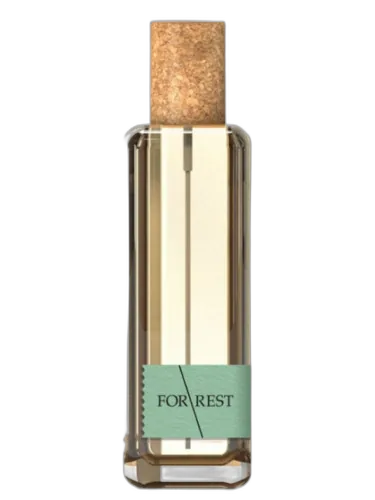
Faberlic
For/rest Faberlic
Shared top notes: fir
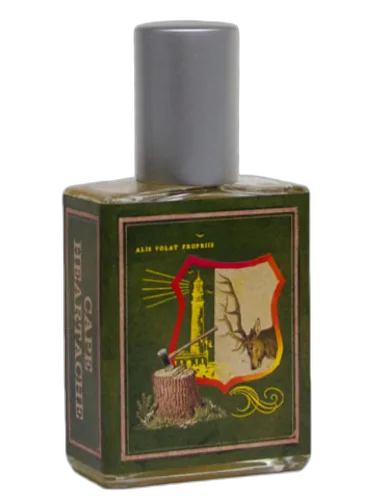
Imaginary Authors
Cape Heartache Imaginary Authors
Shared top notes: fir

Smell Bent
Reindeer Games Smell Bent
Shared top notes: fir
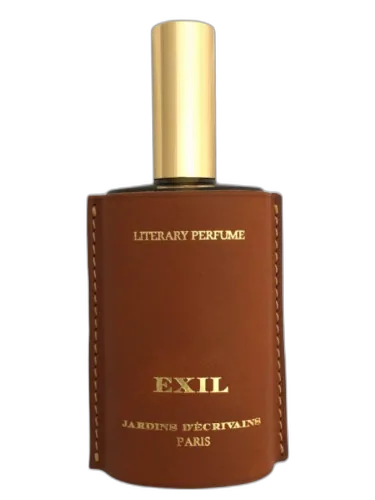
Jardins d’Ecrivains
Exil Jardins D’ecrivains
Shared top notes: eucalyptus
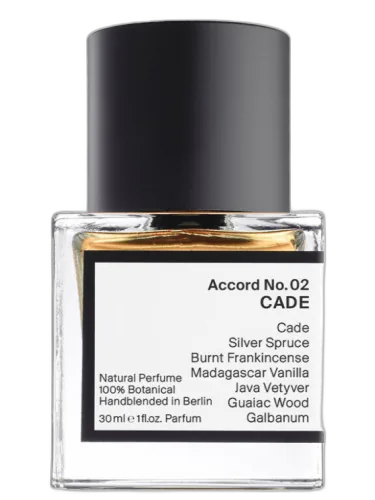
RAER Scents
Accord No. 02: Cade Raer Scents
Shared top notes: fir