


Petrushka Петрушка Ladanika
Fragrance Story
Petrushka Петрушка by Ladanika is a Oriental Fougere fragrance for women and men. This is a new fragrance. Petrushka Петрушка was launched in 2024. The nose behind this fragrance is Andrey Chibisov.
Composition Profile
About the Perfumer

Andrey Chibisov
Andrey Chibisov is a Russian perfumer known for his work with the niche brand Odetu, where he has created a diverse range of fragrances. His style often balances bold, contrasting notes, as seen in Odetu’s Black Coffee and Berry Berissimo, alongside more ethereal compositions like Aurora Borealis. He also contributed to Ladanika and Petrushka, demonstrating a versatility that spans from rich, woody scents to fresh, powdery accords.
Fragrance Notes
All Notes
Complete scent profile
 Beetroot
 Lime
Lime
 Parsley
 Rhubarb
 Clove
Clove
 Sandalwood
 Vanilla
Petrushka Петрушка Ladanika by Ladanika offers a distinctive olfactory experience that stands out from other fragrances in its category.
Crafted with the finest ingredients and a blend of traditional and modern perfumery techniques, this fragrance represents the pinnacle of the perfumer's art.
Petrushka Петрушка Ladanika embodies the distinctive style of Ladanika while adding a unique chapter to their fragrance portfolio.
Character Profile
The Sage Archetype: Portrait of Petrushka Петрушка Ladanika
Essence
To wear Petrushka Петрушка Ladanika is to embrace a scent that is both earthy and enigmatic-a fragrance that whispers of dried herbs, warm spices, and the quiet wisdom of forgotten rituals. The person who chooses this scent is not one for fleeting trends or superficial allure; they seek depth, resonance, and a connection to something timeless. They are, at their core, a Sage-a seeker of knowledge, a keeper of hidden truths, and a guide for those who dare to look beyond the surface.
Their mind is a labyrinth of ideas, theories, and contemplations. They move through life with a quiet intensity, observing the world as if it were a grand puzzle waiting to be deciphered. Their presence is neither loud nor domineering, yet it lingers, like the faint trace of incense in an ancient library.
Style & Aesthetic
Their tastes are refined but never ostentatious. They prefer the understated elegance of raw linen, well-worn leather, and handcrafted ceramics over the sterile sheen of mass-produced luxury. Their home is a sanctuary of textures-rough wood, aged paper, the soft glow of candlelight. They collect books not for display but for the weight of their words, the wisdom they carry.
In music, they are drawn to compositions that unfold slowly, revealing their beauty in layers-Gregorian chants, minimalist piano, or the deep hum of a Tibetan singing bowl. They savor food that tells a story-slow-cooked stews, bitter dark chocolate, black tea steeped with cardamom. Their palate, like their mind, appreciates the interplay of contrasts: sweetness with bitterness, warmth with austerity.
They thrive in solitude but are not reclusive. They may retreat for days into books, meditation, or long walks in nature, yet they are not detached from the world. They engage with it selectively, choosing only those battles that align with their inner truth.
Their work, if they have not chosen the path of the wandering philosopher, is something that allows for contemplation-writing, teaching, healing, or crafting. They disdain the grind of meaningless labor, preferring poverty with purpose over wealth without soul.
Philosophy & Values
They believe that meaning is not handed to us but uncovered through relentless inquiry. They distrust dogma, preferring the winding path of personal discovery. Their philosophy is one of skeptical reverence-they question everything yet remain open to the mystical, the inexplicable.
Their values are rooted in autonomy, wisdom, and authenticity. They despise pretense, hypocrisy, and blind conformity. To them, the greatest sin is not ignorance but the refusal to question. Yet, they are not cynical; they retain a quiet hope that beneath the chaos of existence, there is an order, a pattern, a truth worth pursuing.
Relationships
They are not the life of the party, nor do they wish to be. Their friendships are few but profound, built on mutual respect for depth and intellect. They attract those who hunger for meaning, who sense that this person holds keys to unseen doors.
In love, they are slow to trust but fiercely loyal once their heart is engaged. They do not love lightly; their affection is a rare gift, given only to those who understand their need for solitude, their moments of withdrawal into thought. Their partner must be both an equal and a student-someone who challenges them yet respects their need for silence.
Shadow
Yet even the Sage has their darkness. Their relentless pursuit of wisdom can curdle into intellectual arrogance, a belief that they alone see the truth while others remain blind. They may withdraw too far, becoming cold, detached, or dismissive of those who do not share their depth.
Their skepticism, if unchecked, can harden into cynicism, a refusal to believe in anything beyond their own understanding. They may become trapped in their own mind, mistaking contemplation for action, theory for life.
Conclusion
The true Sage knows that wisdom is not a possession but a journey-one that must be shared, questioned, and lived. The lover of Petrushka Петрушка Ladanika walks this razor’s edge: a thinker who does not lose themselves in thought, a guide who remains a student, a seeker who knows that the greatest truths are often found in the spaces between words.
They are not perfect, nor do they wish to be. They are simply-and profoundly-awake.
Similar Fragrances
Fragrances with a comparable profile - shared accords, notes, and character.
Ladanika
Petrushka Петрушка Ladanika
Shared accords: aromatic, citrus, conifer

Ormonde Jayne
Xian Ormonde Jayne
Shared accords: aromatic, fresh spicy, fruity
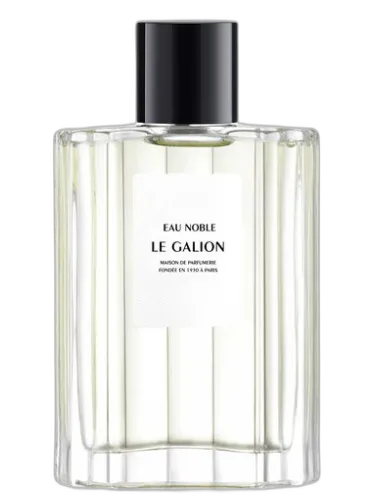
Le Galion
Eau Noble (2022) Le Galion
Shared accords: aromatic, citrus, fresh spicy

Brand No More
Fig / Frozen Brand No More
Shared accords: aromatic, fresh spicy, fruity

Deep Field Perfumes
Viridian Deep Field Perfumes
Shared accords: aromatic, citrus, conifer