
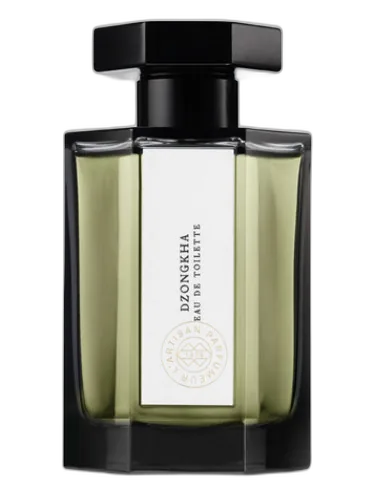
Dzongkha L'artisan Parfumeur
Fragrance Story
Dzongkha by L'Artisan Parfumeur is a Woody Spicy fragrance for women and men. Dzongkha was launched in 2006. The nose behind this fragrance is Bertrand Duchaufour. Top notes are Cardamom, Peony and Litchi; middle notes are Spices, Vetiver, Incense, White Tea and Cedar; base notes are Iris, Papyrus and Leather.
Composition Profile
About the Perfumer

Bertrand Duchaufour
Bertrand Duchaufour is a renowned French perfumer with a prolific career spanning many brands. He has created fragrances for Acqua di Parma, including Blu Mediterraneo - Cipresso Di Toscana and Colonia Assoluta, as well as for Aedes de Venustas, such as Café Tabac and Copal Azur. His style is known for its complexity and use of natural ingredients.
Fragrance Notes
Top Notes
First impression · 15-30 min
 Cardamom
 Peony
Peony
 Litchi
Heart Notes
Core character · 2-4 hours
 Spices
 Vetiver
 Incense
White Tea
Incense
White Tea
 Cedar
Cedar
Base Notes
Lasting impression · 4+ hours
 Iris
Iris
 Papyrus
 Leather
Dzongkha L'artisan Parfumeur by L'Artisan Parfumeur offers a distinctive olfactory experience that stands out from other fragrances in its category.
Crafted with the finest ingredients and a blend of traditional and modern perfumery techniques, this fragrance represents the pinnacle of the perfumer's art.
Dzongkha L'artisan Parfumeur embodies the distinctive style of L'Artisan Parfumeur while adding a unique chapter to their fragrance portfolio.
Character Profile
The Sage Archetype: Portrait of Dzongkha L'artisan Parfumeur
Essence
To wear Dzongkha by L'Artisan Parfumeur is to embrace a paradox-a scent that is at once austere and opulent, meditative yet worldly. It is a fragrance of contrasts: smoky incense and cool spices, leather and tea, the sacred and the temporal. The person who chooses this scent does not merely seek to smell pleasant; they seek to embody an idea-a philosophy of life that is both disciplined and deeply sensual.
Above all, this individual is a Sage, the seeker of wisdom, the one who values knowledge, introspection, and the refinement of the mind. The Sage does not chase fleeting pleasures but seeks enduring truths. They are drawn to Dzongkha because it is a fragrance that demands contemplation-it does not reveal itself immediately but unfolds in layers, much like the wisdom they pursue.
Yet, the Sage is not merely a detached observer. There is a quiet intensity beneath their composed exterior, a sensuality that is restrained but never absent. They understand that wisdom is not purely intellectual-it must be lived, felt, and experienced.
Style & Aesthetic
Their tastes are deliberate, never accidental. They prefer minimalism with depth-a well-worn leather journal, a carefully curated bookshelf, a single piece of art that speaks volumes rather than a cluttered wall. Their wardrobe is understated but tactile: linen, raw silk, wool that feels like history against the skin. They do not follow trends but cultivate a personal style that is timeless, almost monastic in its purity.
In music, they favor ambient soundscapes, classical ragas, or the sparse elegance of jazz. They appreciate silence as much as sound. In food and drink, they savor complexity-bitter dark chocolate, smoky lapsang souchong, a peaty Scotch that lingers on the tongue like a memory.
They live intentionally, whether in a small urban apartment filled with books or a countryside retreat where the air is crisp and the light is golden. Their home is a sanctuary-uncluttered, serene, but never sterile. There is always a hint of the exotic-a Tibetan singing bowl, an antique map, a vial of ink for handwritten letters.
Work is not merely a means to an end but an extension of their values. They may be a writer, a scholar, a curator, or a philosopher-or they may bring their contemplative nature to a more conventional career, treating it as a form of mindful practice.
But their shadow is the risk of becoming too removed from the world. They may retreat into their mind, mistaking solitude for enlightenment. They must remember that wisdom is not just to be hoarded-it is to be shared, tested, and lived.
Philosophy & Values
They believe in the marriage of discipline and curiosity. Routine is sacred to them-not out of rigidity, but because structure creates the space for deeper exploration. They may meditate, journal, or take long solitary walks, treating these rituals as acts of devotion to self-knowledge.
Their values are rooted in authenticity, intellectual honesty, and the pursuit of meaning. They despise superficiality, though they are not unkind-they simply have little patience for empty chatter. They would rather listen to one profound conversation than a hundred trivial ones.
Yet, their reverence for wisdom can become a shadow-a tendency toward arrogance or emotional detachment. They may dismiss emotions as irrational, or look down on those who do not share their depth. Their love of solitude can harden into isolation, their pursuit of truth into dogma.
Relationships
They are selective in love and friendship, valuing quality over quantity. Their closest bonds are with those who can match their intellectual intensity, who appreciate both their wisdom and their occasional eccentricities. They are not cold, but they reveal themselves slowly, like Dzongkha’s unfolding notes.
Romantically, they seek a partner who is both an equal and a mystery-someone who challenges them, who does not demand constant reassurance but respects their need for solitude. They love deeply but quietly, expressing affection through shared silence as much as through words.
Yet, their shadow emerges when their self-sufficiency turns into emotional withdrawal. They may rationalize their avoidance of vulnerability, believing that detachment is strength. They must learn that wisdom without warmth is incomplete.
Conclusion
Dzongkha is not a fragrance for those who seek to be noticed. It is for those who seek to understand. The person who wears it is a modern-day philosopher, a quiet rebel against the noise of the world. They are both disciplined and sensual, detached and deeply feeling.
Their greatest strength is their depth-their ability to see beyond the surface. Their greatest weakness is the temptation to believe they are above it. But if they can balance wisdom with warmth, solitude with connection, they become not just a Sage, but a true guide-one who does not merely accumulate knowledge, but illuminates the path for others.
Similar Fragrances
Fragrances with a comparable profile - shared accords, notes, and character.
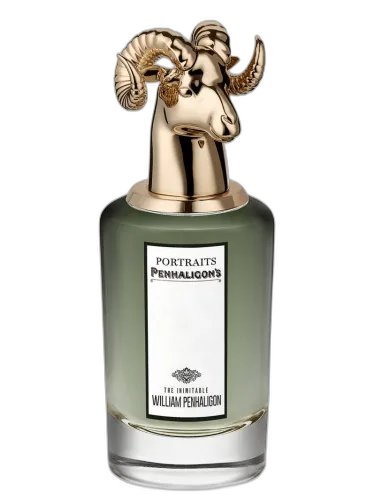
Penhaligon's
The Inimitable William Penhaligon Penhaligon's
Shared accords: amber, aromatic, earthy
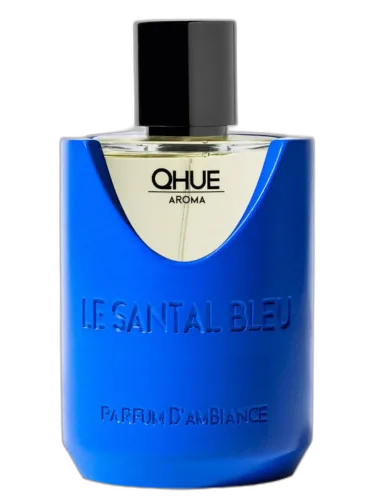
Qhue
Le Santal Bleu Qhue
Shared accords: amber, aromatic, earthy

Atelier Flou
Amarcord Atelier Flou
Shared accords: amber, aromatic, earthy

Tauer Perfumes
Lonesome Rider Tauer Perfumes
Shared accords: amber, earthy, iris
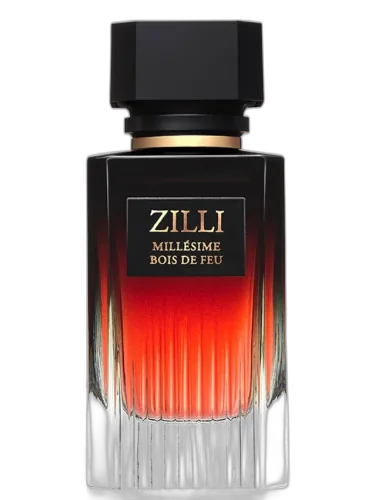
Zilli
Millesime Bois De Feu Zilli
Shared accords: amber, aromatic, earthy