

Iris De Gris L'artisan Parfumeur
Fragrance Story
Iris de Gris by L'Artisan Parfumeur is a Floral Green fragrance for women and men. This is a new fragrance. Iris de Gris was launched in 2022. The nose behind this fragrance is Quentin Bisch.
Composition Profile
About the Perfumer

Quentin Bisch
Quentin Bisch is a French perfumer known for his work with major houses like Amouage and Al-Jazeera Perfumes. His creations include Amouage Guidance, Purpose, and Existence, as well as Sidra Wood for Al-Jazeera Perfumes. Bisch often employs modern, minimalist structures with a focus on woody and amber accords.
Fragrance Notes
All Notes
Complete scent profile
 Pea
Pea
 Iris
Iris
 Bergamot
Iris De Gris L'artisan Parfumeur by L'Artisan Parfumeur offers a distinctive olfactory experience that stands out from other fragrances in its category.
Crafted with the finest ingredients and a blend of traditional and modern perfumery techniques, this fragrance represents the pinnacle of the perfumer's art.
Iris De Gris L'artisan Parfumeur embodies the distinctive style of L'Artisan Parfumeur while adding a unique chapter to their fragrance portfolio.
Character Profile
The Iris Enthusiast Archetype: Portrait of Iris De Gris L'artisan Parfumeur
Essence
This person is most closely aligned with the Sage archetype, though not in the traditional sense of an aged scholar or detached philosopher. Their wisdom is intuitive, refined through observation rather than dogma. They seek truth in subtleties-the way light shifts at dusk, the quiet tension in a conversation left unfinished. Iris De Gris mirrors this: a fragrance that is neither loud nor obvious, but layered with quiet complexity. The powdery earthiness of iris, the cool detachment of violet, the faint warmth of musk-this is a scent for someone who values depth over spectacle.
Style & Aesthetic
Their appearance is deliberate but never ostentatious. They favor muted tones-soft grays, deep greens, the occasional whisper of lavender-colors that suggest thoughtfulness rather than impulse. Fabrics are textured but never stiff: linen, cashmere, wool that has softened with time. Their home is similarly curated: shelves lined with well-worn books, a single striking painting on the wall, a vase holding nothing but a single dried branch. They understand the power of negative space.
Mornings are sacred: black coffee in a handmade mug, the same one every day. They write in journals with thick, unlined paper, filling them with fragments-aphorisms, sketches, quotes from poets long dead. They walk often, not for exercise but for thought, preferring empty streets in the early hours. Work is something they do with quiet excellence, though they rarely seek recognition. They are drawn to professions that allow for autonomy-writing, academia, art curation-anything that lets them dwell in the realm of ideas without excessive interference.
Philosophy & Values
They believe in the sanctity of the inner life. The modern world’s obsession with speed and spectacle baffles them; they prefer the slow unfurling of ideas, the kind that require patience to fully grasp. They value intelligence, but not the kind that parades itself-rather, the intelligence that listens, that waits for the right moment to speak. Their morality is not rigid but fluid, shaped by empathy and a deep suspicion of absolutes. They distrust grand ideologies, preferring instead the quiet ethics of small, meaningful actions.
Relationships
They are not a recluse, but neither are they a socialite. Their friendships are few but profound, built over years of shared silences as much as shared words. They attract those who crave depth, but they also repel those who mistake their reserve for coldness. In love, they are slow to commit but fiercely loyal once they do. Their partner must understand the importance of solitude-not as rejection, but as necessity. They do not suffer fools, but they are not cruel in their dismissals; they simply withdraw, leaving others to wonder what they did wrong.
Shadow
Their greatest strength-their self-sufficiency-can also become their flaw. There is a danger in too much introspection, in the belief that one’s own mind is the only reliable compass. At times, they retreat too far, mistaking isolation for wisdom. Their skepticism, while often justified, can harden into cynicism, closing them off from experiences that might unsettle but also enrich them. They may grow impatient with those who cannot keep up with their thoughts, dismissing them as shallow rather than meeting them halfway.
Conclusion
Iris De Gris is not a fragrance for those who wish to be seen. It is for those who wish to see, to observe the world with a clarity that borders on detachment. The person who wears it is neither aloof nor indifferent-they are simply waiting for something worth their full attention. And when they find it, their engagement is total, their insight piercing. But the risk remains: to live so deeply inside one’s own mind is to sometimes forget how to step outside of it. The challenge, then, is to balance their natural introspection with the messy, imperfect beauty of the world beyond thought.
Similar Fragrances
Fragrances with a comparable profile - shared accords, notes, and character.
L'Artisan Parfumeur
Iris De Gris L'artisan Parfumeur
Shared accords: citrus, earthy, green

Tiffany
Tiffany & Co Wild Iris Tiffany
Shared accords: citrus, earthy, iris
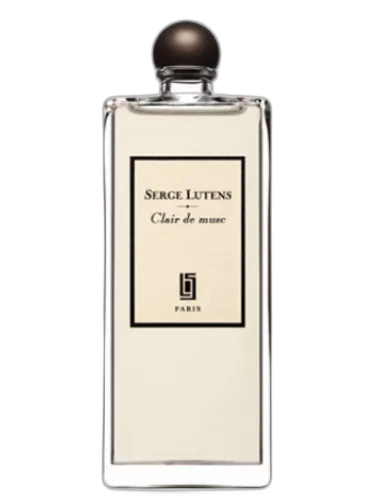
Serge Lutens
Clair De Musc Serge Lutens
Shared accords: citrus, earthy, iris

Fueguia 1833
Elogio De La Sombra Fueguia 1833
Shared accords: citrus, earthy, iris

Tokyo Milk Parfumerie Curiosite
Sencha Bleu Tokyo Milk Parfumerie Curiosite
Shared accords: citrus, earthy, green