
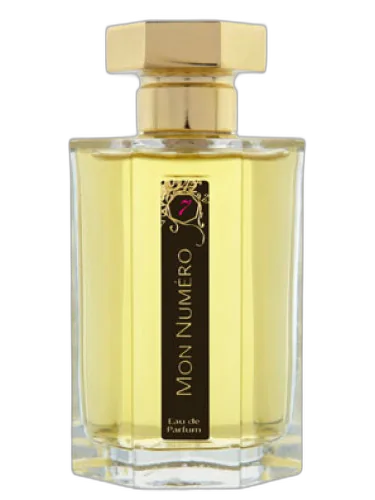
Mon Numero 7 L'artisan Parfumeur
Fragrance Story
Mon Numero 7 by L'Artisan Parfumeur is a Oriental Floral fragrance for women and men. Mon Numero 7 was launched in 2011. The nose behind this fragrance is Bertrand Duchaufour.
Composition Profile
About the Perfumer

Bertrand Duchaufour
Bertrand Duchaufour is a renowned French perfumer with a prolific career spanning many brands. He has created fragrances for Acqua di Parma, including Blu Mediterraneo - Cipresso Di Toscana and Colonia Assoluta, as well as for Aedes de Venustas, such as Café Tabac and Copal Azur. His style is known for its complexity and use of natural ingredients.
Fragrance Notes
All Notes
Complete scent profile
 Spices
 Incense
 Gardenia
 Tea
Tea
 Tuberose
 Jasmine
 Rose
Rose
Mon Numero 7 L'artisan Parfumeur by L'Artisan Parfumeur offers a distinctive olfactory experience that stands out from other fragrances in its category.
Crafted with the finest ingredients and a blend of traditional and modern perfumery techniques, this fragrance represents the pinnacle of the perfumer's art.
Mon Numero 7 L'artisan Parfumeur embodies the distinctive style of L'Artisan Parfumeur while adding a unique chapter to their fragrance portfolio.
Character Profile
The Alchemist Archetype: Portrait of Mon Numero 7 L'artisan Parfumeur
Essence
The person who cherishes Mon Numero 7 by L’Artisan Parfumeur is an Alchemist-a seeker of transformation, a weaver of meaning, and a connoisseur of the elusive. This fragrance, with its mysterious blend of spices, woods, and leather, is not merely a scent but an invocation, a whispered spell for those who refuse the mundane. The Alchemist does not wear perfume; they embody it, allowing it to resonate with their inner world of symbols, intuitions, and hidden truths.
They are drawn to the obscure, the layered, the things that require decoding. Like the alchemists of old, they believe in the transmutation of base experiences into gold-whether through art, philosophy, or the quiet rituals of daily life. Their existence is an experiment, a perpetual refinement of self and surroundings.
Style & Aesthetic
Their tastes are deliberate, never accidental. They favor textures that tell stories-aged leather, raw silk, unpolished metals. Their wardrobe is a carefully curated archive of timeless pieces, each chosen for its ability to evoke rather than impress. They might wear a vintage coat with a modern cut, or a single piece of heirloom jewelry, not for nostalgia’s sake, but because it carries the weight of history.
Their home is a sanctuary of shadows and light, where every object has been selected for its resonance. A well-worn book of poetry sits beside an abstract sculpture; incense burns near an open window, mingling with the crispness of the outside air. They are drawn to art that resists immediate comprehension-surrealist paintings, avant-garde cinema, music that lingers in the mind long after it ends.
Philosophically, they reject dogma but are fascinated by systems of thought-esoteric traditions, Jungian psychology, existentialism. They believe in the power of symbols to shape reality, and they see life as a series of initiations, each revealing a deeper layer of understanding.
Relationships
They do not collect acquaintances; they cultivate intimates. Their friendships are rare but profound, built on shared intellectual curiosity and mutual recognition of each other’s inner worlds. They are drawn to those who can converse in metaphor, who see the sacred in the ordinary.
Romantically, they seek a partner who is both muse and equal-someone who can match their intensity without being consumed by it. They are not possessive, but they demand authenticity. Superficiality repels them; they would rather be alone than engage in hollow connections.
Yet, their depth can be isolating. Not everyone can follow them into the labyrinth of their thoughts, and they sometimes resent those who cannot. Their standards are exacting, and they may withdraw rather than compromise.
Shadow
For all their wisdom, the Alchemist is not immune to folly. Their obsession with meaning can become a prison-they may overanalyze, seeing symbols where none exist, or become lost in abstraction, neglecting the tangible world. Their disdain for the ordinary can curdle into elitism, a quiet arrogance that dismisses those who do not share their refined tastes.
They are prone to melancholy, for the Alchemist knows too well the weight of impermanence. Their search for transformation can become a refusal to accept the present, always chasing an idealized version of life rather than living it. At their worst, they may withdraw into solipsism, mistaking solitude for enlightenment.
Conclusion
The true Alchemist learns that gold is not only found in hidden chambers but in the mundane-the warmth of sunlight on skin, the laughter of a friend, the quiet satisfaction of a well-brewed cup of tea. Mon Numero 7 is their companion in this dance between the mystical and the earthly, a reminder that beauty is not only in the rare but in the way one perceives.
They are neither saint nor cynic, but a seeker-sometimes lost, sometimes found, always in motion. And in that motion, they discover that the greatest alchemy is not in changing the world, but in allowing the world to change them.
Similar Fragrances
Fragrances with a comparable profile - shared accords, notes, and character.
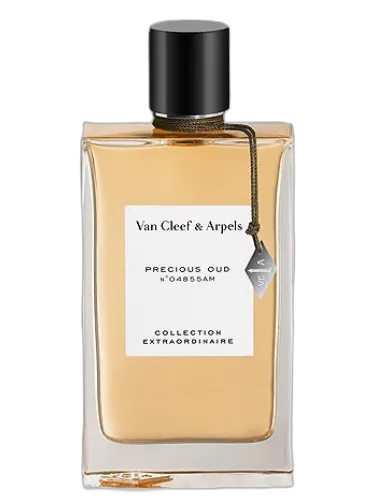
Van Cleef & Arpels
Precious Oud Van Cleef & Arpels
Shared accords: amber, animalic, balsamic
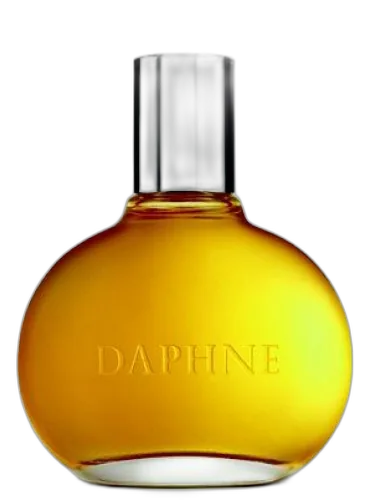
Comme des Garcons
Daphne Comme Des Garcons
Shared accords: amber, balsamic, smoky

Carolina Herrera
212 Men Silver Carolina Herrera
Shared accords: amber, balsamic, green

Dries Van Noten
Orange Smoke Dries Van Noten
Shared accords: amber, balsamic, green

Jo Malone London
Vintage Gardenia Jo Malone London
Shared accords: amber, animalic, balsamic