
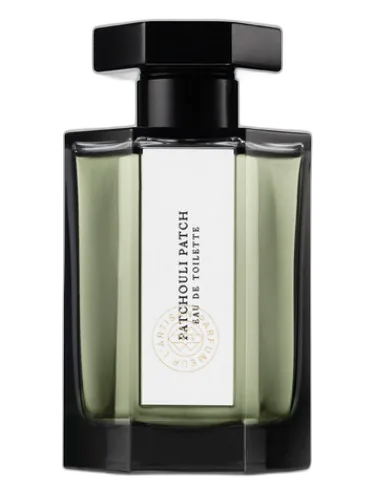
Patchouli Patch L'artisan Parfumeur
Fragrance Story
Patchouli Patch by L'Artisan Parfumeur is a Oriental fragrance for women and men. Patchouli Patch was launched in 2002. Patchouli Patch was created by Evelyne Boulanger and Bertrand Duchaufour. Top notes are Patchouli, Caraway, Star Anise and White Musk; middle notes are Patchouli, White Musk, Osmanthus and Iris; base notes are Sandalwood, Vetiver and Cedar.
Composition Profile
About the Perfumer

Bertrand Duchaufour
Bertrand Duchaufour is a renowned French perfumer with a prolific career spanning many brands. He has created fragrances for Acqua di Parma, including Blu Mediterraneo - Cipresso Di Toscana and Colonia Assoluta, as well as for Aedes de Venustas, such as Café Tabac and Copal Azur. His style is known for its complexity and use of natural ingredients.
Fragrance Notes
Top Notes
First impression · 15-30 min
 Patchouli
 Caraway
 Star Anise
 White Musk
Heart Notes
Core character · 2-4 hours
Patchouli
White Musk
 Osmanthus
 Iris
Iris
Base Notes
Lasting impression · 4+ hours
 Sandalwood
 Vetiver
 Cedar
Cedar
Patchouli Patch L'artisan Parfumeur by L'Artisan Parfumeur offers a distinctive olfactory experience that stands out from other fragrances in its category.
Crafted with the finest ingredients and a blend of traditional and modern perfumery techniques, this fragrance represents the pinnacle of the perfumer's art.
Patchouli Patch L'artisan Parfumeur embodies the distinctive style of L'Artisan Parfumeur while adding a unique chapter to their fragrance portfolio.
Character Profile
The Mystic Archetype: Portrait of Patchouli Patch L'artisan Parfumeur
Essence
The person who cherishes Patchouli Patch by L'Artisan Parfumeur is most closely aligned with the Sage archetype-a seeker of wisdom, a lover of depth, and a wanderer of the unseen. This fragrance, earthy yet ethereal, grounding yet mystical, mirrors their dual nature: rooted in the tangible world while perpetually drawn to the intangible. They are not merely a thinker but an interpreter of life’s hidden meanings, someone who finds beauty in the interplay of shadow and light.
Style & Aesthetic
Their wardrobe is an extension of their inner world-layered, textured, slightly enigmatic. They favor natural fabrics, loose silhouettes, and muted tones that whisper rather than shout. A well-worn leather satchel, a silver ring with obscure symbolism, a scarf dyed with indigo-these are their signatures. Their home is a sanctuary of curiosities: dried botanicals, antique books, incense residue on brass holders.
But there is a shadow here: a tendency toward aesthetic elitism. They may scorn mass-produced beauty, forgetting that even the simplest things can hold profundity.
They rise early, not out of discipline but because dawn feels like a secret hour. Their rituals are sacred: brewing tea with deliberate slowness, journaling in half-legible script, walking without destination. They may practice yoga, meditation, or some form of divination-not as trends, but as pathways to the unseen.
Yet their contemplative nature can tip into passivity. They may mistake reflection for action, spending so much time deciphering life that they forget to live it.
Philosophy & Values
To them, existence is a riddle to be contemplated, not solved. They reject superficiality, favoring instead the slow unraveling of truth through intuition and introspection. Their philosophy is not rigid but fluid-a blend of Eastern mysticism, existentialism, and a touch of bohemian romanticism. They believe in the sacredness of the mundane, finding divinity in the scent of damp earth, the texture of aged paper, or the silence between words.
Yet, their reverence for wisdom can sometimes manifest as dogmatism. They may dismiss those who do not share their depth as "unawakened," forgetting that enlightenment, too, can be a prison if it becomes self-righteous.
Relationships
They do not seek companionship lightly. Their friendships are few but profound, built on shared silences as much as shared words. They attract fellow seekers-artists, philosophers, wanderers-but may struggle with those who demand constant emotional availability. Romantic partners must understand their need for solitude, their occasional retreat into the labyrinth of their own mind.
Their flaw? Emotional detachment. They can become so enamored with ideas that they forget people are not concepts to be analyzed but beings to be felt.
Shadow
The Sage’s greatest danger is isolation-not of the body, but of the spirit. When wisdom becomes a fortress rather than a bridge, they risk becoming the Hermit, hoarding knowledge like a dragon hoards gold. They must remember that true understanding is not just to be acquired but shared, not just pondered but embodied.
Conclusion
The lover of Patchouli Patch is neither wholly of this world nor entirely apart from it. They are the quiet observer, the keeper of forgotten truths, the one who smells the storm before it breaks. Their life is a pilgrimage-sometimes meandering, sometimes purposeful-but always in pursuit of something just beyond reach. And perhaps that is the point: not to arrive, but to wander beautifully.
Similar Fragrances
Fragrances with a comparable profile - shared accords, notes, and character.

Sarah Ireland
Keahia Sarah Ireland
Shared accords: aromatic, earthy, floral

Lanoe
No. 4 Lanoe
Shared accords: aromatic, balsamic, earthy

Héritage Berbère
Hb Homme 09 Héritage Berbère
Shared accords: aromatic, balsamic, earthy

Mugler
Woodissime Mugler
Shared accords: aromatic, earthy, floral

Rose & Co Manchester
Gentleman Rose & Co Manchester
Shared accords: aromatic, balsamic, earthy