
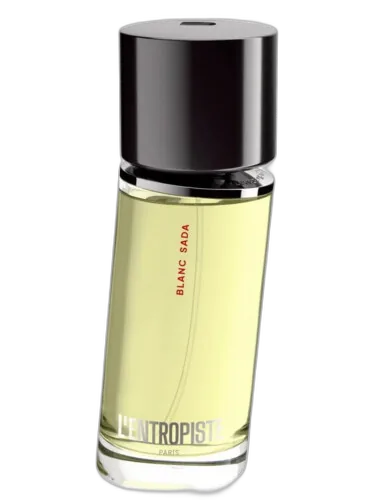

Blanc Sada L'entropiste
Fragrance Story
Blanc Sada by L'Entropiste is a Floral Woody Musk fragrance for women and men. This is a new fragrance. Blanc Sada was launched in 2025. The nose behind this fragrance is Bertrand Duchaufour.
Composition Profile
About the Perfumer

Bertrand Duchaufour
Bertrand Duchaufour is a renowned French perfumer with a prolific career spanning many brands. He has created fragrances for Acqua di Parma, including Blu Mediterraneo - Cipresso Di Toscana and Colonia Assoluta, as well as for Aedes de Venustas, such as Café Tabac and Copal Azur. His style is known for its complexity and use of natural ingredients.
Fragrance Notes
All Notes
Complete scent profile
 Rice Powder
 Powdery Notes
 Iris
Iris
 Tatami
 Straw
Straw
 Milk
Milk
 Green Notes
 Litchi
Character Profile
The Alchemist Archetype: Portrait of Blanc Sada L'entropiste
Essence
To wear Blanc Sada L’Entropiste is to embrace the paradox of stillness within motion, of order within chaos. This fragrance-cool, mineral, yet subtly alive-is not for those who seek the obvious or the comforting. It is for the one who walks the razor’s edge between structure and entropy, who finds beauty in the tension of opposing forces.
The Alchemist is the eternal seeker, the one who transmutes the raw into the refined, the mundane into the mystical. They are drawn to the hidden patterns of the world, the unseen connections between things. Like the scent they favor-clean yet enigmatic, precise yet elusive-they are both scientist and mystic. Their life is an experiment, their identity a work in progress. They do not simply exist; they transform.
Shadow
Yet the Alchemist’s pursuit of transformation has its costs. Their love of complexity can become a refusal to commit-to people, to ideas, even to themselves. They may vanish without explanation, retreating into solitude when the world demands simplicity they cannot give. Their relationships suffer from their reluctance to settle into any fixed role; they are the lover who will not be pinned down, the friend who is always slightly out of reach.
Worse still is their tendency toward obsession. What begins as curiosity can spiral into fixation-an idea, a project, a person-consuming them until the rest of life fades into background noise. They risk becoming lost in their own labyrinth, mistaking depth for truth, complexity for wisdom.
Conclusion
Their tastes are an exercise in restraint and depth. They prefer muted tones-stone grays, deep blues, the starkness of white-but with a single, deliberate flourish: an asymmetrical cut, an unexpected texture. Their home is sparse but curated, each object chosen for its resonance rather than its utility. A rough-hewn crystal on a steel shelf, a single black orchid in a concrete vase. They are drawn to art that demands interpretation: abstract geometries, ambient music that hovers just below conscious perception.
Philosophy is not an abstract pursuit for them but a lived experience. They are fascinated by systems-whether the logic of mathematics or the fluidity of Eastern thought-but they distrust dogma. Truth, to them, is not fixed but emergent, shaped by context and perspective. They may quote Heraclitus one moment and quantum physics the next, not out of pretension, but because they see no boundary between the poetic and the empirical.
Similar Fragrances
Fragrances with a comparable profile - shared accords, notes, and character.
L'Entropiste
Blanc Sada L'entropiste
Shared accords: earthy, iris, powdery
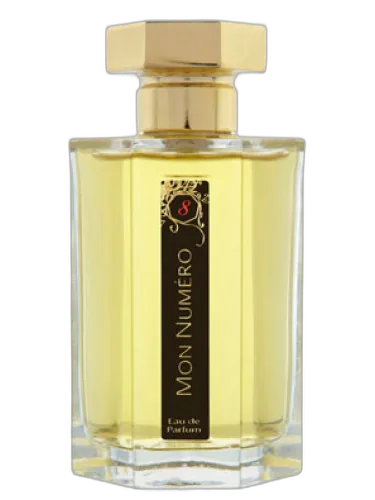
L'Artisan Parfumeur
Mon Numero 8 L'artisan Parfumeur
Shared accords: earthy, iris, powdery
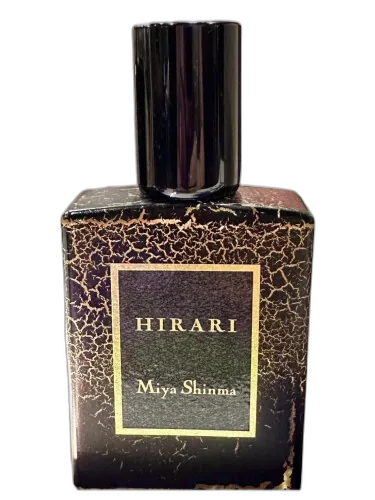
Miya Shinma
Hirari Miya Shinma
Shared accords: earthy, iris, powdery
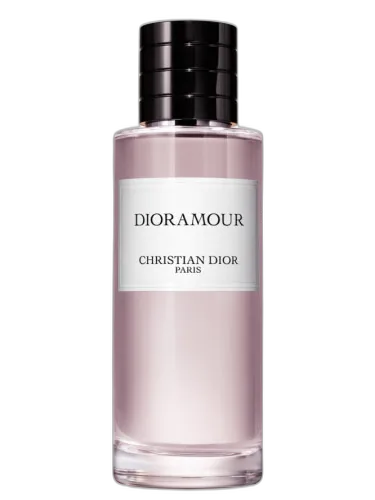
Dior
Dioramour Dior
Shared accords: earthy, iris, powdery

Reflexion
Iris Reflexion
Shared accords: earthy, iris, powdery