
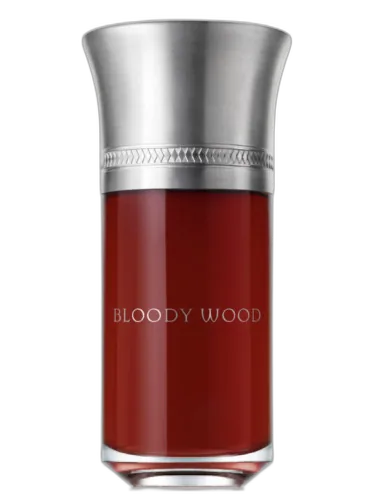

Bloody Wood Les Liquides Imaginaires
At a glance
Is Bloody Wood Les Liquides Imaginaires worth trying?
Bloody Wood by Les Liquides Imaginaires is a fragrance for women and men.
- Best match
- Evening wear in Fall
- Performance feel
- Very Good longevity with Strong sillage
- Signature profile
- woody, wine, fruity with Red Wine, Rose, Violet
The first impression
Bloody Wood by Les Liquides Imaginaires is a fragrance for women and men. Bloody Wood was launched in 2013. Top notes are Red Wine, Rose and Violet; middle notes are Red Wine, Cherry, Fruity Notes and Raspberry; base notes are Woody Notes, Oak and Sandalwood.
What shapes the scent
The perfumer behind it

Unknown Perfumer
Notes pyramid
Top Notes
First impression · 15-30 min
 Red Wine
 Rose
Rose
 Violet
Heart Notes
Core character · 2-4 hours
Red Wine
 Cherry
 Fruity Notes
 Raspberry
Base Notes
Lasting impression · 4+ hours
 Woody Notes
 Oak
Oak
 Sandalwood
The mood it creates
The Lover Archetype: Portrait of Bloody Wood Les Liquides Imaginaires
Essence
The person who cherishes Bloody Wood by Les Liquides Imaginaires is most closely aligned with The Mystic-a seeker who dwells in the liminal space between the sacred and the sensual. This archetype is drawn to the ineffable, the intoxicating, the paradoxical. Bloody Wood, with its dark, resinous warmth, its whispers of incense and iron, its duality of violence and serenity, speaks to a soul who finds beauty in tension. The Mystic does not merely wear a fragrance; they commune with it, allowing it to amplify their inner world.
Relationships
They do not love lightly, nor do they love many. Their relationships are deep, consuming, occasionally destructive. To be close to them is to be studied, unraveled, tasted. They are not possessive in a petty sense, but they demand intensity-anything less feels like betrayal. Their lovers often describe them as "too much," yet they cannot resist returning to the fire.
Friendship, for them, is a slow-burning ember. They have few confidants, but those they choose are bound to them in silent understanding. They listen more than they speak, and when they do speak, their words are weighted, deliberate. They despise small talk, not out of arrogance, but because they see time as sacred-why waste it on the trivial?
Shadow
The Mystic’s greatest danger is dissolution-the line between ecstasy and self-annihilation is perilously thin. Their pursuit of the sublime can tip into obsession, their sensuality into hedonism. They risk losing themselves in the very depths they seek to explore. There are nights when the scent of Bloody Wood is not enough, when they crave something darker, sharper, more ruinous.
They are prone to melancholy, not the sentimental kind, but a bone-deep recognition of life’s fleeting beauty. This can make them distant, even cruel, when they feel others do not understand their gravity. Their intensity frightens the timid, and their refusal to conform to emotional norms can leave loved ones feeling abandoned.
Conclusion
Their tastes are refined but never ostentatious. They prefer the weight of aged paper in books of esoteric philosophy, the slow burn of a single-malt whiskey, the flicker of candlelight on bare skin. Their style is deliberate-structured yet fluid, like a monk’s robe cut for a modern silhouette. Black, deep red, and charcoal gray dominate their wardrobe, fabrics that feel like a second skin rather than a disguise. They are drawn to art that unsettles as much as it enchants-Caravaggio’s chiaroscuro, the poetry of Rilke, the dissonant harmonies of Arvo Pärt.
Their philosophy is one of embodied transcendence-they do not seek to escape the flesh but to sanctify it. The body is a temple, but not in the sterile sense of ascetic denial; rather, it is a vessel for ecstasy, pain, and revelation. They believe in the holiness of touch, the sacrament of scent, the way a moment can be both fleeting and eternal.
If you like this, try these
Fragrances with a comparable profile - shared accords, notes, and character.

Odetu
Vincher Rouge Odetu
Shared heart notes: cherry, red wine
Neil Morris
Woodland Strawberries Neil Morris
Shared base notes: oak, sandalwood, woody notes

Ladanika
Ladanika Ладаника Ladanika
Shared top notes: red wine

Filigree & Shadow
Changer Filigree & Shadow
Shared top notes: rose, violet
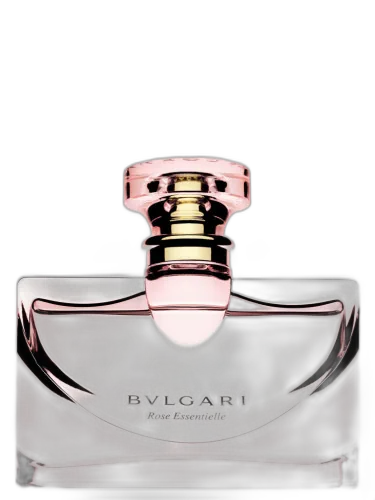
Bvlgari
Rose Essentielle Bvlgari
Shared top notes: rose, violet