


Melancolia Les Liquides Imaginaires
At a glance
Is Melancolia Les Liquides Imaginaires worth trying?
Melancolia by Les Liquides Imaginaires is a Woody Spicy fragrance for women and men.
- Best match
- Evening wear in Fall
- Performance feel
- Good longevity with Moderate sillage
- Signature profile
- fresh spicy, aromatic, citrus with Mint, Bergamot, Laurels
The first impression
Melancolia by Les Liquides Imaginaires is a Woody Spicy fragrance for women and men. Melancolia was launched in 2014. Melancolia was created by Amelie Bourgeois and Anne-Sophie Behaghel. Top notes are Mint and Bergamot; middle notes are Laurels and Ginger; base notes are Musk and Woody Notes.
What shapes the scent
The perfumer behind it

Amelie Bourgeois
Amelie Bourgeois is a French perfumer known for her work with the niche houses Aether and Alexandre.J. Her style blends experimental, synthetic accords with natural elements, often exploring contrasts like citrus and musk or rose and alkanes. She created the Aether Oxyde and Carboneum compositions, as well as Alexandre.J’s Mandarine Sultane and Passion Bliss.
Notes pyramid
Top Notes
First impression · 15-30 min
 Mint
Mint
 Bergamot
Heart Notes
Core character · 2-4 hours
 Laurels
 Ginger
Base Notes
Lasting impression · 4+ hours
 Musk
Musk
 Woody Notes
The mood it creates
The Sage Archetype: Portrait of Melancolia Les Liquides Imaginaires
Essence
To wear Melancolia by Les Liquides Imaginaires is to embrace a fragrance that lingers between sorrow and transcendence-a scent that evokes the bittersweet beauty of autumnal decay and the quiet wisdom of solitude. This person is not merely drawn to perfume; they are drawn to the poetry of existence, to the spaces where light and shadow blur into something profound. Their soul resonates with the Sage archetype, the seeker of truth, the contemplative mind that peers beneath the surface of things.
They are not content with superficial pleasures. Their intellect is a lantern in the dark, illuminating hidden meanings, questioning what others accept without thought. They value depth over distraction, silence over noise, and introspection over impulsivity. Yet, this very strength-their relentless pursuit of understanding-can become their undoing, for the Sage risks drowning in their own mind, lost in labyrinths of thought while life passes them by.
Relationships
They love deeply but cautiously, as if afraid their emotions might shatter the fragile equilibrium of their inner world. Their closest bonds are with those who understand silence, who do not demand constant reassurance but instead share in the unspoken. Their love language is the exchange of ideas, the quiet companionship of two souls wandering the same intellectual terrain.
Yet, their shadow emerges in detachment. They can become so absorbed in their thoughts that they neglect the warmth of human touch, the necessity of vulnerability. They may rationalize loneliness as independence, isolation as depth. The Sage must remember that wisdom without connection is a barren harvest.
Shadow
Their greatest flaw is not ignorance but over-intellectualization-the tendency to dissect emotions until they lose their vitality. They may retreat into analysis as a defense against chaos, mistaking control for enlightenment. At their worst, they become the recluse, the one who sees the world through a lens of abstraction but forgets to live within it.
Yet, when balanced, they are the quiet guide, the one who sees what others miss, who offers not answers but the right questions. Their melancholy is not weakness but a refined sensitivity to the transient beauty of existence.
Conclusion
Their tastes are refined but never ostentatious. They prefer the weight of a well-worn book to the gloss of new possessions, the texture of aged paper, the scent of ink and leather. Their home is a sanctuary of quiet elegance-antique wood, dim lighting, perhaps a single vase holding dried flowers, preserving beauty in its fading state. They do not chase trends; they curate experiences that resonate with their inner world.
Philosophy is not an abstract study for them but a way of being. They might find solace in Stoicism’s embrace of impermanence or Nietzsche’s call to create meaning in a godless world. They do not fear suffering, for they see it as a crucible of wisdom. Yet, they must guard against the temptation to romanticize melancholy, to mistake sorrow for depth.
If you like this, try these
Fragrances with a comparable profile - shared accords, notes, and character.

M. Micallef
English Garden M. Micallef
Shared top notes: bergamot, mint

Jean Paul Gaultier
Le Male Les D'ete 2005 Jean Paul Gaultier
Shared top notes: bergamot, mint

Floraïku
In The Rain Floraïku
Shared top notes: bergamot
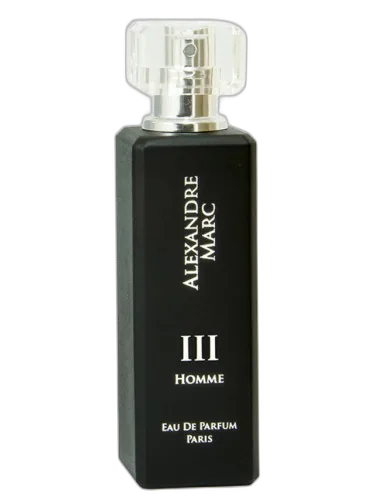
Alexandre Marc
Homme Iii Alexandre Marc
Shared top notes: bergamot

Zara
Blanc Ensoleille Zara
Shared top notes: bergamot