
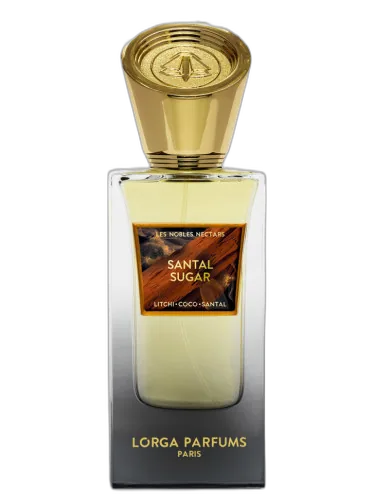

Santal Sugar Lorga Parfums
At a glance
Is Santal Sugar Lorga Parfums worth trying?
Santal Sugar by Lorga Parfums is a fragrance for women and men.
- Best match
- Evening wear in Fall
- Performance feel
- Very Good longevity with Moderate sillage
- Signature profile
- sweet, fruity, woody with Litchi, Bergamot, Raspberry
The first impression
Santal Sugar by Lorga Parfums is a fragrance for women and men. Santal Sugar was launched in 2021. Top notes are Litchi and Bergamot; middle notes are Raspberry, Coconut and Violet; base notes are Sandalwood, Tonka Bean and Creme Brulee.
What shapes the scent
The perfumer behind it

Unknown Perfumer
Notes pyramid
Top Notes
First impression · 15-30 min
 Litchi
 Bergamot
Heart Notes
Core character · 2-4 hours
 Raspberry
 Coconut
 Violet
Base Notes
Lasting impression · 4+ hours
 Sandalwood
 Tonka Bean
 Creme Brulee
The mood it creates
The Alchemist Archetype: Portrait of Santal Sugar Lorga Parfums
Essence
To wear Santal Sugar by Lorga Parfums is to embrace a paradox-warmth and mystery, sweetness and depth, the sacred and the sensual. This fragrance, with its blend of creamy sandalwood, caramelized vanilla, and smoky spices, speaks to a soul who thrives in transformation, who seeks to turn the mundane into the extraordinary. The archetype that most defines them is The Alchemist-the eternal seeker who transmutes experience into meaning, who finds gold in the ordinary.
Their personality is a tapestry of contrasts, much like the fragrance itself. They are drawn to the richness of life-luxury, but not in the vulgar sense of opulence. Their luxury is in texture, in sensation, in the slow savoring of moments. They prefer cashmere over silk, aged whiskey over champagne, handwritten letters over digital messages. There is an old-world elegance to them, yet they are not bound by nostalgia. They are modern mystics, finding enchantment in the present.
Philosophically, they are drawn to the idea that life is an experiment, a series of reactions waiting to be catalyzed. They believe in the power of intention, in the subtle alchemy of influence. They might dabble in astrology, tarot, or perfumery itself-not as superstition, but as symbolic languages that help them navigate the unseen. They value wisdom over knowledge, depth over breadth.
Shadow
Yet, like all who seek transformation, they risk becoming lost in their own labyrinth. Their pursuit of depth can tip into escapism-endless self-reinvention that borders on instability. They may grow restless, abandoning projects (or people) when the initial spark fades, always chasing the next alchemical reaction.
There is also a danger of solipsism. Their fascination with the inner world can make them dismissive of the mundane realities others must navigate. They may unintentionally isolate themselves, believing their way of seeing is superior. At their worst, they become the Hermit, not by choice but by the slow erosion of connection.
Another shadow is their relationship with pleasure. Santal Sugar is indulgent, and so are they-whether in rich food, late nights, or romantic intensity. They walk the line between hedonism and transcendence, and sometimes they stumble.
Conclusion
Their days are a dance between discipline and abandon. They rise early to meditate, then lose hours in a novel. They fastidiously plan their week, then impulsively book a flight to someplace unknown. They are both the scientist and the experiment, always testing the boundaries of their own existence.
Their greatest fear? Stagnation. To live a life untouched by mystery, by transformation, is a fate worse than death. And so they keep moving, keep distilling, keep searching-for the next revelation, the next sublime encounter, the next note in the fragrance of their life.
In the end, they are neither wholly light nor shadow, but the interplay of both-the alchemist who knows that gold cannot exist without the crucible.
If you like this, try these
Fragrances with a comparable profile - shared accords, notes, and character.
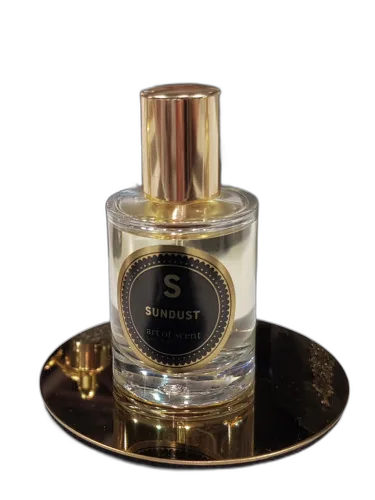
Art of Scent - Swiss Perfumes
Sundust Art Of Scent - Swiss Perfumes
Shared top notes: bergamot
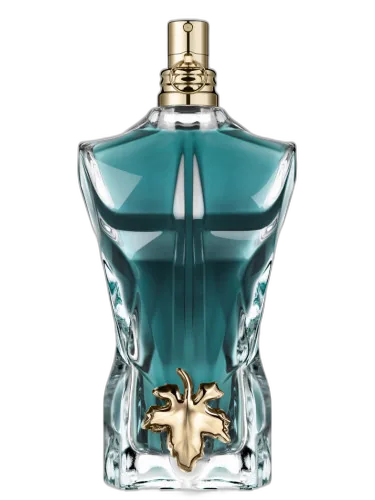
Jean Paul Gaultier
Le Beau Jean Paul Gaultier
Shared top notes: bergamot
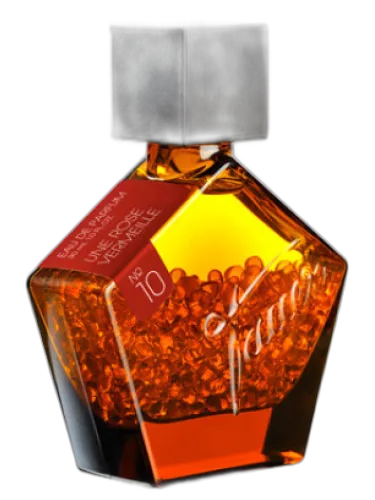
Tauer Perfumes
10 Une Rose Vermeille Tauer Perfumes
Shared top notes: bergamot

Salvatore Ferragamo
Vendemmia Salvatore Ferragamo
Shared top notes: bergamot

d.grayi
Coffee Cat D.grayi
Shared top notes: bergamot, litchi