


Compassion Louis Cardin
At a glance
Is Compassion Louis Cardin worth trying?
Compassion by Louis Cardin is a Floral Woody Musk fragrance for women.
- Best match
- Any wear in Any
- Performance feel
- Good longevity with Moderate sillage
- Signature profile
- floral, woody, amber with Orchid, Lotus, Amber
The first impression
Compassion by Louis Cardin is a Floral Woody Musk fragrance for women. Compassion was launched in 2011.
What shapes the scent
The perfumer behind it

Louis Cardin
Louis Cardin is a perfumer recognized for his thoughtful, emotive fragrance creations. His work often explores themes of compassion and connection through scent. He crafts compositions that balance depth with accessibility. His perfumes are designed to resonate on a personal and emotional level.
Notes pyramid
All Notes
Complete scent profile
 Orchid
 Lotus
Lotus
 Amber
Amber
 Pomegranate
 Mahogany
 Violet
The mood it creates
The Louis Cardin Devotee Archetype: Portrait of Compassion Louis Cardin
Essence
At the heart of this individual lies the Caregiver archetype, one who finds purpose in nurturing, comforting, and elevating others. Their choice of Compassion by Louis Cardin-a fragrance blending warmth, soft florals, and a hint of spice-mirrors their essence: gentle yet resilient, tender yet enduring. Like the scent, they leave an impression that lingers, not through force, but through quiet, unwavering presence.
Yet, the Caregiver is not without shadows. Their devotion to others can slip into self-neglect, their kindness into martyrdom. To understand them is to walk the fine line between their radiant generosity and the silent toll it takes.
Style & Aesthetic
Their wardrobe favors comfort over ostentation-soft knits, flowing fabrics, muted earth tones that whisper rather than shout. Jewelry, if worn at all, is understated: a simple pendant, a worn bracelet with history. Their home is a sanctuary of warmth, filled with books on healing, art that stirs the soul, and the faint, ever-present trace of their signature fragrance.
They reject the coldness of minimalism, preferring spaces that feel lived-in-a quilt draped over a chair, a cup of tea left half-finished, a vase of wildflowers gathered on a morning walk.
Their days are structured around acts of care-checking in on an aging neighbor, volunteering at shelters, sending handwritten notes "just because." They thrive in roles that demand compassion: nursing, teaching, counseling. Even in corporate settings, they are the ones who remember coworkers' struggles, who mediate conflicts with grace.
Yet, their selflessness can lead to exhaustion. They forget that rest is not laziness, that boundaries are not cruelty.
Philosophy & Values
They move through life with an unspoken creed: to ease suffering where they find it. Their philosophy is not born of dogma, but of lived empathy-an instinctive pull toward the wounded, the overlooked, the weary. They believe in the sacredness of small gestures: a listening ear, a timely word, the faintest brush of reassurance.
Yet, their virtue is also their vulnerability. They seldom ask, Who cares for me?-assuming that love must be earned through sacrifice. Their moral compass points always outward, rarely inward.
Relationships
To know them is to be held. Friends confide in them without fear of judgment; lovers find in them a rare depth of emotional attunement. They are the steady hand in chaos, the one who remembers birthdays, anniversaries, the small sorrows others forget.
But their shadow emerges in relationships-the fear of being a burden. They give freely but hesitate to receive, believing their worth lies in utility. Some mistake their kindness for weakness, exploiting their patience until resentment simmers beneath the surface.
Shadow
Beneath their generosity lurks a quiet question: If I stop giving, will I still be loved? Their greatest fear is irrelevance-that without their service, they are nothing. This fear can breed resentment, passive-aggression, or worse-a hollowing out of the self until only the role of "helper" remains.
To transcend this, they must learn the hardest lesson: true compassion begins with self-compassion.
Conclusion
The one who wears Compassion Louis Cardin is both a beacon and a caution. They remind us of the beauty in tenderness, the strength in vulnerability. But they also warn us: even the kindest heart must learn to receive, lest it wither from giving too much.
In their ideal form, they are the embodiment of love as action-not as obligation, but as choice. And in that choice, they find their deepest freedom.
If you like this, try these
Fragrances with a comparable profile - shared accords, notes, and character.

Pamela Anderson
Malibu Night Pamela Anderson
Shared top notes: amber, lotus, mahogany
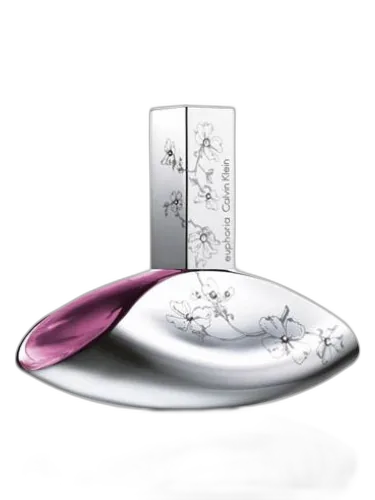
Calvin Klein
Euphoria Crystalline Calvin Klein
Shared top notes: amber, mahogany, pomegranate

Contém 1g
Meu Despertar Contém 1g
Shared top notes: lotus, pomegranate

Kenzo
Rêve Lotus Kenzo
Shared top notes: lotus

Shiseido
Ever Bloom Ginza Flower Shiseido
Shared top notes: lotus, violet