

Reverie Luviane
At a glance
Is Reverie Luviane worth trying?
Reverie by Luviane is a Floral fragrance for women.
- Best match
- Evening wear in Spring
- Performance feel
- Good longevity with Moderate sillage
- Signature profile
- tobacco, tuberose, white floral with Tuberose, Balsamic Notes, Tobacco
The first impression
Reverie by Luviane is a Floral fragrance for women.
What shapes the scent
The perfumer behind it

Unknown Perfumer
Notes pyramid
All Notes
Complete scent profile
 Tuberose
 Balsamic Notes
 Tobacco
 Woody Notes
 Rum
Rum
The mood it creates
The Innocent Archetype: Portrait of Reverie Luviane
Essence
To wear Reverie Luviane is to embrace an olfactory dream-a fragrance that lingers between memory and fantasy, soft yet persistent, like the whisper of an unfinished story. The person who cherishes this scent is not merely drawn to its notes of vanilla, jasmine, and amber; they are seduced by its promise of escape, its suggestion of a world untarnished by harshness. They are, at their core, an Innocent-one of Jung’s primordial archetypes, embodying purity, optimism, and an unshakable belief in the goodness of life.
Yet the Innocent is not naive in the way of a child untouched by sorrow. Their optimism is a choice, a shield against the abrasions of reality. They have seen darkness, perhaps even tasted it, but they refuse to let it define them. Instead, they cultivate beauty, seeking refuge in art, tenderness, and the quiet magic of everyday moments.
Relationships
In love, they are tender but guarded. They give affection freely, yet they withhold the parts of themselves that have known pain. Their partners often find them enchanting, but they may also sense an unbridgeable distance-a reluctance to let anyone see the moments when the dream falters.
Their friendships are warm but selective. They surround themselves with those who share their reverence for beauty, who understand the sacredness of small joys. They have little patience for bitterness, for those who mock their idealism. Yet their aversion to conflict can make them passive, even complicit, in the face of wrongdoing. They would rather disappear than engage in a battle that might shatter their peace.
Shadow
Their tastes are refined but never ostentatious. They prefer muted elegance-linen dresses, cashmere sweaters, the patina of well-loved books. Their home is a sanctuary: sunlit corners, fresh flowers, a record player spinning Chopin or Debussy. They are drawn to poetry, to films where love triumphs, to the kind of music that feels like a secret shared between souls.
Philosophically, they are romantics in the truest sense-not in the cloying, sentimental way, but in their insistence that meaning is found in connection, in fleeting beauty, in the belief that life is more than mere survival. They reject cynicism, not out of ignorance, but defiance.
Yet this refusal to dwell in darkness has its shadow. Their optimism can curdle into avoidance, their idealism into fragility. When reality proves too brutal, they retreat-into nostalgia, into fantasy, into the safety of their carefully curated world. They may struggle with commitment, not because they are fickle, but because they fear disillusionment. To love deeply is to risk seeing the cracks in the dream.
Conclusion
Their greatest strength is their ability to find wonder where others see only mundanity. A cup of tea at dawn, the scent of rain on pavement, the way sunlight filters through leaves-these are not trivialities to them, but the essence of existence. They remind others that life is not merely endured but savored.
Yet their weakness lies in their reluctance to face the storm. When tragedy strikes, they are slow to grieve, slow to rage. They would rather transform pain into poetry than let it burn through them. This evasion can leave them untested, their wisdom shallow where it should be deep.
If you like this, try these
Fragrances with a comparable profile - shared accords, notes, and character.
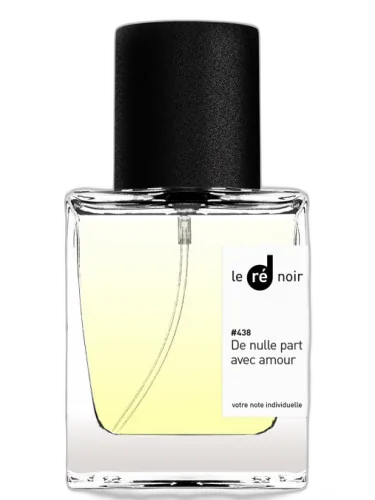
Le Ré Noir
#438 De Nulle Part Avec Amour Le Ré Noir
Shared top notes: tuberose, woody notes

Luviane
Violete Luviane
Shared top notes: balsamic notes, rum, tobacco
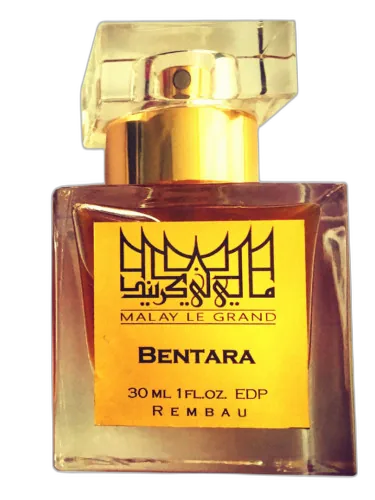
Malay Perfumery
Bentara Malay Perfumery
Shared top notes: tobacco, woody notes
Headspace
Tubereuse Headspace Headspace
Shared top notes: tobacco

House of Gozdawa
Hel House Of Gozdawa
Shared top notes: tuberose, woody notes